

An operational evaluation of why forward-thinking organizations leverage external technical desks to elevate service quality and drive enterprise efficiency.
Modern IT help desk outsourcing is no longer a simple labor arbitrage exercise. Enterprise leadership views outsourced technical desks as a strategic driver to scale operations, improve service availability, and liberate core IT talent for digital innovation.
According to research from Deloitte's Global Outsourcing Survey, adopting outcome-based outsourcing models allows organizations to achieve operational agility and significant cost advantages over purely in-house delivery. As technical environments expand across distributed cloud frameworks, hybrid workforces, and multi-cloud architectures, internal IT teams often face operational paralysis under the weight of routine user tickets. For executive leadership, deploying outsourced technical support services provides a scalable framework that mitigates ticket backlogs, stabilizes service level agreements, and optimizes operational expenditure.
Relying entirely on internal IT personnel for tier-one and tier-two user issues frequently leads to skilled engineering burnout, higher turnover, and neglected strategic initiatives. Partnering with a dedicated technical support services provider allows enterprises to offload repetitive troubleshooting while maintaining strict operational control. Furthermore, adopting IT help desk outsourcing models creates a predictable cost structure that aligns directly with actual user headcount and operational consumption.
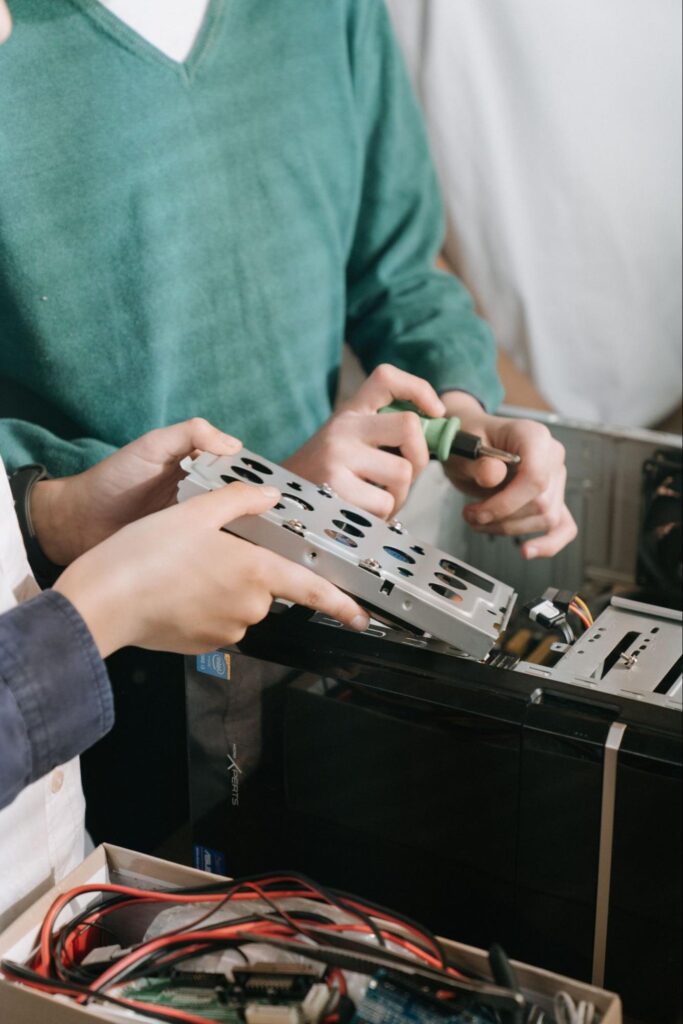
12 Benefits of IT Help Desk Outsourcing
Outsourcing IT support operations is different from outsourcing customer service because it provides enterprise leadership with a modern framework to address rising user demands, complex software environments, and talent constraints.
1. Reduce IT Support Costs
Maintaining an internal IT help desk requires heavy ongoing capital and operational investment across talent acquisition, continuous training, physical facilities, and management oversight. Enterprise organizations often struggle with hidden administrative costs, including employee benefits, specialized hardware allocations, and enterprise software licensing fees. Utilizing outsourced technical support services enables leadership to convert unpredictable capital expenditures into predictable, variable operating expenses tailored to precise business volume.
|
Expense Category |
In-House IT Help Desk |
Outsourced IT Help Desk |
|---|---|---|
| Recruitment & Hiring | High ongoing cost per engineer hire | Fully absorbed by external partner |
| Salary & Benefits | Full fixed salary, health care, and bonus overhead | Included in predictable monthly vendor fee |
| Training & Skill Building | Continuous internal expense per technology update | Managed and funded by service provider |
| Software & Infrastructure | Expensive ticketing, ITSM, and remote tools | Bundled into partner's service platform |
| Management Overhead | Internal directors spend time on daily supervision | Dedicated vendor management and QA team |
Transitioning to an external model allows organizations to eliminate idle labor costs during low-ticket windows while maintaining robust staffing capacity for unpredictable volume surges. This structural financial alignment ensures that executive leadership pays strictly for consumed support capacity, driving maximum return on operational spend.
2. Provide 24/7 IT Support
Modern business operations function continuously across multiple international time zones, making standard eight-hour local help desk coverage insufficient for enterprise needs. Unresolved technical disruptions occurring during overnight shifts, weekends, or holidays cause immediate operational friction and stall core workflows. Implementing a follow-the-sun support model guarantees that user requests submitted at any hour receive immediate attention from qualified technical personnel.
Continuous coverage eliminates morning ticket backlogs, enabling internal staff to begin their workday without waiting for credential resets or system access fixes. Working alongside a specialized technical support services provider ensures that system alerts and user inquiries are processed continuously around the clock. This relentless operational availability safeguards business continuity and prevents localized technical glitches from escalating into enterprise outages.
3. Improve First-Contact Resolution
First-contact resolution stands as one of the most vital metrics for evaluating help desk efficiency and user satisfaction across an enterprise ecosystem. When user tickets suffer from multiple handoffs between tier-one, tier-two, and internal systems engineers, downtime increases while organizational productivity drops. Dedicated external help desks utilize standardized knowledge management frameworks and structured triage protocols to resolve user issues during the initial interaction.
High first-contact resolution rates prevent minor technical requests from clogging escalation queues reserved for high-priority infrastructure projects. When organizations choose to outsource tech support, they gain access to specialized tier-one agents trained to resolve complex user issues quickly. This disciplined triage approach optimizes ticket flow, lowers mean time to resolution, and restores end-user productivity without internal escalation.
4. Reduce Employee Downtime
Technical friction directly impairs organizational efficiency when employees spend valuable working hours waiting for password resets, software access, or hardware troubleshooting. Cumulative downtime across a distributed enterprise results in lost revenue, missed project deadlines, and widespread employee frustration. Establishing a rapid-response support desk minimizes user idle time by providing instant assistance across live chat, phone, and web portals.
Accelerating ticket intake and execution ensures that remote, hybrid, and office-based workers return to core tasks with minimal operational disruption. Utilizing outsourced technical support services establishes rigorous service level agreements that hold support teams accountable for strict response and resolution speeds. Reducing technical friction across daily workflows allows the broader workforce to remain focused on driving business outcomes.
5. Access Specialized IT Expertise
Building an internal help desk capable of supporting legacy software, modern cloud platforms, specialized cybersecurity tools, and complex networks is cost-prohibitive for most organizations. Technology stacks evolve rapidly, making it difficult for internal support staff to maintain up-to-date certifications across every enterprise application. External technical providers maintain deep pools of certified talent spanning L1, L2, and L3 technical capabilities across diverse software ecosystems.
This multi-tiered expertise allows enterprise leadership to tap into specialized technical knowledge without hiring dedicated, niche internal engineers. Partnering with a comprehensive provider offering IT help desk outsourcing ensures that specialized domain experts handle intricate configuration issues immediately. Access to enterprise-grade expertise mitigates technical risk and improves the overall resilience of the IT environment.
6. Scale Support Without Constant Hiring
Business expansion, corporate acquisitions, seasonal demand spikes, and rapid office rollouts place immense pressure on internal support structures. Internal HR departments often struggle to source, vet, and onboard qualified help desk technicians quickly enough to keep pace with rapid business growth. External support models offer immediate operational elasticity, allowing organizations to adjust support capacity up or down based on real-time business demands.
This scalability eliminates the financial burden of overstaffing during quiet quarters or facing critical talent shortages during major organizational rollouts. When leadership decides to outsource tech support, support capacity scales seamlessly alongside business expansion without incurring recruitment delays. Flexible support frameworks preserve operational momentum during periods of significant corporate change.
7. Automate Repetitive IT Requests
Modern help desk operations leverage a balanced hybrid framework that combines advanced AI-driven automation with skilled human assistance. AI chatbots, automated self-service portals, and intelligent knowledge bases automatically resolve routine, high-volume user requests like credential resets or software installations. Routine requests are processed instantly by automated workflows, freeing human technicians to focus exclusively on complex, high-touch technical challenges.
Integrated machine learning systems analyze incoming user tickets by intent and urgency, automatically routing complex issues to the correct specialized tier. Deploying outsourced technical support services that incorporate automated triage protocols significantly accelerates resolution times while reducing human error. This hybrid operating model optimizes cost-per-ticket metrics without degrading the overall quality of user support.
8. Strengthen IT Security and Compliance
Frontline help desk personnel serve as a critical defense layer against social engineering attacks, unauthorized access attempts, and credential theft. Inadequate security training among help desk staff can lead to compliance violations, accidental data exposure, or compromised user accounts. Specialized external providers enforce strict identity verification protocols, role-based access controls, and robust security monitoring across every user interaction.
Third-party providers align their operational workflows with stringent regulatory frameworks, including ISO 27001, GDPR, SOC 2, and HIPAA compliance requirements. Working with a compliance-aligned technical support services provider ensures that user access requests, credential resets, and device enrollments adhere to enterprise security governance. Rigorous compliance management protects sensitive corporate data and lowers overall security risk exposure.
9. Improve IT Service Quality and Consistency
Inconsistent support processes, unorganized ticket queues, and informal escalation rules result in unpredictable user experiences and unreliable service quality. External help desk providers operate under strict standard operating procedures, structured quality assurance frameworks, and formalized escalation workflows. Every support interaction is logged, monitored, and evaluated against established performance benchmarks to ensure operational consistency.
Comprehensive knowledge management databases ensure that technical solutions are documented and executed uniformly across all support shifts. Organizations leveraging IT help desk outsourcing benefit from rigorous service management models that enforce standardized service delivery. This disciplined operational environment drives higher end-user satisfaction and ensures predictable performance outcomes.
10. Support Remote and Hybrid Employees
Managing distributed workforces introduces complex technical challenges, including remote device management, home network troubleshooting, and multi-factor authentication issues. Internal help desks designed for traditional centralized offices often struggle to support remote employees operating across disparate geographical locations and time zones. External support centers specialize in remote troubleshooting tools, secure co-browsing platforms, and distributed workspace management.
Prompt, localized assistance ensures that remote employees remain fully connected and operational regardless of their physical working location. Utilizing outsourced technical support services provides remote staff with instant access to technical resolutions via multi-channel communication tools. Seamless remote support eliminates geographical bottlenecks and empowers a mobile, productive workforce.
11. Gain Better IT Analytics and Reporting
Optimizing an IT support ecosystem requires real-time visibility into operational metrics, recurring failure patterns, and performance trends. Internal help desks often lack the advanced reporting tools needed to track key metrics like First Contact Resolution, Mean Time to Resolution, and Customer Satisfaction scores accurately. External providers supply executive leadership with comprehensive analytics dashboards detailing ticket volumes, SLA compliance, backlog trends, and cost-per-ticket metrics.
Data-driven insights allow IT executives to identify recurring software bugs, infrastructure bottlenecks, and user training gaps across the enterprise. When organizations outsource tech support, transparent operational reporting provides full visibility into support efficiency and vendor accountability. Clear data analytics support strategic decision-making and drive continuous service improvement.
12. Let Internal IT Focus on Strategic Work
Forcing senior internal IT talent to spend their days resolving printer errors, password locks, and basic desktop glitches misallocates high-value engineering resources. Internal IT professionals should focus their expertise on high-impact initiatives, such as cloud migration, cybersecurity hardening, infrastructure modernization, and enterprise automation. Offloading routine user support to an external partner creates a clear operational boundary between daily maintenance work and strategic technology initiatives.
Transitioning tier-one and tier-two workloads allows internal engineering teams to execute digital transformation projects that drive competitive advantage and long-term business growth. Leveraging a trusted technical support services provider restores strategic focus to internal IT leadership. This division of labor maximizes employee engagement, accelerates strategic project delivery, and elevates the overall value of internal IT assets.
Scale your technical support operations 24/7 without recruitment delays.
Frequently Asked Questions
What are the main benefits of outsourcing an IT help desk?
The primary benefits include lower operating expenses, round-the-clock coverage, access to certified technical expertise, and rapid scalability without internal hiring delays. Outsourcing also elevates service quality through strict service level agreements while allowing internal IT personnel to focus on strategic business initiatives.
Is outsourcing an IT help desk cheaper than hiring internally?
Yes, outsourcing is typically much more cost-effective than building an internal help desk because it eliminates fixed recruitment costs, employee benefits, desktop hardware, and software licensing expenses. Organizations pay strictly for consumed capacity, turning unpredictable capital expenses into manageable, variable operating costs.
What services can an outsourced IT help desk provide?
An outsourced help desk handles tier-one through tier-three technical support, credential resets, software installation, remote device troubleshooting, network monitoring, and security access management. External providers can also supply self-service automation, knowledge base management, and multi-channel user communication.
Can an outsourced help desk provide 24/7 support?
Yes, external help desk providers utilize global delivery networks to deliver continuous 24/7/365 coverage across all time zones. This follow-the-sun model ensures that weekend, overnight, and holiday technical inquiries receive immediate attention without delay.
Is IT help desk outsourcing secure?
Reputable support providers maintain strict data privacy compliance standards, including ISO 27001, SOC 2, and GDPR certifications. External teams enforce strict identity verification steps, role-based access protocols, and encrypted communications to protect enterprise data assets.
What is the difference between L1, L2, and L3 IT support?
L1 support handles basic user inquiries, password resets, and initial ticket triage. L2 support addresses complex software issues, configuration errors, and advanced troubleshooting. L3 support consists of specialized systems engineers and developers who manage server infrastructure, database issues, and major system changes.
How do you measure outsourced help desk performance?
Help desk performance is evaluated using key performance indicators such as First Contact Resolution (FCR), Mean Time to Resolution (MTTR), SLA Compliance Rate, Customer Satisfaction (CSAT), and Cost per Ticket. Transparent reporting dashboards allow leadership to audit vendor performance continuously.
How long does it take to transition to an outsourced help desk?
A standard help desk transition typically takes between four to eight weeks, depending on organizational complexity, system integration requirements, and knowledge transfer scope. The process involves establishing routing rules, configuring ticketing platforms, training vendor teams, and running parallel pilot tests.
What should I look for in an IT help desk outsourcing provider?
Key factors include proven domain expertise, robust security certifications, flexible scalability, advanced AI automation tools, and transparent SLA reporting. Leadership should also verify that the provider aligns culturally and operationally with their internal organizational goals.
Conclusion
The true value of IT help desk outsourcing extends far beyond basic cost reduction. While lowering operating expenses provides immediate financial relief, the broader strategic value lies in combining specialized technical expertise, continuous 24/7 availability, advanced AI automation, and disciplined service delivery into a unified framework. Partnering with an external help desk provider restores operational focus to internal technology teams, enabling them to execute critical digital transformation projects. Evaluating a dedicated help desk partner allows business owners and IT leaders to build a resilient, scalable, and secure technical infrastructure that supports sustainable long-term enterprise growth.