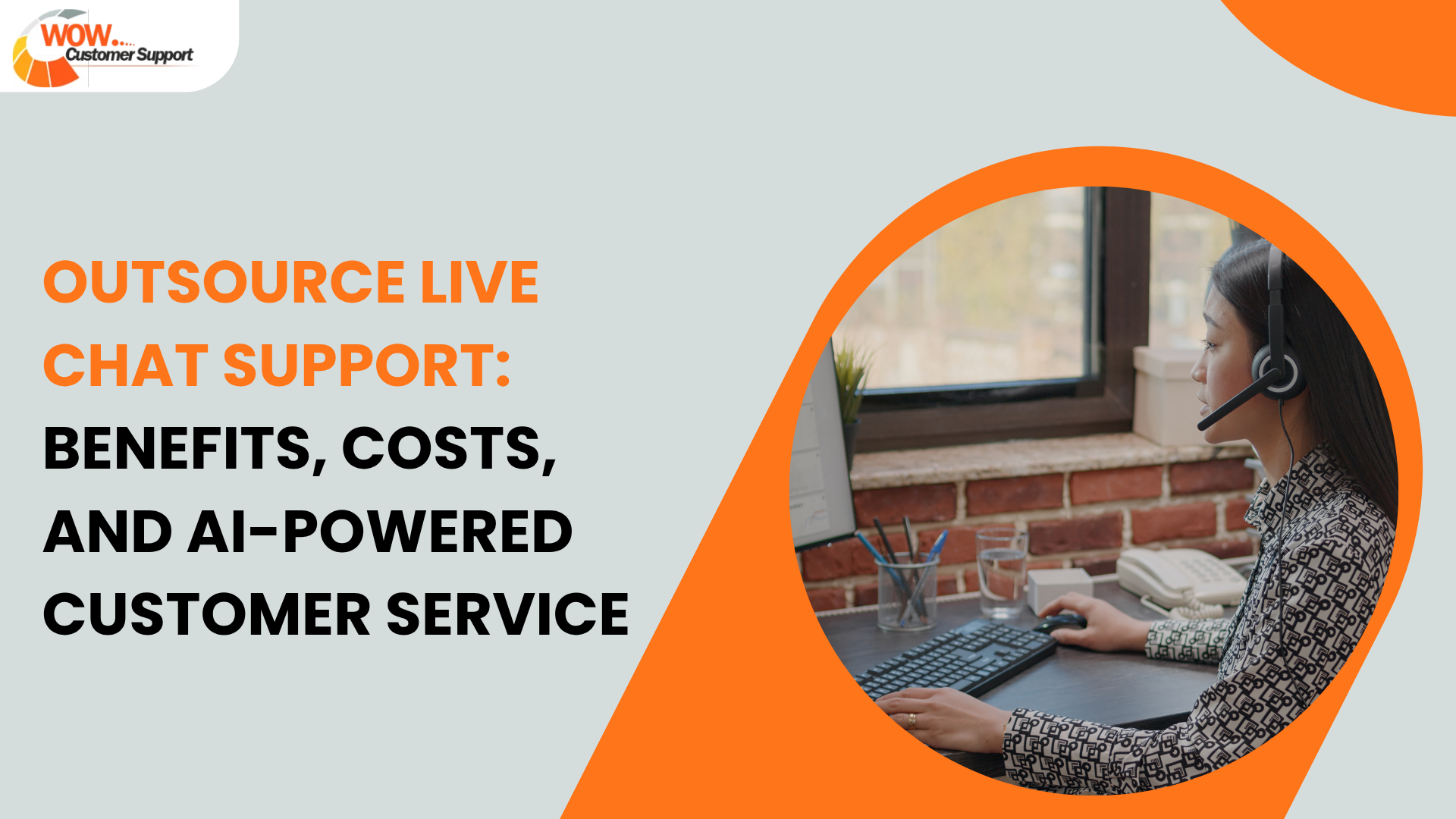
Customers expect immediate answers. Whether they are asking about product availability, shipping updates, billing concerns, or technical issues, delays can quickly lead to abandoned purchases and lost revenue. This is why many businesses choose to outsource live chat support rather than build and manage large in-house teams.
In this guide, we'll explore the benefits, costs, technology requirements, and AI-driven trends shaping modern live chat operations
Table of Contents
What Is Live Chat Support Outsourcing?
Why Businesses Outsource Live Chat Support
Outsourced vs In-House Live Chat Support
Understanding Live Chat Outsourcing Costs
The Rise of AI-Powered Live Chat Outsourcing
Technology Integrations That Strengthen Outsourced Live Chat Support
How to Choose the Right Live Chat Outsourcing Partner
What Is Live Chat Support Outsourcing?
Live chat support outsourcing is the practice of partnering with a specialized service provider to manage customer conversations across websites, mobile applications, and digital messaging channels. Instead of building and maintaining an in-house chat team, businesses rely on external experts to deliver timely, professional, and consistent customer support.
Companies that outsource live chat support gain access to trained agents who represent their brand, follow established service guidelines, and handle customer interactions with the same level of professionalism expected from an internal team. This approach allows businesses to improve response times, enhance customer satisfaction, and provide support coverage without the challenges of recruiting, training, and managing additional staff.
How Outsourced Live Chat Support Works
Outsourced live chat providers typically integrate with a company's existing technology ecosystem, including websites, CRM platforms, help desk software, ecommerce systems, and knowledge bases. Once integrated, incoming chats are routed to dedicated or shared agents who respond in real time, answer questions, resolve issues, and guide customers through their buying journey.
Many providers also use AI-powered tools to assist agents, automate routine inquiries, and ensure customers receive faster support while maintaining a seamless experience.
Convert visitors instantly with 24/7 live chat outsourcing.
Common Live Chat Support Functions Businesses Outsource
Businesses commonly outsource a wide range of customer-facing chat activities, including:
- Answering sales and pre-purchase inquiries
- Providing product recommendations and buying guidance
- Tracking orders and shipping updates
- Delivering technical support and troubleshooting assistance
- Managing billing and account-related questions
- Qualifying leads and capturing prospect information
- Handling returns, exchanges, and refund requests
- Supporting customer retention and loyalty initiatives
By outsourcing these functions, organizations can maintain high service standards while allowing internal teams to focus on growth, strategy, and core business operations.
Why Businesses Outsource Live Chat Support
Customer expectations have changed dramatically in recent years. Today's consumers expect fast, accurate, and personalized support regardless of the time of day. For many businesses, meeting these expectations with an in-house team can be both challenging and expensive. As a result, more organizations choose to outsource live chat support to improve service quality while maintaining operational efficiency.
Improve Customer Response Times
Speed plays a critical role in customer satisfaction. Research consistently shows that customers are more likely to make a purchase or remain loyal to a brand when their questions are answered quickly. Outsourced live chat teams are specifically structured to manage large volumes of conversations simultaneously, ensuring customers receive timely assistance instead of waiting in lengthy queues. Faster response times not only improve the customer experience but can also increase conversions and reduce cart abandonment.
Extend Support Availability
Modern customers do not operate on a standard 9-to-5 schedule. They browse, shop, and seek assistance during evenings, weekends, and holidays. This is one of the primary reasons businesses invest in 24/7 live chat outsourcing. Around-the-clock support ensures customers can receive help whenever they need it, regardless of location or time zone. For companies serving national or international markets, continuous availability can become a significant competitive advantage.
Scale During Growth and Seasonal Demand
Support requirements rarely remain constant. Product launches, holiday shopping seasons, promotional campaigns, and periods of rapid business growth can cause chat volumes to surge unexpectedly. Hiring and training additional in-house staff for temporary demand spikes is often costly and time-consuming. Outsourcing provides the flexibility to quickly scale support operations up or down, allowing businesses to maintain consistent service levels without overextending internal resources.
Reduce Operational Overhead
Building an internal live chat department involves much more than hiring agents. Businesses must invest in recruitment, onboarding, training, workforce management, quality assurance, software licenses, and ongoing performance monitoring. By choosing to outsource live chat support, organizations can shift many of these responsibilities to a specialized provider. This allows leadership teams to focus on strategic priorities while benefiting from experienced support professionals, established processes, and advanced customer service technologies.
Outsourced vs In-House Live Chat Support
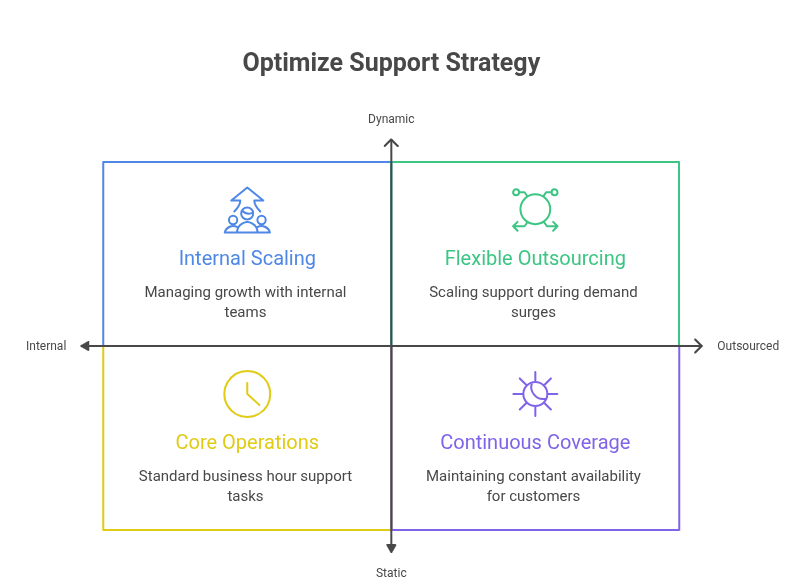
Choosing between an in-house support team and an outsourced provider is one of the most important decisions businesses make when developing their customer service strategy. While both models can deliver quality support, they differ significantly in terms of cost, scalability, staffing flexibility, and operational complexity. Understanding these differences can help organizations determine which approach best aligns with their growth objectives and customer service requirements.
Cost Comparison
Building an in-house live chat team involves a wide range of direct and indirect expenses. Beyond employee salaries, businesses must account for benefits, recruitment costs, onboarding programs, management oversight, software subscriptions, equipment, workspace requirements, and ongoing training initiatives. These costs can quickly add up, especially as support operations expand.
In contrast, outsourcing typically consolidates many of these expenses into a predictable monthly or usage-based service fee. This cost structure allows businesses to forecast customer service expenditures more accurately while gaining access to experienced agents and established support infrastructure without significant upfront investment.
Scalability and Flexibility
Customer support demand is rarely consistent throughout the year. Seasonal sales events, marketing campaigns, product launches, and business growth can all generate sudden increases in customer inquiries. Expanding an internal team to accommodate these fluctuations often requires lengthy hiring and training cycles.
Outsourced providers offer a much higher degree of flexibility. Because they maintain larger talent pools and workforce management systems, they can quickly increase or decrease staffing levels based on demand. This agility helps businesses maintain service quality during peak periods without carrying excess staffing costs during slower months.
Talent and Coverage Considerations
Recruiting and retaining skilled support professionals can be challenging, particularly for businesses that require specialized knowledge, multilingual capabilities, or extended operating hours. Creating a fully staffed support operation that provides continuous coverage often requires substantial investment and ongoing management.
Outsourcing providers typically employ agents with experience across multiple industries and customer service environments. Many also offer multilingual support and established processes for delivering seamless customer experiences across different regions and time zones. For organizations seeking 24/7 live chat outsourcing, partnering with a specialized provider is often a more practical and cost-effective solution than building a global support team from the ground up.
Understanding Live Chat Outsourcing Costs
Cost is often one of the first considerations for businesses evaluating whether to outsource live chat support. However, pricing is rarely one-size-fits-all. It is influenced by multiple operational factors, service models, and business requirements that determine the overall investment and long-term value.
Common Outsourcing Pricing Models
Live chat outsourcing providers typically structure their pricing in several ways, depending on the level of support and customization required. The most common models include:
- Per-agent pricing, where businesses pay for each dedicated or shared support representative
- Per-hour pricing, based on the total time agents spend handling customer interactions
- Per-chat pricing, where costs are tied directly to the number of conversations managed
- Monthly service packages that bundle staffing, tools, and support features into a fixed fee
Each model offers different levels of predictability and scalability, depending on business needs.
Factors That Influence Live Chat Support Costs
Several key variables affect the overall cost of outsourced live chat services. These include:
- Support volume and expected chat traffic
- Required hours of coverage, including after-hours or 24/7 live chat outsourcing
- Industry complexity and the level of product or technical knowledge required
- Language requirements for serving global or multilingual customers
- Technical expertise needed for troubleshooting or specialized support
- Reporting depth and analytics requirements for performance tracking
The more complex and demanding the support environment, the higher the overall cost tends to be.
Dedicated vs Shared Agent Pricing
One of the most important pricing distinctions is between dedicated and shared agents. Dedicated agents work exclusively with a single brand, allowing them to develop deeper product knowledge and deliver more personalized customer experiences. This model typically comes at a higher cost due to exclusivity.
Shared agents, on the other hand, handle support for multiple clients. This structure allows providers to distribute costs more efficiently, making it a more budget-friendly option for businesses with moderate or fluctuating chat volumes.
Hidden Costs Businesses Often Overlook
While base pricing is often clearly defined, businesses should also account for potential additional costs that may arise during implementation or ongoing operations, such as:
- Initial training and onboarding of agents
- Integration with CRM, ecommerce, or help desk systems
- Quality assurance and monitoring programs
- Custom reporting or advanced analytics requests
- Seasonal staffing adjustments during peak demand periods
Understanding these potential costs upfront helps businesses make more accurate comparisons between providers and avoid unexpected expenses later in the partnership.
The Rise of AI-Powered Live Chat Outsourcing
Modern customer support is undergoing a major shift. The most effective live chat operations no longer rely solely on human agents or fully automated systems. Instead, they combine artificial intelligence with human expertise to create a hybrid support model that is faster, more scalable, and more consistent.
This evolution is especially important for businesses that outsource live chat support, as providers increasingly integrate AI tools into their workflows to improve efficiency and customer satisfaction.
How AI and Human Agents Work Together
In an AI-assisted support model, artificial intelligence handles the initial layer of customer interaction. It responds to routine questions, collects relevant customer details, and routes inquiries to the appropriate department or agent.
Human agents focus on higher-value interactions that require critical thinking, empathy, or negotiation skills. This division of labor allows support teams to resolve issues more efficiently while ensuring customers receive the right level of attention based on the complexity of their concern.
When Conversations Should Be Escalated to Human Agents
While AI can manage a large portion of customer inquiries, certain situations require human intervention. Escalation is typically necessary in cases such as:
- Billing disputes that require review of account history
- Technical troubleshooting involving complex or multi-step issues
- Account security concerns such as login issues or unauthorized access
- High-value sales opportunities where personalized guidance is critical
Clear escalation pathways ensure that customers are not stuck in automated loops and receive timely, accurate resolutions.
Benefits of an AI-Assisted Support Model
Integrating AI into live chat outsourcing delivers several measurable advantages for businesses:
- Faster response times through instant automated replies
- Lower operational costs by reducing repetitive workload for agents
- More consistent service delivery across large volumes of inquiries
- Improved agent productivity by eliminating routine tasks
- Enhanced customer experiences through quicker and more accurate support
These benefits make AI-powered systems a key driver behind the growth of 24/7 live chat outsourcing strategies across industries.
Common Use Cases for AI in Live Chat Operations
AI is particularly effective in handling high-frequency, structured interactions. Common applications include:
- Providing order status updates and shipment tracking
- Answering frequently asked questions
- Assisting with appointment scheduling and confirmations
- Processing return or refund requests
- Recommending relevant help articles from knowledge bases
By automating these repetitive tasks, businesses allow human agents to focus on more complex and revenue-impacting conversations, improving overall service quality and efficiency.
Technology Integrations That Strengthen Outsourced Live Chat Support
Modern live chat outsourcing is no longer just about staffing support agents. The real performance advantage comes from deep technology integration that connects chat systems with business tools, customer data, and automation platforms. These integrations enable faster resolutions, more personalized conversations, and smoother workflows across the entire support ecosystem.
CRM Integration
Customer Relationship Management (CRM) integration is one of the most critical components of effective live chat operations. By connecting chat systems to a CRM, agents gain immediate access to valuable customer context, including purchase history, previous interactions, preferences, and account details.
This level of visibility allows agents to deliver more personalized and efficient support. Instead of asking customers to repeat information, agents can quickly understand the situation and provide relevant solutions, improving both speed and satisfaction.
Help Desk and Ticketing System Integration
Not all customer inquiries can be resolved in a single chat session. More complex or technical issues often require structured follow-up and internal coordination. Help desk and ticketing system integration ensures that these cases are seamlessly escalated without losing context.
When a chat is converted into a ticket, all conversation history, customer details, and relevant notes are preserved. This allows support teams to continue resolving issues efficiently, even if multiple agents or departments are involved. It also helps maintain accountability and ensures consistent follow-through.
Ecommerce Platform Integration
For online retailers, integration with ecommerce platforms such as Shopify, WooCommerce, Magento, and similar systems is essential. These connections allow support agents to access real-time order data, inventory information, shipping updates, and payment status directly within the chat interface.
This enables faster resolution of common customer requests such as order tracking, cancellations, refunds, and product availability checks. It also reduces the need to switch between systems, improving overall efficiency and response time.
Knowledge Base and Customer Data Synchronization
A well-structured knowledge base plays a key role in both human and AI-assisted support environments. When live chat systems are synchronized with up-to-date documentation and customer data, agents and AI tools can quickly retrieve accurate information to answer customer questions.
This synchronization improves consistency across responses, reduces resolution time, and enhances the effectiveness of automated suggestions. It also ensures that both AI systems and human agents are working with the same verified information, which is critical for maintaining service quality in 24/7 live chat outsourcing operations.
How to Choose the Right Live Chat Outsourcing Partner
Selecting the right live chat outsourcing partner is a strategic decision that directly impacts customer experience, brand reputation, and operational efficiency. Beyond cost considerations, businesses should evaluate providers based on expertise, reliability, security, and their ability to deliver measurable performance outcomes.
Industry Expertise
Not all live chat providers are equally equipped to handle every industry. A strong outsourcing partner should have proven experience within your specific sector, whether it is ecommerce, SaaS, healthcare, finance, or another customer-driven industry.
Industry expertise matters because it ensures agents understand common customer concerns, terminology, and expectations. This reduces training time and improves the quality and accuracy of support interactions from the start.
Service Level Agreements (SLAs)
Service Level Agreements define the performance standards a provider is expected to meet. A well-structured SLA should clearly outline response time targets, resolution benchmarks, availability commitments, and quality assurance metrics.
Strong SLAs are essential for maintaining accountability. They ensure that both parties have a shared understanding of expectations and provide a framework for evaluating performance over time. Without clear SLAs, it becomes difficult to measure whether a provider is delivering consistent value.
Security and Compliance Standards
Because live chat support often involves sensitive customer data, security is a critical consideration. Reputable providers should follow strict data protection protocols and comply with relevant industry standards and regulations.
This may include secure data handling practices, encrypted communication channels, access control policies, and compliance with frameworks such as GDPR or other regional data privacy laws. Ensuring strong security measures helps protect both the business and its customers from potential risks.
Reporting and Performance Monitoring
Transparent reporting is essential for evaluating the effectiveness of an outsourced support operation. A reliable provider should offer detailed performance dashboards and regular reports that track key metrics such as response time, resolution rate, customer satisfaction, and chat volume.
These insights allow businesses to identify trends, measure success, and uncover areas for improvement. Over time, strong reporting practices help optimize support strategies and ensure continuous improvement in 24/7 live chat outsourcing performance.
Signs Your Business Is Ready to Outsource Live Chat Support
Recognizing the right time to outsource live chat support can make a significant difference in customer satisfaction, operational efficiency, and overall business growth. Many organizations do not actively plan for outsourcing in advance. Instead, they reach a point where internal teams can no longer keep up with increasing demand or rising customer expectations.
If your business is experiencing any of the following challenges, it may be a strong indicator that outsourcing is the next logical step.
- Consistently increasing chat volumes that strain your internal support team
- Long response times that negatively impact customer satisfaction and conversion rates
- Limited or inconsistent after-hours coverage that leaves customers waiting outside business hours
- Rising support costs that are difficult to scale alongside business growth
- Seasonal or unpredictable demand spikes that overwhelm existing staff
- Difficulty maintaining consistent service quality across all customer interactions
When several of these issues occur at the same time, internal support structures often become inefficient or unsustainable. At this stage, many companies begin exploring 24/7 live chat outsourcing as a scalable solution that can stabilize performance, improve response times, and support continued business growth without overburdening internal teams.
Conclusion
The decision to outsource live chat support is no longer driven solely by cost savings. Modern outsourcing solutions provide access to skilled agents, advanced technology, scalable staffing models, and AI-powered tools that improve both efficiency and customer satisfaction.
As customer expectations continue to rise, businesses that embrace 24/7 live chat outsourcing gain a significant competitive advantage through faster responses, broader coverage, and a more seamless customer experience. The strongest results come from combining human expertise with intelligent automation, creating a support model that is both efficient and customer-focused.
Frequently Asked Questions
1. How long does it take to onboard an outsourced live chat team?
Implementation timelines vary based on complexity. Most providers require two to six weeks for training, system integration, workflow development, and quality testing. Businesses with extensive product catalogs or highly regulated industries may require additional preparation time before launch.
2. What performance metrics should businesses monitor?
Key metrics include first response time, resolution rate, customer satisfaction score, average handling time, conversion rate, and escalation frequency. Monitoring these indicators helps organizations evaluate service quality and identify opportunities for continuous improvement.
3. Can outsourced chat agents support multiple languages?
Yes. Many outsourcing providers offer multilingual support capabilities. This is particularly beneficial for ecommerce businesses serving international customers. Language coverage often includes major global markets and can significantly improve customer experience across regions.
4. What happens if chat volumes suddenly increase?
Established providers typically maintain workforce management systems that allow rapid staffing adjustments. This flexibility helps businesses maintain service levels during product launches, marketing campaigns, holiday seasons, and unexpected demand surges without disrupting customer support operations.