
eCommerce today is a world where phones do not sleep anymore. Customers send messages at midnight, and emails arrive before breakfast. Complaints walk in fast, and expectations walk even faster. Businesses today are not only selling products. They are answering questions every minute of the day.
That is why many companies now outsource customer service instead of building large internal teams. The modern customer cares a lot about speed. They want a solution without waiting forever on hold, listening to soft piano music.
For growing businesses, handling support internally can mean rising costs, hiring stress, training problems, and endless tickets. This is where call center outsourcing services fix the hassles without appearing in the spotlight.
Some businesses choose outsourced customer support to reduce costs. Others want 24/7 availability. Some simply want their internal teams to get a little break. Whatever the reason, customer service outsourcing service providers are becoming a major part of modern business growth.
The call center outsourcing market is projected to grow by USD 26.3 billion between 2024 and 2029, with a 4.3% CAGR, fueled by AI adoption and increased outsourcing demand across industries. Outsourcing comes with costs, risks, and rewards. Knowing the difference matters.
Table of Contents
What Is Call Center Outsourcing?
Why Businesses Outsource Customer Service
Types of Customer Support Outsourcing Services
Benefits of Outsourced Customer Support
Common Risks in Call Center Outsourcing
How to Choose the Right Outsourcing Partner
Why Small Businesses Are Outsourcing Faster
What Is Call Center Outsourcing?
Call center outsourcing services allow businesses to hire external teams to handle customer communication. This may include calls, live chat, emails, technical support, social media responses, or complaint management.
Instead of managing everything in-house, companies outsource customer support to trained professionals. These are people who work remotely or from dedicated support centers.
This approach has become common across industries, including eCommerce, healthcare, finance, travel, SaaS, and retail.
Why Businesses Outsource Customer Service
Running support internally sounds simple at first, but hiring agents takes time. Training takes money, and managing shifts takes energy. Technology costs continue growing. Suddenly, the support department starts behaving like a second business inside the business.
This is why companies outsource customer service to experienced providers who already have trained teams, infrastructure, and systems in place.
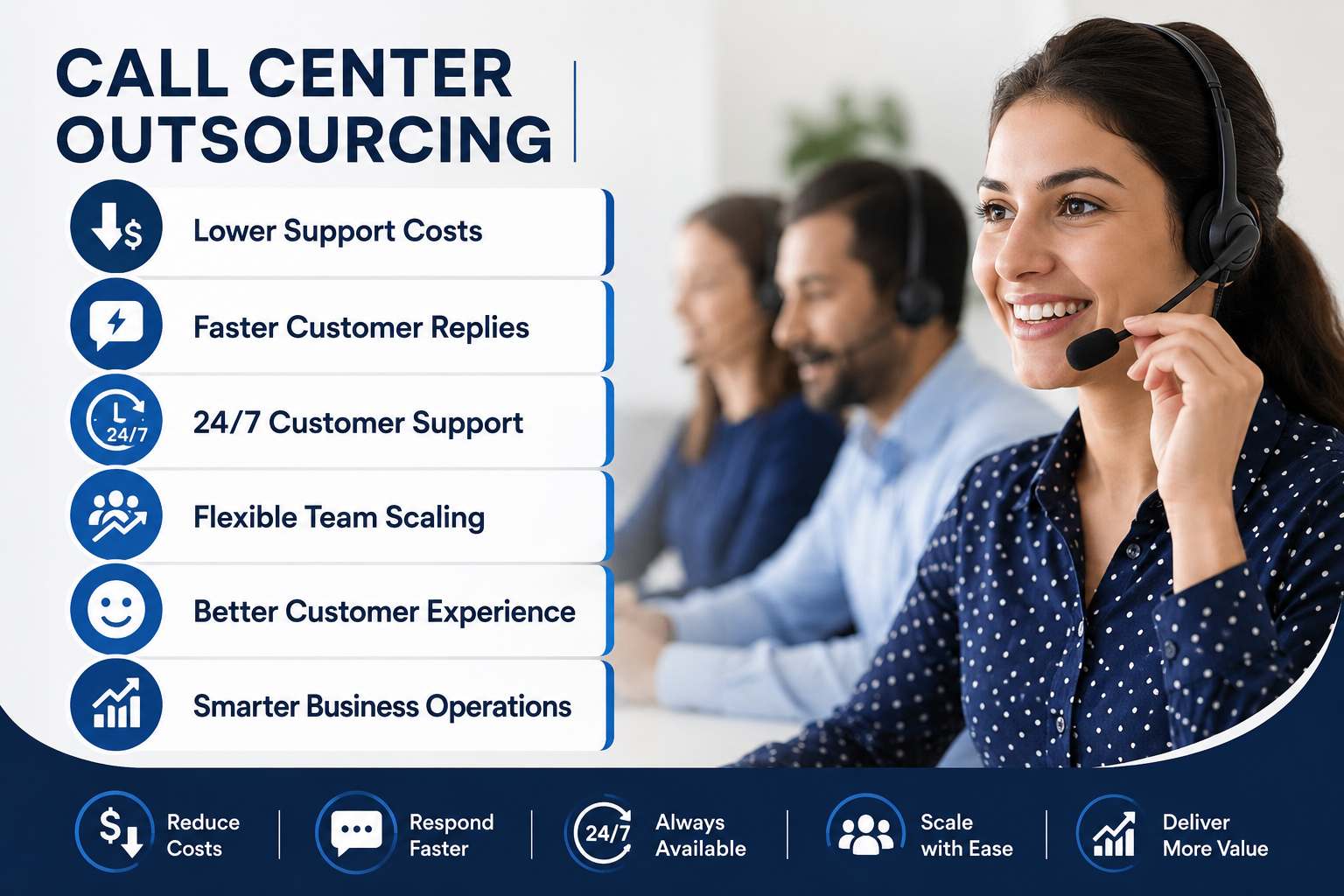
Some common reasons include:
- Reducing operational costs
- Faster response times
- 24/7 customer support
- Flexible team scaling
- Reduced hiring pressure
- Better multilingual support
Many businesses also use outsourced customer support services during seasonal spikes when customer requests suddenly increase.
For eCommerce brands especially, customer support outsource processes help maintain customer satisfaction during busy periods.
Types of Customer Support Outsourcing Services
Different customer support company providers offer different levels of service depending on business needs.
Inbound Support
Handles incoming customer calls, complaints, and questions.
Outbound Support
Used for sales calls, surveys, lead generation, and follow-ups.
Technical Support
Focused on troubleshooting and product-related assistance.
Omnichannel Support
Supports customers through calls, email, live chat, and social media together.
Dedicated Support Teams
Some customer service outsourcing company providers assign fully dedicated agents for specific brands.
This creates a more personalized customer experience.

The Real Cost of Outsourcing
Many businesses search for a cheap call center, hoping to save money quickly. Cost matters, but choosing only based on price can create bigger problems later.
Cheap support sometimes leads to:
- Poor communication
- Slow response times
- High agent turnover
- Weak training quality
- Customer frustration
A cheap call centre may reduce short-term expenses but increase long-term customer loss.
Good customer care outsourcing solutions balance affordability with quality.
Costs usually depend on:
- Number of agents
- Support channels
- Working hours
- Technical complexity
- Language requirements
- Dedicated or shared teams
When you outsource customer service for small business models, you can begin with just one or two agents before expanding gradually.
That flexibility helps smaller companies grow without large investments.
Benefits of Outsourced Customer Support
Customers need to simply feel heard and helped. That is the real strength of outsourced customer support.
Lower Operational Costs
Businesses avoid office expenses, recruitment costs, and infrastructure investments.
Faster Scaling
Customer demand changes quickly. Outsourcing teams can expand support operations faster than internal hiring.
Better Availability
Many call center support services offer round-the-clock support. Customers appreciate quick replies.
Focus on Core Business
When businesses outsource customer support services, internal teams gain more time for product development, marketing, and growth planning.
Access to Experienced Teams
Established customer support agency providers already understand customer communication workflows. That experience reduces mistakes.

Common Risks in Call Center Outsourcing
Outsourcing works well when managed properly. Without structure, problems appear quietly.
Communication Gaps
Different time zones or unclear instructions may create confusion.
Quality Control Issues
Not every customer service outsourcing solutions provider maintains consistent quality standards.
Data Security Concerns
Businesses handling sensitive customer information must choose secure partners carefully.
Brand Voice Problems
Some outsourced agents sound robotic or disconnected from the brand identity.
Proper training solves this issue.
Overdependence on Vendors
Relying entirely on one outsourcing customer care service provider without backup plans can create operational risk.
How to Choose the Right Outsourcing Partner
The best outsourcing partnerships usually begin with simple questions.
Ask:
- Do they understand your industry?
- Can they scale with growth?
- How do they train agents?
- What tools do they use?
- How do they measure quality?
A good customer service outsource provider should feel like an extension of your business, not like a disconnected external team. Always request trial periods or pilot projects before long-term agreements.
When you outsource customer service solutions, partnerships are built on communication, transparency, and realistic expectations.
Why Small Businesses Are Outsourcing Faster
Large companies once dominated outsourcing. Today, even startups outsource customer service for small business operations because customer expectations are rising too quickly.
Small businesses benefit from:
- Lower startup costs
- Faster customer response
- Flexible growth support
- Reduced internal pressure
Instead of hiring large internal teams immediately, businesses use customer support services to stay lean while still delivering professional customer experiences. This creates room for smarter growth.
Future Trends in Customer Service Outsourcing
AI tools now assist agents with responses, summaries, and ticket routing. Automation handles repetitive questions. Human agents focus more on emotional conversations and complex issues.
Modern customer care outsourcing service providers are combining AI support with human communication instead of replacing people completely.

- AI-assisted support
- Predictive customer service
- Hyper-personalized responses
- Omnichannel integration
- Faster automation workflows
But one thing will remain constant. Customers will still want fast and human conversations.
FAQs
1. What is customer service outsourcing?
Customer service outsourcing means hiring an external company to manage customer support tasks like calls, emails, chats, and technical support.
2. Why do companies outsource customer support?
Businesses outsource customer support to reduce costs, improve response times, and scale operations more efficiently.
3. Are cheap call center services reliable?
Some are reliable, but businesses should evaluate quality, training, and communication standards before choosing low-cost providers.
4. Can small businesses use outsourcing services?
Yes. Many companies outsource customer service for small business operations to save money and improve customer handling.
5. What are the risks of outsourced customer support?
Common risks include communication issues, inconsistent service quality, data security concerns, and weak brand alignment.
Conclusion
Customer support is no longer an unimportant department quietly answering phones in the background. It shapes customer trust, brand reputation, and long-term growth. One poor support experience can quietly close doors that marketing worked hard to open.
That is why businesses are paying closer attention to customer service outsourcing solutions. The right outsourcing partner answers tickets. In the process, they create smoother conversations, faster resolutions, and calmer operations behind the scenes.
Can Better Customer Support Quietly Change Business Growth?
Sometimes growth is not about louder marketing or larger teams. Sometimes it begins with faster replies, better conversations, and support systems that actually work when customers need them most. WOW Customer Support has helped many businesses turn visitors into customers.
Contact WOW Customer Support Call Center Services
Suggested Reads
-
- Explore call center BPO services that help growing businesses improve customer communication and operational efficiency.
- Learn how enterprise call center solutions support scalable business growth and customer engagement.
- Discover how AI-powered customer support agents are changing modern customer service experiences.
- Understand how predictive customer support improves customer satisfaction through smarter service systems.