

If you are part of the call center world, you will know that this is a place that is never still. It is amazing how sharper and sharper the pace gets with every passing day. Digital tools are multiplying. Customers are more vocal today, use many channels, and want faster responses. Thanks to globalization, there are no borders, and support teams now speak across time zones, screens, and channels. This changing rhythm defines the call center industry overview today.
Call centers revolved around phones and scripts earlier. Today, it leans on data, automation, and experience design. Businesses that notice these shifts are able to tide over them and survive longer. Those who ignore them fade quietly. This blog explores the latest and most important trends in call center industry operations. We focus on inbound services, technology, compliance, and customer expectations.
Table of Contents
The Importance Of Cloud-Based Call Center Solutions
Increasing Priority Of Data Security In Call Centers
Data Analytics In Call Center Solutions
Adoption Of Recall Technology In Call Centers
Social Media Management in Call Centers
Optimization Of Call Center Workforce
A Shift to Remote Working Environment
Implementation of Self-Service Tools In Call Centers
Customer Satisfaction Measurement
Frequently Asked Questions (FAQ)
The Importance Of Cloud-Based Call Center Solutions
Cloud systems are the most important of modern call center technology trends. Businesses are now opting for cloud-based call center solutions. This is mainly because they reduce infrastructure costs. They improve flexibility and deepen security when implemented correctly.
Cloud platforms also allow call centers to scale high without any disruption. Teams can add agents and integrate tools. They can manage peak volumes without physical limitations. This shift also supports call center design trends. Here, agility matters more than physical space.
Another major factor is automation. They use AI-powered systems to take care of repetitive queries. This allows agents to work on more emotional, complex conversations. Cloud-enabled remote work has led to a 77% increase in agent productivity compared with traditional office setups.
These contact center automation trends reduce workload while increasing service quality. As automation grows, managers spend less time firefighting and more time thinking about how to improve customer journeys.
Increasing Priority of Data Security in Call Centers
In today’s world, data is fragile and expensive to lose. Security now dominates call center compliance trends across industries. Customer information passes through multiple systems. There are CRM platforms, analytics tools, cloud storage, and more, and every touchpoint introduces risk.
Regulations around data protection are tightening globally. Compliance is no longer a legal checkbox. It is a trust signal. Strong contact center compliance trends focus on encryption, access controls, secure cloud environments, and internal accountability.
Businesses are not relying entirely on third-party tools. Instead, companies are now investing in secure internal systems. The goal is to protect both customer and operational data. Security today is silent. When done right, customers never notice it. When done wrong, everyone does.

Data Analytics in Call Center Solutions
Data analytics has moved from reports to immediate decisions being taken. It helps predict call volumes, identify bottlenecks, and measure agent performance. This trend sits at the heart of contact center technology trends.
Analytics combined with AI enables intelligent routing, personalized offers, and faster resolutions. Managers can see patterns before problems grow. Decisions feel sharper. There is less guessing and more precise knowledge.
This method decreases associated costs while improving customer satisfaction. It is no longer about collecting data but about using it to give better results.
Omnichannel Communication
Customers do not think in channels. They think in problems. Omnichannel communication allows them to move seamlessly between voice, chat, email, social media, and self-service without repetition.
This is one of the most visible trends call centre teams are adopting. Customers expect consistent speed and manner across every platform. A slow email response after a fast chatbot interaction feels broken.
Omnichannel systems also increase sales opportunities. Conversations do not end when calls do. They continue wherever the customer goes.
Adoption Of Recall Technology In Call Centers
Recall technology is quietly changing operations. Instead of forcing customers to wait on hold, systems schedule callbacks. This reduces frustration. It also improves efficiency.
For inbound call centers, recall tools help manage peak traffic without increasing staffing costs. This trend supports smooth workflows and happier agents. There is less pressure and fewer abandoned calls.

Social Media Management in Call Centers
Social media has become a frontline support channel. More than half of customers prefer interacting with brands through social platforms. Ignoring this space weakens visibility.
Managing social media conversations is now part of core call center design trends. Monitoring sentiment, responding quickly, and resolving issues publicly requires skill and coordination. The reward is trust and speed.
Optimization of Call Center Workforce
Workforce optimization balances cost, technology, and empathy. Automation handles volume, while humans handle meaning. This practice defines the modern new trends in call center industry thinking.
Customers still prefer voice for sensitive issues. They expect the same quality across channels. To meet this demand, businesses invest in training, personalization, and flexible staffing models.
Emerging tools even include immersive experiences and smarter scripting. The goal is simple. It is to make agents effective and make customers feel like they matter.
Shift to a Remote Working Environment
Remote work is no longer experimental. It is operational. Distributed teams reduce overhead costs and expand talent access. This shift is consistent with evolving call center technology trends and flexible staffing needs.
Some companies operate fully remote. Others mix office and home models. Both approaches demand strong digital infrastructure, secure systems, and clear communication standards.
Implementation of Self-Service Tools in Call Centers
Customers want control. Self-service tools give them the power to solve problems quickly. Knowledge bases, chatbots, and automated workflows reduce call volumes while boosting satisfaction.
These tools reflect rising contact center automation trends. When done right, they save time for both customers and agents. When done wrong, they push customers away. Balance is everything.
Customer Satisfaction Measurement
Measuring satisfaction now goes beyond surveys. Businesses track sentiment, behavior, resolution speed, and repeat interactions. Customer satisfaction influences brand loyalty, referrals, and revenue.

Frequently Asked Questions
1. What are the most important call center technology trends today?
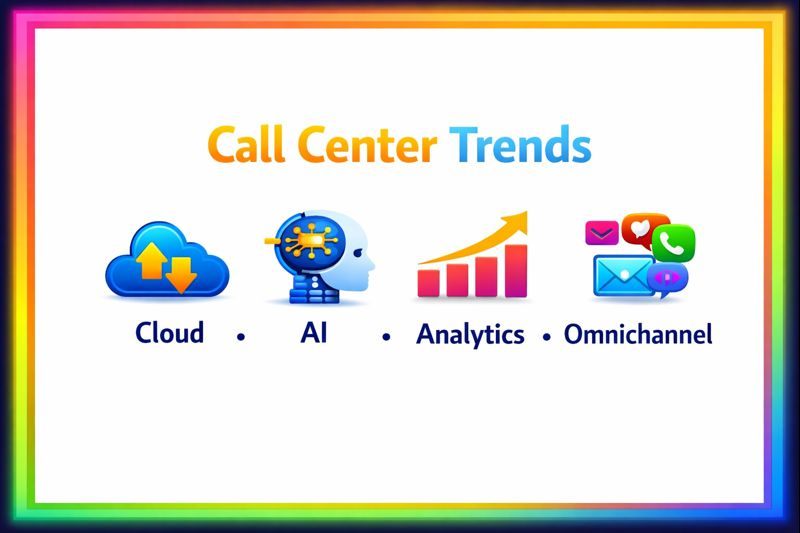
Cloud platforms, AI automation, analytics, and omnichannel communication lead adoption are the most important trends.
2. Why are call center compliance trends becoming stricter?
Data security laws and customer privacy demands are increasing globally, and hence, call center compliance trends are becoming stricter.
3. How does automation help contact centers?
It reduces repetitive tasks, lowers costs, and improves response speed.
4. Is remote work suitable for call centers?
Yes, with secure systems, proper training, and performance monitoring.
5. Why is omnichannel support critical now?
Customers anticipate smooth service across all platforms without repetition.
Conclusion
Call centers are no longer cost centers. They are experience engines. Customers judge brands by how they are treated when something goes wrong. As expectations rise, companies need to adjust to the trends call centre environments demand.
From automation to analytics, from security to remote work, the future belongs to call centers that listen closely and move quickly. The tools are ready. The customers are waiting.
Looking to stay ahead of evolving call center trends?
WOW Customer Support delivers reliable, secure, and scalable customer support solutions. We have a trained remote workforce and advanced technologies to help businesses save up to 60% while improving customer satisfaction.
Partner with WOW Customer Support.
Suggested Reads
https://www.wowcustomersupport.com/blog/automation-tools-making-call-centers-more-efficient/ - Explains automation tools that improve speed, accuracy, and efficiency
https://www.wowcustomersupport.com/blog/best-omnichannel-contact-center-softwares-2025/ - Reviews leading omnichannel platforms shaping future contact centers
https://www.wowcustomersupport.com/blog/affordable-call-center-services/ - Discusses cost-effective call center outsourcing models
https://www.wowcustomersupport.com/blog/ai-call-center-services-customer-experience/- Shows how AI improves customer experience in call centers