
Future Trends in Outbound Call Centers: The Impact of AI on Customer Outreach

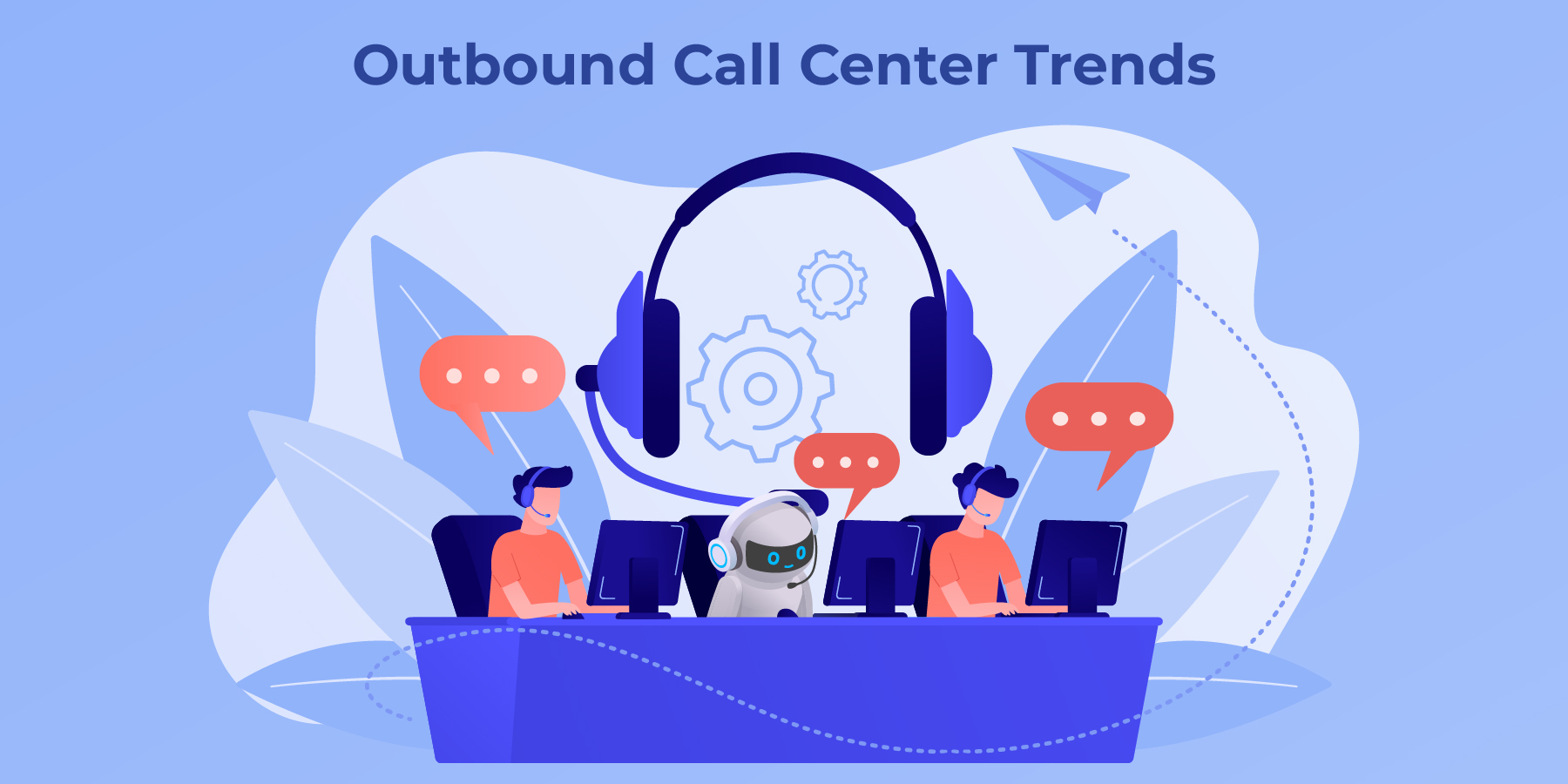
Outbound Call Center Trends

In today's rapidly evolving business landscape, outbound call center services are crucial for customer outreach, sales, and support. These centers constantly seek ways to enhance their operations and improve the customer experience. With the advent of artificial intelligence (AI), outbound contact centers are experiencing a significant transformation. This article explores the future trends in outbound call centers and examines the profound impact of AI on customer outreach.

As more businesses transition to an AI outbound call center model, they are able to streamline outbound campaigns while maintaining quality human engagement.

Evolution of Outbound Call Centers

Outbound contact centers have come a long way since their inception. Initially, they relied on manual dialing and scripted conversations. Over time, technological advancements enabled the automation of specific processes, such as predictive dialers. However, these traditional methods often lacked personalization and failed to deliver a seamless customer experience.

The rise of the AI outbound call center has eliminated many of these inefficiencies, allowing agents to engage in more strategic and personalized outreach.

Rise of AI in Customer Service

The integration of AI in outbound calling services has revolutionized customer service. AI technologies like chatbots and virtual assistants have become increasingly prevalent. These intelligent systems leverage natural language processing (NLP) to engage with customers in real-time, answering queries and assisting.

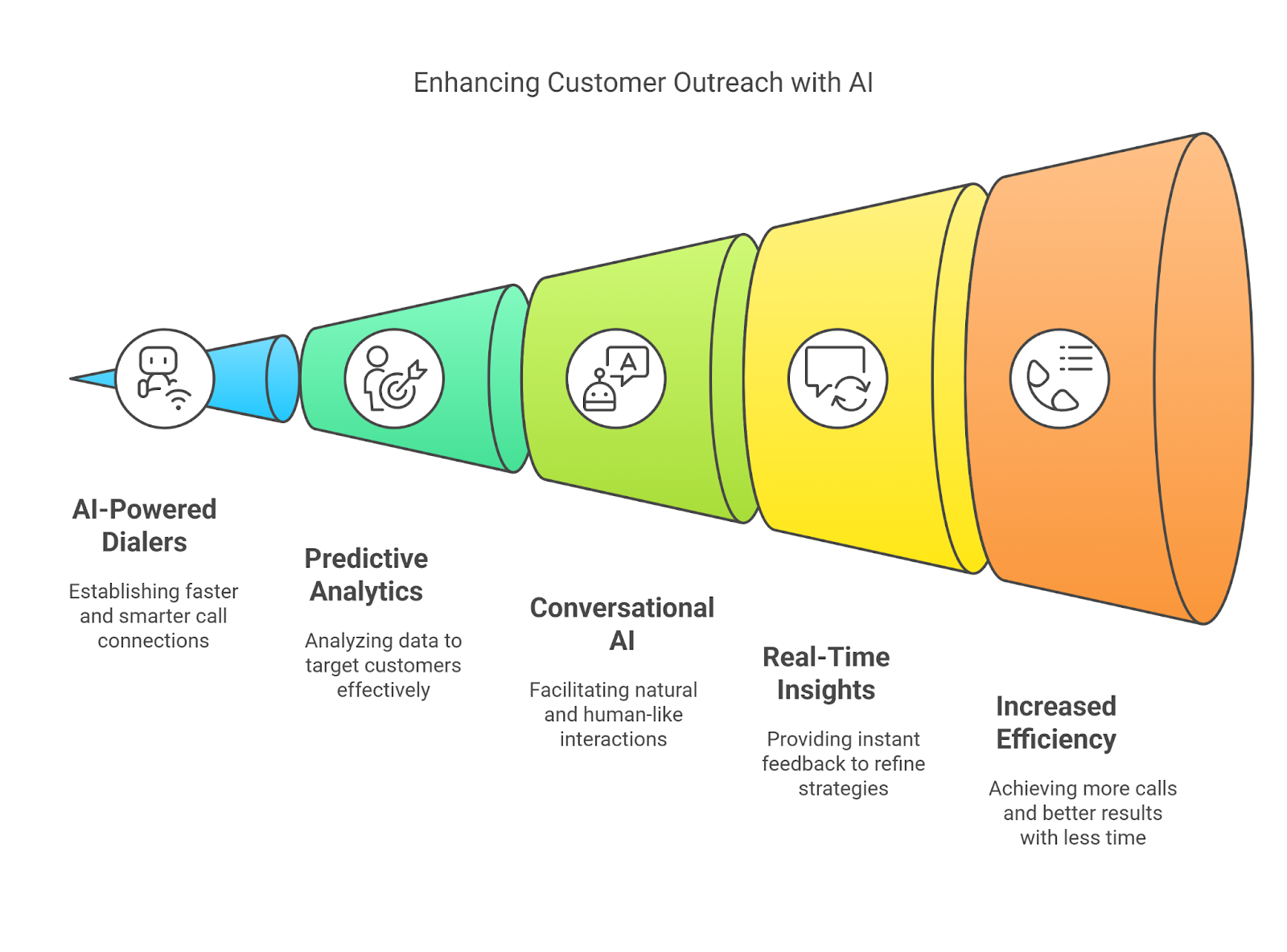
According to Harvard Professional & Executive Development, predictive analytics in AI allows companies to forecast customer needs and optimize workforce management, enhancing both efficiency and customer experience. This helps outbound call centers better anticipate customer needs and personalize interactions.

Chatbots and Virtual Assistants

Chatbots and virtual assistants are AI-powered tools that can handle many customer interactions. They can quickly address frequently asked questions, guide customers through simple processes, and even escalate complex issues to human agents when necessary. By leveraging AI, outbound contact center services can provide round-the-clock support and reduce customer wait times.

Incorporating virtual agents into an AI outbound call center model not only reduces overhead but improves response time across communication channels.

Natural Language Processing

Natural Language Processing is a core component of AI that enables machines to understand and interpret human language. Outbound call center services can use NLP to deliver personalized responses and recommendations by analyzing customer queries, sentiments, and context. This level of personalization creates a positive customer experience and fosters customer loyalty.

Speech Analytics

Speech analytics is another significant application of AI in outbound call center services. AI algorithms can extract valuable insights by analyzing customer calls, such as customer sentiment, tone, and intent. This data can then be used to identify training needs, monitor agent performance, and improve overall call center operations.

Benefits of AI in Outbound Contact Centers

The integration of AI in outbound call center services brings several benefits that positively impact customer outreach.
Enhanced Efficiency and Productivity

AI-powered automation streamlines repetitive tasks, allowing agents to focus on complex, high-value interactions. Outbound call center services can significantly improve operational efficiency and increase agent productivity by automating call routing, data entry, and lead qualification.

Companies adopting an AI outbound call center approach often report faster lead qualification and higher conversion rates.

Personalization and Customer Experience

AI technologies enable outbound call centers to deliver personalized experiences to each customer. AI algorithms can provide tailored recommendations and offers by analyzing customer data, purchase history, and preferences. This personal touch enhances customer satisfaction and increases the likelihood of successful sales conversions.

Improved Lead Generation and Sales Conversion

AI-powered analytics can identify patterns and trends in customer behavior, helping outbound call centers target customers with the right message at the right time. By leveraging predictive analytics, outbound call center services can identify potential leads and optimize their sales strategies. This data-driven approach improves lead generation and increases sales conversion rates.

Challenges and Considerations

While AI brings significant benefits, there are challenges and considerations to address.

Data Privacy and Security

As AI systems rely on customer data for analysis and personalization, ensuring data privacy and security is crucial. Outbound call centers must adhere to strict regulations and implement robust security measures to protect customer information.

Human Touch and Emotional Intelligence

While AI can automate many tasks, it cannot completely replace the human touch. Emotional intelligence, empathy, and understanding are essential to effective customer interactions. Striking the right balance between AI and human interaction is vital to exceptional customer service.

The future of the AI outbound call center lies in blending smart automation with emotionally intelligent human support.

Integration and Adoption

Implementing AI technologies requires careful planning and seamless integration with existing systems. Outbound calling services must consider factors like staff training, data integration, and change management to ensure a smooth transition and successful adoption of AI.

The future of outbound call centers holds exciting possibilities as AI advances.

AI-Powered Predictive Analytics

AI-powered predictive analytics will be crucial for outbound calling services. AI algorithms can accurately predict customer behavior and optimize outreach strategies by analyzing vast amounts of customer data. This proactive approach helps outbound contact centers stay ahead of customer needs and deliver personalized experiences.

Voice Recognition and Sentiment Analysis

Advancements in voice recognition and sentiment analysis technology enable outbound call centers to extract valuable insights from customer conversations. By analyzing tone, emotions, and sentiment, AI can identify customer satisfaction levels, detect potential issues, and provide real-time feedback to agents for continuous improvement.

Omni-channel Integration

Omni-channel integration allows customers to interact with outbound call center services seamlessly across various channels, such as phone, email, chat, and social media. AI-powered systems can ensure consistent and personalized experiences across these channels, enabling customers to switch between them without disruption.

Conclusion

AI has become a game-changer in the realm of outbound calling services. Its integration has paved the way for enhanced efficiency, personalized customer experiences, and improved sales outcomes. However, outbound call centers must address data privacy, human touch, and successful integration challenges.

As more businesses seek agility and scale, the demand for a hybrid AI outbound call center will only grow—blending smart automation with personalized human service.

By embracing future trends like AI-powered predictive analytics, voice recognition, and omnichannel integration, outbound call center services can continue to evolve and provide exceptional customer outreach.

Looking for the best outbound call center company? We at Wow Customer Support know that keeping existing customers will be much less expensive for your company than finding new ones. We go above and beyond to ensure that each of your customers has a satisfying experience with your company. Contact us today to learn more!
Customer Support Experience in 2030: A Look into the Future

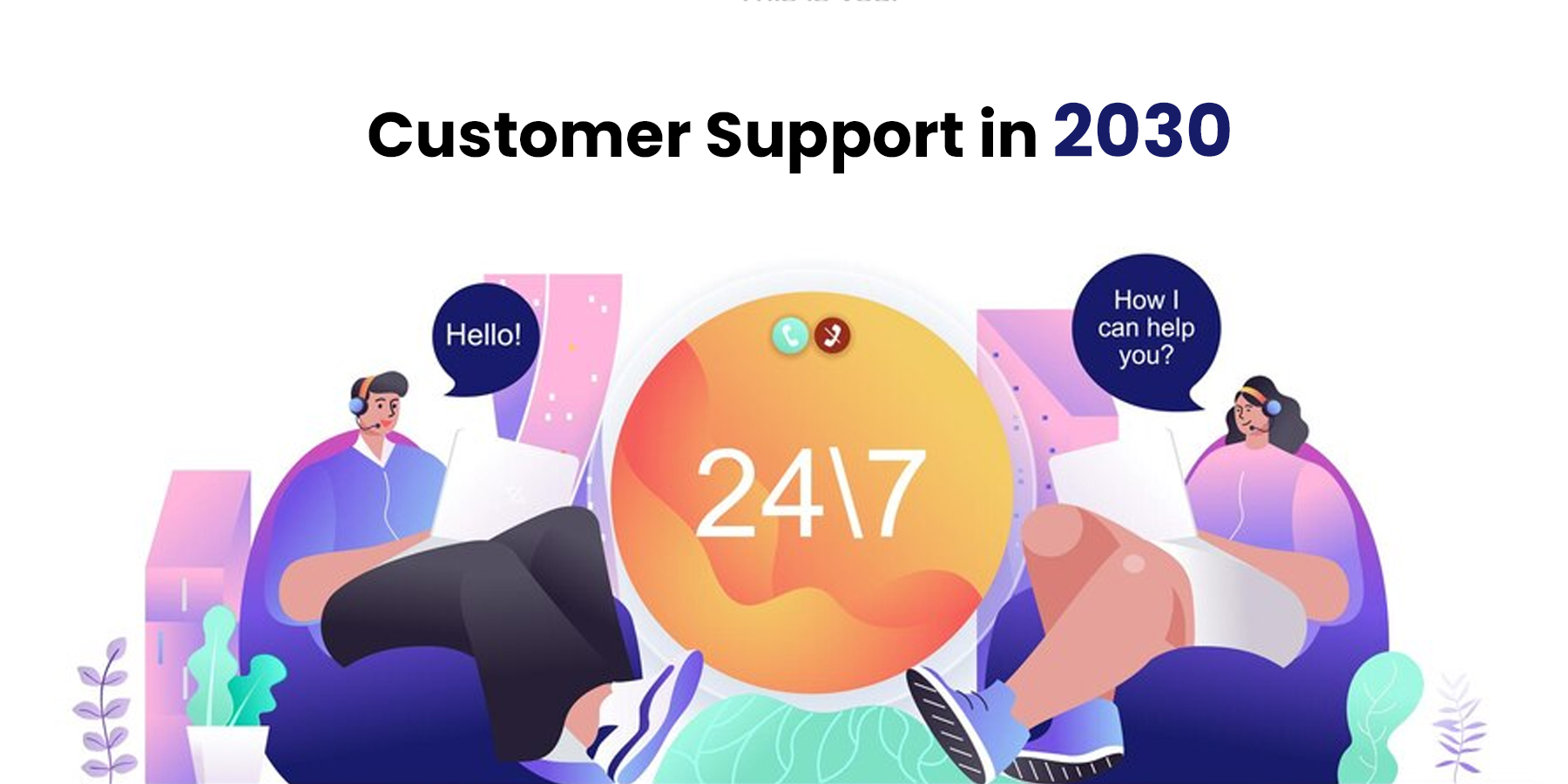
Customer Support in 2030

Table of Contents

Customer Experience In 2030 Will Have Various Important Components, Including:

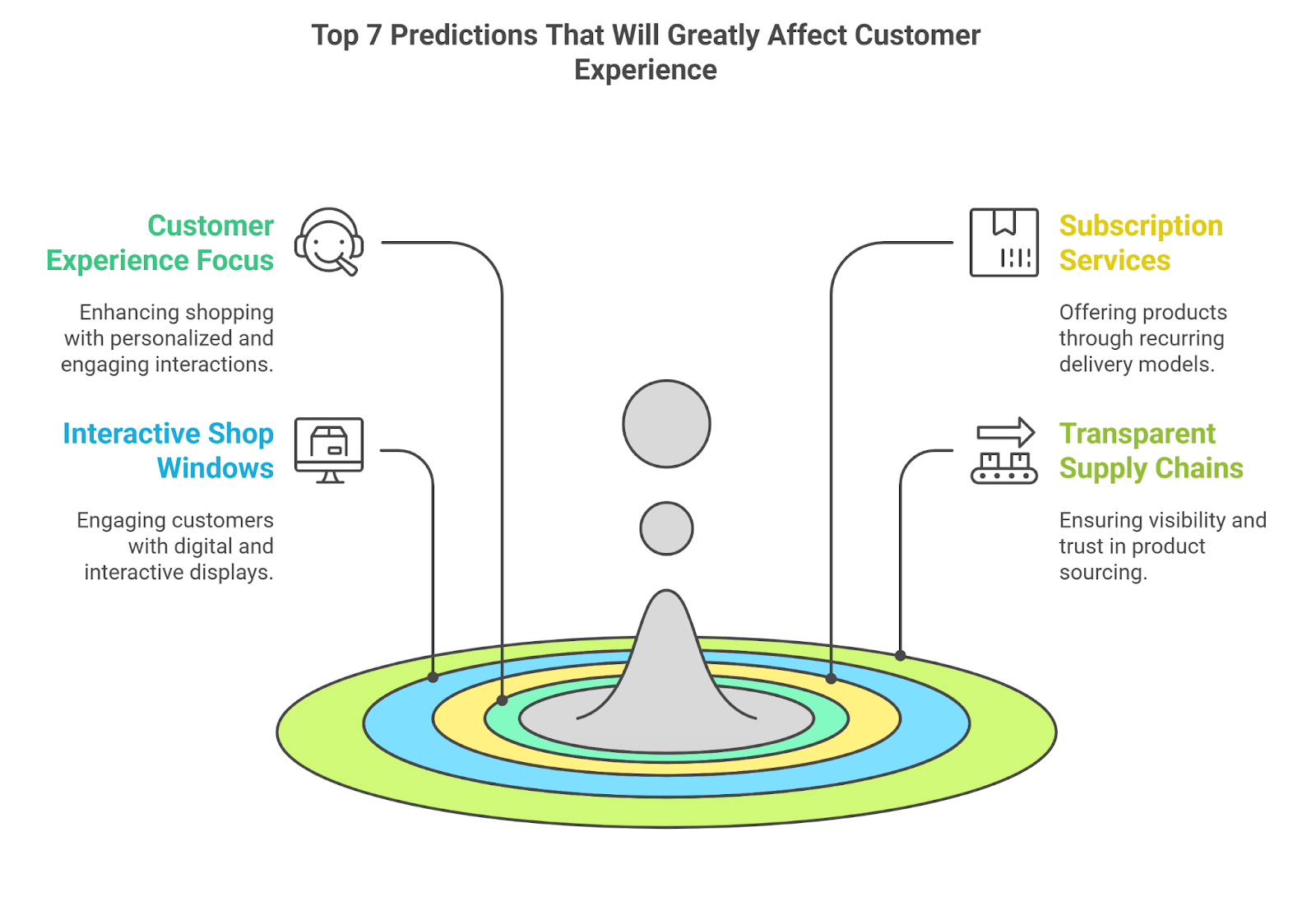
Top 7 Predictions That Will Greatly Affect Customer Experience

1. Shopping Will Focus on Customer Experience

2. Purchase Growth Will Affect The Customer Experience

3. The Customer Experience Will Be Much Lighter

4. Products Will Be Offered As Subscription Services

5. Businesses Must Understand How Their Customers Feel

6. Interactive Shop Windows Are Going to Explode

7. Transparent Supply Chains

Final Thoughts

We have all experienced customer service call centers at some point in our life: from asking for help to resolving a problem or getting advice. But how will the customer service experience evolve in the next decade?

The future of customer service 2030 is expected to be driven by a powerful mix of AI, emotional intelligence, and human interaction.

In recent years, there has been a shift from traditional phone and email customer support to interacting with virtual agents and bots on digital channels. Automation and AI are becoming increasingly important in many modern industries, including call center solutions. In 2030, we expect even more changes that could drastically alter our customer service experience.

When we talk about the future of customer service 2030, we’re referring to a complete transformation in how brands deliver support—faster, smarter, and more emotionally aware.

So what will the experience of a call center solution look like in 10 years? Will it be a completely automated process, or will human interaction still play a role? This article will explore how customer service experiences may change by 2030 and how businesses can prepare for these shifts.

Customer Experience In 2030 Will Have Various Important Components, Including:

  • Customers' demands for the flexibility to purchase from brands regardless of the channel will make omnichannel the dominant model, emphasizing the value of seamless customer involvement.
  • Omnichannel strategies will be at the heart of the future of customer service 2030, empowering customers to switch devices and platforms effortlessly.
  • Brands will stand out thanks to 3D; this technology is here to stay, from 3D printers to 3D advertisements.
  • Due to consumer environmental concerns and demands that companies do their part, sustainability in business and the circular economy will grow.
  • Businesses will need to offer services and subscriptions to extend.
  • From neuromarketing to understanding client demands to artificial intelligence, we anticipate emotional intelligence to increase significantly and become a key component of brands.
  • Digital and physical shops will change, becoming more individualized and incorporating AI into the final product.
  • Consumers will be more concerned with where their goods are from to support their desire to spend money with businesses that demonstrate purpose. Therefore supply chains will need to be open and ethical.
  • Refrain from assuming you can pass a client off to a delivery service any longer; if something doesn't arrive when expected, that IS your fault. Delivery must deliver.

Top 7 Predictions That Will Greatly Affect Customer Experience

1. Shopping Will Focus on Customer Experience

In 2030, e-commerce and e-shopping will be commonplace.

As a result, physical stores will retain their value, but they won't look like they do now while this post is written. The conventional department stores will have been mainly supplanted by "retail spaces," much of which will be outdoors.

This is due to several factors, including rising building costs and the requirement for considerably greater flexibility than bricks can provide. The focus of the outdoor stores will be mostly on providing a customer experience rather than merely making sales.

Additionally, the social component will be the main focus. And when it rains, cutting-edge technology will swiftly cover the store.

2. Purchase Growth Will Affect The Customer Experience

Customers want to be able to purchase items whenever, wherever, and however, they like. By 2030, the dangers of maintaining stock will have grown even more. The response? 'On demand' goods are created using industrial 3D printers. These printers can be found in stores rather than in industrial locations. The consumer immediately observes while taking the completely "customized" merchandise home.

3. The Customer Experience Will Be Much Lighter

Through 2030, concerns about the environment will grow significantly, including those of customers who will continue to choose circular goods and services overwhelmingly. This will result in a dramatic increase in the number of shared concepts.

There will be a sharing or "as-a-service" approach for everything, including clothing, vehicles, tools, and living space.

There will have been a change in value for small-scale and local goods due to the rise in environmental and health consciousness. Locally made crafts will be highly prized. Local communities will gain from this, and the planet will value the behavior change.

The logistics management process will be much easier and less demanding. The offer will be closely tailored to regional preferences and customs due to extensive data collection and behavioral analysis.

4. Products Will Be Offered As Subscription Services

By 2030, almost every good you can buy today will be offered as a service.

Take a lawnmower, for instance. The item itself has little worth. However, a need underlies the product: customers want to have a regularly maintained lawn. The growth of businesses like Uber and Snappcar illustrates this trend.

The focus is on getting from A to B, not owning a car. Going back to the lawnmower, Amazon recognized this trend in 2015. Back then, customers could already rent goats for lawn maintenance.

Subscriptions will also become crucial for brands as the customer experience in 2030 increasingly emphasizes ease and simplicity.

5. Businesses Must Understand How Their Customers Feel

By 2030, 80% of all customer interactions will be handled by artificial intelligence, according to Gartner's predictions. These AI systems will be able to detect the customer's mood in addition to their specific preferences. The system will adjust to a customer's emotions based on whether they are happy, sad, or angry.

Brands use AI systems in physical and online stores because they can identify emotions through voice, language, and facial expression.

All scenarios involving AI-mediated customer service experience may benefit from the technology.

That connection will be strengthened by an AI system that understands and anticipates emotions. Customers feel more understood and have the impression that "the system" shares their thoughts.

Emotional recognition not only lowers the chance that a disgruntled customer will completely abandon a brand, but it also opens up new opportunities for up-selling. After all, a happy or satisfied customer is more likely to make another purchase, whereas an angry customer will likely perceive this sales technique as being pushier.

However, emotional recognition is necessary to maintain the importance and necessity of human contact with the customer.

However sophisticated AI may be, it cannot replace the kindness and compassion of people. People will always prefer working with people when dealing with some issues. (Use technology when practical, humans when necessary.)

6. Interactive Shop Windows Are Going to Explode

Only some stores are open around-the-clock, which will stay the same in 2030. Even so, Sunday and the evening hours on the high streets will be much less dull than they are now.

Interactive screens will be installed in storefront windows with constantly changing content. The information displayed will be adjusted for the time, weather, and even the person in front of the shop window. Visitors can use their smartphones to place immediate orders for the displayed items. A QR code will also give them quick access to more product details.

Holograms, virtual reality, and haptic feedback gloves will allow customers to try out and experience custom-made products before making a purchase, transforming physical stores into showrooms and "experience centers."

Robots in the store will offer assistance, counsel, and directions, giving store employees more time to provide a better customer experience and more specialized service to customers.

7. Transparent Supply Chains

In 2030, suppliers and manufacturers will be giving out much information about supply chains and sourcing. It will also be a significant competitive factor.

Spreading false information will be useless because fraudsters will be exposed at a record-breaking pace due to the blockchain. The identical blockchain will also increase chain transparency to new heights. This abundance of information will result in a sharp decline in returns, saving money.

Final Thoughts

As we approach 2030, it's becoming increasingly clear that the customer support landscape is set to undergo significant changes. With advances in technology, increasing customer service call center expectations, and the rise of new communication channels, businesses will need to adapt quickly if they hope to stay competitive.

Preparing for the future of customer service 2030 means investing in tech, training, and trust. Brands that evolve early will lead the next decade of support.

Are you looking for the best call center solution provider? Wow customer support is here for you! We are committed to offering our clients an excellent omnichannel customer service experience while maintaining the privacy and security of their personal and financial data.

If you have questions about this blog, don't hesitate to reach out! Drop your comments down below, and we'll gladly get back to you!

How Email Support Outsourcing Services Can Improve Your Customer Retention Rate

Email Customer Support

When I first began working with eCommerce and service-based companies, I didn't realize the power of email support. It just seemed like another channel—plain, passive, and easily overlooked in favor of live chat or phone. But I've come to learn something critical: email support is where long-term customer relationships are created or destroyed.

Customers don't always write in when everything is going right. They contact us when they're frustrated, confused, or waiting for a response. And how we reply—how quickly, how precisely, and how politely—makes all the difference. That's why many companies today opt to outsource email support, not only to save time, but to enhance their customer retention rates.

In this blog, I'll take you through exactly how email support outsourcing services can assist you in keeping more customers, enhancing loyalty, and scaling sustainably. We'll also discuss where AI-based email support solutions can assist (and where they can't).

Table of Contents

Why Email Support Plays a Huge Role in Customer Retention

The Problem With Handling Email Support In-House

How Email Support Outsourcing Services Improve Retention

The Role of AI in Email Support—And Why It’s Not Enough Alone

Case Study: How Email Support Turned Around Customer Retention for a Subscription Brand

Key Features to Look for in Email Support Outsourcing Services

Frequently Asked Questions (FAQs)

Key Takeaways

Why Email Support Plays a Huge Role in Customer Retention

When we speak of retention, we think of loyalty programs, one-to-one marketing, or onboarding. But great support is the key. In a report by HubSpot, 93% of customers are likely to remain loyal to a business that provides great customer service.

Now, why email?

Because it's:

  • Private and detailed
  • Easy for customers to refer to later
  • Available 24/7
  • Less stressful than live chat for sensitive topics

But in order for email to drive retention, the answer has to be:

  • Quick
  • Personal
  • Simple
  • Problem-solving, not templated

This is where email support services excel—particularly when you outsource them to a talented team that's been trained to deal with volume and subtlety.

The Problem With Handling Email Support In-House

I’ve seen it happen many times: a business grows fast, and email tickets pile up. The team gets overwhelmed. Responses are delayed. A customer who waited two days for a shipping update suddenly becomes a lost sale—and probably leaves a negative review.

Common in-house issues include:

  • Slow response times due to limited staffing
  • Inconsistent tone or branding
  • Missed follow-ups
  • Poor prioritization (urgent issues buried in general inquiries)

And let’s be honest—most business owners and managers are juggling too many responsibilities already. Email often becomes the "we’ll handle it later" task.

That’s why more companies are turning to outsourced email support—not just to clear the inbox, but to keep customers happy and coming back.

How Email Support Outsourcing Services Improve Retention

Let’s dive into the core of this blog: how outsourced email support boosts retention rates.

Faster Response Time = Smiling Customers

Outsourcing vendors work with dedicated agents and shift coverage, usually providing 24/7 or near real-time responses. Customers anticipate email replies in 6 hours, as Forrester reports, yet most companies take more than 24. Speed counts.

Consistency and Professionalism

An outsourced team is taught to employ brand voice, script when necessary, and escalate properly. This establishes trust. A fractured tone or inappropriate response from an untrained person can destroy that trust quickly.

Proactive Follow-Ups

Retention isn't fixing the problem—it's following up once it's fixed. Outsourced teams tend to utilize ticketing systems that mark pending resolutions, so no customer ever feels ignored.

Multilingual Support

If your platform or store has customers all over the world, customer service email outsourcing allows you to support customers in various languages—a feat difficult to accomplish in-house.

Detailed Documentation

Each email is logged, labeled, and sorted. You can use this to find repetitive issues, make better products, and provide increased long-term value to customers.

The Role of AI in Email Support—And Why It’s Not Enough Alone

We can't discuss support today without mentioning AI-powered email support. From automated email customer service to smart replies, AI solutions assist teams in responding quickly and minimizing manual effort.

What AI solutions can do:

  • Sort and tag tickets by priority
  • Generate draft responses based on keywords
  • Detect sentiment (frustrated vs. neutral vs. happy)
  • Trigger canned responses for FAQs
  • Assist agents with response suggestions

Popular software such as Zendesk, Freshdesk, and Gorgias employs AI-driven email customer service capabilities to assist in streamlining workflow.

But here's what AI isn't good at:

  • Reading between the lines of complicated or emotional questions
  • Solving subtle product problems
  • Providing empathy and context
  • Changing tone according to customer mood

That's why we employ AI-enhanced email support services as a tool—not a substitute. The best outcome is achieved when AI is incorporated into human-driven support—particularly in a retention-driven model.

Case Study: How Email Support Turned Around Customer Retention for a Subscription Brand

We had one client, a DTC wellness brand, which was facing a steady drop in customer retention. Their support mailbox was deluged, with an average response time of around 30 hours. Refunds were on the rise, and churn was becoming increasingly problematic.

They hired us to outsource email support to our trained workforce.

What we did

  • Employed 3 dedicated email support staff working shifts
  • Implemented automated ticket tagging and escalation workflows via AI tools
  • Redrafted support templates to be more empathetic and brand-friendly
  • Implemented 24-hour follow-ups on subscription-related questions

Results within 90 days:

  • Response time fell to below 6 hours
  • Customer churn fell by 18%
  • NPS scores increased from 38 to 61
  • Had fewer refund requests due to proactive, friendly responses

This client now recognizes their email support as a central component of their retention strategy, rather than a back-office function. We provide this same level of service to brands in eCommerce and services.

Key Features to Look for in Email Support Outsourcing Services

Not all outsourced providers are created equal. Here's what I always suggest you look for:

  • Agents with training in your niche or industry
  • Shift coverage that aligns with your busiest times
  • Tools or workflows involving AI-driven email support outsourcing
  • Integration with ticket systems (such as HelpScout, Gorgias, Zendesk)
  • Performance reporting and quality assurance
  • Protocol for escalated high-risk or difficult issues

The aim is to ensure that email support services should be indistinguishable from members of your own team—not an isolated third party.

Frequently Asked Questions (FAQs)

1. How do I know if it’s time to outsource email support?

If your team is overwhelmed, your response time is slow, or you’re losing customers due to poor support, outsourcing can help you scale and regain control.

2. Will customers know the support is outsourced?

Not if done right. Agents are trained to use your brand voice, and the experience feels seamless.

3. Can outsourced teams use our existing tools?

Yes. Most email support outsourcing services work inside your current helpdesk tools for easy integration and reporting.

Key Takeaways

In summarizing our investigation on how email support outsourcing services enhance your customer retention rate, it's certain that timely, professional, and consistent email support is crucial in today's customer-centric culture. Below are three key takeaways:

  • Respond With Speed: Outsourced email support enables your brand to deliver customer expectations of quick, 24/7 service, directly influencing satisfaction and loyalty.
  • Stay Consistent and Human: Trained agents provide empathetic, brand-relevant responses that establish trust over time and avoid churn.
  • Balance AI With Human Support: Although AI-driven email response systems increase productivity, long-term retention results from valuable human interactions.

We've discussed how strategic email support outsourcing enhances retention and safeguards your brand reputation. If you'd like to continue the discussion or learn how we help growing businesses, leave a comment or contact us.

For additional tips and customer service trends, connect with us on Facebook, and LinkedIn. Let's construct support that brings your customers back.

Can AI Analyze Customer Sentiments Accurately Enough to Predict Satisfaction?

ai driven

Customer satisfaction is the top priority in today's competitive business scenario. But wouldn't it be great if we could gauge customer satisfaction levels even before they complain about it? Step forward AI-driven sentiment analysis, a groundbreaking technology that's changing the game for businesses when it comes to interacting with customers. With AI solutions such as MonkeyLearn and Lexalytics, businesses can capture customer reviews, complaints, and social media posts, predict satisfaction levels, and take preemptive measures. But can AI really analyze sentiments accurately? Can it forecast satisfaction levels with sufficient accuracy to enhance customer support?

Let's explore how AI-based sentiment analysis is revolutionizing customer support and how companies can use these technologies to improve their customer experience.

Table of Contents

How Does AI-Powered Sentiment Analysis Help Predict Customer Satisfaction Levels?

What Are the Benefits of Using AI for Customer Sentiment Analysis in Improving Customer Service?

How Does AI Sentiment Analysis Work to Analyze Customer Reviews and Feedback?

What Is the Best AI Tool for Customer Sentiment Analysis to Predict Satisfaction Accurately?

How Can AI for Customer Support Improve Customer Experience Through Sentiment Analysis?

How Do AI-Powered Sentiment Analysis Tools Like MonkeyLearn and Lexalytics Help Businesses?

What Are the Key Features of AI Sentiment Analysis Tools for Customer Experience Analysis?

How Does Customer Sentiment Analysis with AI Help Businesses Personalize Their Services?

Can AI for Customer Service Predict Customer Dissatisfaction Before It Happens?

How Do Businesses Integrate Sentiment AI into Their Customer Support Systems to Boost Satisfaction?

Frequently Asked Questions (FAQs)

Key Takeaways

How Does AI-Powered Sentiment Analysis Help Predict Customer Satisfaction Levels?

AI-driven sentiment analysis applies natural language processing (NLP) and machine learning algorithms to comprehend and analyze customer feedback. It examines the words used in reviews, social media, and even emails to identify whether the sentiment expressed in the text is positive, negative, or neutral.

For instance, a company can input customer feedback regarding their product or service into an AI sentiment analysis software. The software will categorize these feedback according to the sentiment conveyed, and the company can determine patterns of customer satisfaction. Analyzing a high number of customer interactions in real-time, AI can provide companies with a clear understanding of their customers' moods.

As per a Gartner report, 77% of businesses are using AI to enhance customer experience and engagement. Sentiment analysis through AI enables businesses to better forecast the level of customer satisfaction by applying these insights to identify areas of improvement. If a customer complains about a product problem, the AI can raise a red flag before it turns into a complaint, enabling businesses to avoid negative reviews and enhance customer relationships.

What Are the Benefits of Using AI for Customer Sentiment Analysis in Improving Customer Service?

There are a number of advantages of using AI for customer sentiment analysis, particularly in customer service. The main advantages are:

  1. Proactive Customer Care: AI detects early warning signals of dissatisfaction to avoid escalation issues from customers. For instance, if a product has been cited as being not satisfactory by the customer in his review, then AI can notify the support staff to follow up, thus averting possible churn.
  2. Improved Personalization: Through the analysis of customer sentiment, companies can tailor their service to customers' needs. AI software can scan previous interactions and adjust the response accordingly so that customers are made to feel important and heard.
  3. Cost Savings: AI-based sentiment analysis eliminates the requirement for manual review of every customer interaction. Businesses can instead count on automation to categorize feedback and flag high-value or urgent issues.
  4. Actionable Insights: AI can pull actionable insights from vast amounts of data. It can assist companies in identifying repeat issues, customer tastes, and opportunities for product or service enhancement.

How Does AI Sentiment Analysis Work to Analyze Customer Reviews and Feedback?

AI sentiment analysis operates by evaluating the language and contextual components of customer opinions. Here's how it tends to work:

  • Text Preprocessing: The machine learning model first preprocesses the text, removing noise such as stopwords, punctuation, and irrelevant characters.
  • Sentiment Detection: The machine learning model then detects the sentiment in the text, which may be positive, negative, or neutral.
  • Contextual Understanding: Advanced AI tools consider context as well, differentiating between sarcasm or irony and true customer sentiment.
  • Categorization: Finally, the AI organizes sentiment data into categories, allowing businesses to easily identify trends (e.g., customer complaints about a specific feature or product).

This allows companies to quickly sort through thousands of customer reviews and feedback to make data-driven decisions without manually reading each comment.

What Is the Best AI Tool for Customer Sentiment Analysis to Predict Satisfaction Accurately?

The best AI tools for customer sentiment analysis often come down to the platform’s accuracy, speed, and ability to integrate with existing customer service systems. Two of the most popular tools are MonkeyLearn and Lexalytics, both known for their robust sentiment analysis capabilities.

  • MonkeyLearn: This AI tool is perfect for businesses that want to analyze customer reviews, social media comments, and survey data. Its machine learning models are super adaptable, making it possible for businesses to train the model to recognize specific customer sentiments related to their brand.
  • Lexalytics: It is popular for its high-end AI sentiment analysis capabilities, and Lexalytics employs natural language processing to categorize and analyze customer sentiments in real time. It's particularly well-suited for large companies that require rapid analysis of large volumes of customer data.

These AI applications are great at assisting companies in anticipating customer satisfaction levels through data-driven actionable insights.

How Can AI for Customer Support Improve Customer Experience Through Sentiment Analysis?

AI sentiment analysis is critical to enhancing customer experience (CX) since it allows companies to know how their customers feel in real time. Through automated sentiment analysis, companies can respond more efficiently to customers' issues, leading to enhanced satisfaction levels.

For instance, an AI-based sentiment analysis tool could identify frustration in a customer's interaction on a support ticket or chat. Rather than having the issue go unresolved, the tool can initiate an automatic notification to escalate the query to a superior level of support, with faster resolution.

By capturing customer sentiment, companies can respond to complaints before they turn into issues, enhancing overall customer satisfaction. Moreover, the AI solution can advise on improved responses or flag up positive interactions, giving insight into what is going right.

How Do AI-Powered Sentiment Analysis Tools Like MonkeyLearn and Lexalytics Help Businesses?

AI-based sentiment analysis software such as MonkeyLearn and Lexalytics offer companies actionable insights that can be utilized to enhance customer interactions. These tools enable companies to:

  • Automate Customer Feedback Analysis: Rather than taking hours to manually review customer feedback, these AI tools can scan large amounts of data within seconds, classifying sentiments as positive, negative, or neutral.
  • Detect Emerging Trends: Through continuous monitoring of new information, these tools enable companies to identify emerging trends, complaints, or wishful thinking before they turn into common issues.
  • Optimize Marketing and Sales: AI-based tools can also assist companies in optimizing their marketing efforts based on customer preferences and emotions, leading to enhanced conversion rates.

Integrating sentiment analysis into customer support platforms enables companies to be more proactive in responding to customer satisfaction.

What Are the Key Features of AI Sentiment Analysis Tools for Customer Experience Analysis?

AI sentiment analysis software is equipped with a range of characteristics intended to advance customer experience analysis. Some of the main features include:

  • Real-Time Sentiment Recognition: AI software reads customer interactions as they occur, offering companies immediate insights into what customers are feeling.
  • Contextual Perception: High-end AI algorithms can interpret the context of customer interactions, making the difference between true sentiment and sarcasm.
  • Customizable Sentiment Models: A few tools enable businesses to customize sentiment analysis for their industry or business requirements, providing a more precise outcome.
  • Multilingual Support: A lot of AI sentiment analysis tools are multilingual, allowing businesses to analyze the sentiment of a global customer base.

How Does Customer Sentiment Analysis with AI Help Businesses Personalize Their Services?

Customer sentiment analysis using AI gives companies useful information that can be utilized to customize services. Through knowledge of customers' emotional reactions and likes, companies can customize their services to suit individual requirements.

For instance, AI technologies can examine customer interactions and identify what products or services they are most keen on. This data can be utilized to tailor marketing campaigns, suggest products, or build customized customer experiences that seem more individualized.

Can AI for Customer Service Predict Customer Dissatisfaction Before It Happens?

Yes, AI for customer service can predict customer dissatisfaction before it happens. By analyzing patterns in customer sentiment, AI can identify early warning signs of frustration or dissatisfaction.

For instance, if there are several complaints regarding a product feature or service problem, AI can notify the customer support team before the issue gets out of hand. This enables companies to proactively address the issue, avoiding negative reviews and enhancing customer satisfaction.

How Do Businesses Integrate Sentiment AI into Their Customer Support Systems to Boost Satisfaction?

Incorporating sentiment AI in customer support means applying the AI tool to analyze customer interactions automatically and rank them according to sentiment. Companies can then utilize this information to send more critical issues to upper-level support and also give customized responses that are attuned to the emotional tone of the customer.

AI sentiment analysis can be incorporated into CRM systems as well, enabling companies to monitor customer satisfaction over time and react accordingly.

Frequently Asked Questions (FAQs)

1. What is sentiment analysis, and how does it work?

Sentiment analysis is the activity of utilizing AI to analyze and interpret the emotional tone of customer feedback, reviews, and interactions. It allows companies to see how customers feel and, therefore, to enhance customer service and satisfaction.

2. How accurate is AI-powered sentiment analysis?

AI-powered sentiment analysis is highly accurate, especially with advanced tools like MonkeyLearn and Lexalytics. These tools continuously improve as they learn from more data, ensuring increasingly precise insights into customer emotions.

Key Takeaways

To wrap up our discussion on AI-powered sentiment analysis for predicting customer satisfaction, here are the three key points:

  • Proactive Solutions: AI helps businesses predict and address customer dissatisfaction before it escalates.
  • Personalized Service: AI solutions allow companies to personalize their response according to customer sentiment, enhancing service quality.
  • Efficiency Boost: Sentiment analysis automation saves companies time and money while making customers' lives easier.

These key takeaways show how AI can be an incredible weapon for companies to enhance customer support and satisfaction. For more insights, join us on Facebook and LinkedIn!

Affordable Call Center Services That Improve Response Times & Customer Satisfaction

Call Center Services

Having a business, either small or big, involves multitasking. As your business expands, handling customer calls in an efficient manner is something you would struggle with. And that's where call center outsourcing can save the day when you don't want to spend a fortune yet deliver incredible customer service. I'll explain in this blog why cheap call center services are what you need to ensure response times are faster and customers are happier at a lower cost.

Table of Contents

What Are the Benefits of Outsourcing Call Center Services for Small Businesses?

How Do Affordable Call Center Services Improve Response Times for Businesses?

What Are the Key Features of Enterprise Call Center Solutions?

How Can Outsourcing Call Center Services Help Small Businesses Reduce Costs?

What Makes Affordable Call Center Services a Great Option for Startups?

What Types of Call Center Services Are Available for Small Businesses?

How Do Call Center Solutions Enhance Customer Satisfaction and Retention?

What Are the Advantages of Outsourcing Call Center Services to a Third-Party Provider?

How Can Enterprise Call Center Solutions Improve Scalability for Large Businesses?

What Factors Should Businesses Consider When Choosing Affordable Call Center Services?

Frequently Asked Questions (FAQs)

Key Takeaways

What Are the Benefits of Outsourcing Call Center Services for Small Businesses?

Outsourcing call center services has many benefits for small businesses that may not be able to handle customer support internally. To begin with, it enables small businesses to concentrate on their core business while leaving the intricacies of customer service to professionals.

One of the most significant advantages is cost savings. Recruiting in-house agents has expenses such as salaries, training, benefits, and office space, which can be very expensive for small companies. Outsourcing provides businesses with access to quality customer support at a fraction of the expense. As per a report by Statista, the average cost per minute for inbound call center services is between $1 and $3, depending on the degree of expertise needed.

Another major advantage is 24/7 availability. Outsourced call center operations can provide round-the-clock support, which can be a business game-changer for companies that serve customers in various time zones. This guarantees that your customers are always able to get the assistance they require, enhancing their experience and satisfaction.

How Do Affordable Call Center Services Improve Response Times for Businesses?

Response time is everything for customer support. Studies confirm that 47% of clients await a 24-hour reply while 12% anticipate an under-hour response. Call centers at budgeted rates support the business expectations while not swamping internal personnel.

Outsourcing enables companies to scale rapidly and process more calls without compromising on response times. With the help of a specialized team that works to answer customer queries, companies can minimize waiting times and enhance their response times.

For example, Vserve's call center solution aids firms such as Electronics in optimizing their customer service process, resulting in a 30% decrease in response time. This enabled them to enhance their products while continuing to offer excellent customer service.

What Are the Key Features of Enterprise Call Center Solutions?

Enterprise call center solutions are intended to address large-scale businesses with intricate needs. Enterprise call center solutions feature sophisticated call routing, automated attendant, and integration with CRM solutions for smooth delivery of services.

The most significant features of enterprise call center solutions are:

  • Omni-channel support: Enterprise solutions offer support across various channels such as phone, chat, email, and social media.
  • AI-powered analytics: Enterprise solutions apply artificial intelligence in analyzing customer interactions, offering insights to enhance the quality of services.
  • Scalability: Business call centers are designed to manage huge volumes of customer calls, guaranteeing your organization can expand while maintaining service level quality.

They guarantee that the large organizations will be able to offer consistent quality support to their customers, should they require it for a problem with a product or have queries regarding billing.

How Can Outsourcing Call Center Services Help Small Businesses Reduce Costs?

Outsourcing is one of the best methods small companies have of saving themselves money on customer service without cheapening their product. The expense of hiring and training internal agents, particularly for small teams, is prohibitive. Outsourced call centers, however, provide a pay-as-you-use solution, so you only have to pay for what you use, which is an economical approach.

Also, outsourcing eliminates the requirement for expensive infrastructure. You will not have to offer office space, equipment, or software for in-house agents, so you can invest those savings in expanding your business. For instance, a Retail, small company, discovered that by outsourcing their customer service, they cut overhead by 40% within the first six months.

What Makes Affordable Call Center Services a Great Option for Startups?

Startups usually have to deal with the dilemma of supporting customers using few resources. Cost-effective call center services enable startups to offer professional customer support without having to strain their budget. Outsourcing provides startups with seasoned agents who are capable of handling questions professionally so that they can concentrate on other key business operations such as marketing and product development.

For instance, a technology startup that started to outsource call center services operations to Vserve saw customer satisfaction scores increase by 50% while also saving on training and infrastructure expenses.

What Types of Call Center Services Are Available for Small Businesses?

Small businesses have access to several call center services that are specifically designed for them, such as:

  • Inbound support: Answering customer questions, complaints, and support calls.
  • Outbound support: Taking surveys, follow-up calls, and lead generation.
  • Technical assistance: Providing expert support for technology products or services.
  • Order administration: Assisting with ordering products, processing, and delivery notifications.

Outsourcing these services enables small businesses to provide expert support without breaking the bank.

How Do Call Center Solutions Enhance Customer Satisfaction and Retention?

Customer satisfaction is the foundation of any successful enterprise. Through call center solutions, companies can guarantee that customer concerns are resolved promptly and effectively. Trained call center representatives are equipped to handle customer inquiries with compassion and knowledge, resulting in increased satisfaction levels and better retention.

For example, A software company outsourced its customer support to a call center company that provided 24/7 support. This resulted in their customer retention growing by 20% within one year.

What Are the Advantages of Outsourcing Call Center Services to a Third-Party Provider?

Outsourcing call center services to a third-party vendor has numerous benefits:

  • Cost savings: You avoid infrastructure and employee-related costs.
  • Scalability: Scalable customer support easily during peak times such as holidays or new product launches.
  • Expertise: Providers possess experience and trained staff who are knowledgeable about customer service best practices.
  • Focus on core business functions: Outsourcing enables you to focus on business growth without being hampered by routine customer support hassles.

How Can Enterprise Call Center Solutions Improve Scalability for Large Businesses?

As companies expand, so do their customer service requirements. Enterprise call center solutions have scalability as they enable companies to cope with more calls without sacrificing service quality. The solutions can be integrated into CRM systems easily, and companies can coordinate inquiries from more than one channel.

For instance, a major retail corporation was in a position to expand its customer service activities for a big product launch, answering more than 1,000 calls daily without adding more employees in-house. This was achievable by incorporating enterprise call center solutions.

What Factors Should Businesses Consider When Choosing Affordable Call Center Services?

In selecting cost-effective call center services, businesses need to look at:

  • Service level: Make sure the provider provides you with the level of service you require (e.g., 24/7 support).
  • Experience: Select a provider with experience in your field to make sure they can answer customer-specific questions.
  • Technology: Make sure the provider employs contemporary tools such as CRM solutions, AI-powered support, and analytics.
  • Scalability: Select a provider that can scale with your business and accommodate higher demand as you expand.

These considerations guarantee that companies can select the most suitable call center service provider that suits both their financial and operational requirements.

Frequently Asked Questions (FAQs)

1. What kind of services do call center providers provide?

Call center providers provide a variety of services, ranging from inbound and outbound support to technical support, order management, and customer retention services. Companies can select the services that best suit their needs.

2. How much are call center services for small companies?

The price of call center services varies depending on the number of calls, the amount of expertise needed, and the service provider. On average, small companies pay $1 to $3 per minute for inbound assistance.

Key Takeaways

To wrap up, outsourcing call center services has many advantages for business houses of various sizes, most importantly enhancing response times and customer satisfaction. Three things stand out to remember:

  • Cost Savings: Outsourcing call center services reduces overhead expenses significantly and enables businesses to continue providing efficient customer support.
  • Scalability: Call center solutions can be scaled easily as per the needs of expanding businesses, so you do not have to settle on service quality at any time.
  • Expertise: Outsourcing provides companies with skilled experts who can deal with sophisticated customer inquiries, thus enhancing customer retention and satisfaction.

For even more tips and trends in customer support, don't forget to stay tuned to Wow Customer Support on our social media handles: Facebook and LinkedIn. Let's navigate the changing customer service landscape together, staying engaged and informed.

Gaming Customer Service Outsourcing vs. In-House Support: Which Saves More Time & Money?

gaming

For gaming businesses, player support is the foundation of player retention and satisfaction. Whether it's resolving technical issues, in-game questions, or debug payment issues, an effective gaming customer support system guarantees a smooth player experience. But the question on everyone's mind is: do gaming businesses handle support internally or outsource it to an expert gaming customer support provider?

As someone who has worked closely with gaming customer service outsourcing, I’ve seen how outsourced player support services can help gaming companies save money, scale operations, and offer round-the-clock assistance. At the same time, in-house support offers more control but comes with higher operational costs.

In this blog, we will contrast gaming customer support outsourcing and in-house support, discuss the cost and efficiency aspects, and assist you in deciding what would work best for your gaming company.

Table of Contents

What Are Player Support Services for Gaming Companies, and Why Are They Important?

How Does Gaming Customer Service Outsourcing Improve Player Satisfaction?

What Are the Benefits of Professional Gaming Customer Support?

How Do Gaming Companies Choose Between In-House Support and Outsourcing?

What Cost Savings Can Gaming Customer Support Outsourcing Provide?

How Does Outsourced Gaming Customer Support Handle Technical Issues and In-Game Queries?

How Do Gaming Customer Service Providers Ensure 24/7 Support for Players?

Frequently Asked Questions (FAQs)

Key Takeaways

What Are Player Support Services for Gaming Companies, and Why Are They Important?

Player Support Services include a customer care team, which will focus on client trouble regarding the players, technical glitches, in-game disputes, and account-related queries. Having high-gambling speed in the industry, and instant solution expectation from players increase the urgency of good gaming customer services for player retention and positive gaming experience.

Why Player Support Is Important:

  • Increases Player Retention Player tends to stay loyal only when it finds that support is around for the players.
  • Boosts In-Game Purchases Effective support encourages confident spending on microtransactions, DLCs, and subscriptions.
  • Reduces Churn Rate Poor customer support is a leading cause of player frustration and game abandonment.

According to Statista, 63% of gamers expect real-time support, whether through live chat, email, or in-game assistance. Without proper player support services for gaming companies, negative reviews and customer churn can severely impact a game’s reputation.

How Does Gaming Customer Service Outsourcing Improve Player Satisfaction?

Gaming customer service outsourcing enables businesses to collaborate with experienced third-party vendors who manage player queries, technical support, and community interaction.

How Outsourcing Enhances Player Satisfaction:

  • 24/7 Support AccessibilityPlayers across various time zones always receive assistance, minimizing frustration.
  • Multilingual SupportFacilitates international gaming communities with native speakers.
  • Faster Response TimesOutsourced teams employ AI chatbots and auto-ticketing for instant resolutions.

A 2023 Deloitte report revealed that outsourcing the customer support of games enhances response times by 40% and decreases operational expenditures by 30%.

What Are the Benefits of Professional Gaming Customer Support?

Having a professional gaming customer support team guarantees that gamers get expert-level support for technical and game-related issues.

Major Advantages of Professional Gaming Support:

  • Expertise Support agents are instructed on game mechanics, troubleshooting, and player interactions.
  • Scalability Outsourced teams can expand or reduce staff upon the demand of the game.
  • Cost-Effective Evades hiring and training expense in-house employees, thus, reducing expenditure.
  • Access to Advanced ToolsThe AI-driven chatbots, automated ticketing, and analytics for higher efficiency.

How Do Gaming Companies Choose Between In-House Support and Outsourcing?

In making an in-house vs. outsourced customer support decision for games, businesses have to weigh cost, efficiency, and scalability.

Consider the Following:

  • Budget: Is your business able to sustain full-time, in-house personnel and infrastructure?
  • Scalability: Is your game subject to traffic bursts that need quick scaling up?
  • 24/7 Support Requirements: Do you have international users needing multilingual support?

Gartner research indicated that gaming businesses that outsource customer support can save as much as 50% of operating expenses versus sustaining in-house teams.

What Cost Savings Can Gaming Customer Support Outsourcing Provide?

Gaming support outsourcing is much more cost-effective than employing and training internal staff.

Outsourcing vs. In-House Costing Breakdown:

In-House Support Expenses:

  • Support staff salaries ($40K–$60K per agent per year).
  • Training & software costs.
  • Infrastructure & operational expenses.

Outsourced Support Expenses:

  • Flexible pricing models (hourly, per-ticket, or subscription-based).
  • No recruitment or training expenses.
  • Lower international labor expenses.

A Forrester study found that gaming companies outsourcing customer support cut expenses by 60% while maintaining high player satisfaction.

How Does Outsourced Gaming Customer Support Handle Technical Issues and In-Game Queries?

Outsourced player support teams are trained to handle game-specific issues, including:

  • Bug reports & troubleshooting
  • Account recovery & payment processing
  • In-game abuse & cheating reports

Outsourcing solutions train their agents with game-specific modules, making them an extension of the in-house team of the gaming company.

How Do Gaming Customer Service Providers Ensure 24/7 Support for Players?

Those gaming companies that have global player bases have to offer constant support. Outsourcing makes it possible by:

  • Employing international support agents across various time zones.
  • Utilizing AI chatbots for immediate responses.
  • Employing multi-channel support (live chat, email, Discord, in-game support).

According to a report by Zendesk, 73% of players assume customer support must be present 24/7, and therefore outsourcing is an intelligent move for covering all areas of the globe.

Frequently Asked Questions (FAQs)

1. What types of gaming companies benefit most from outsourcing support?

MMORPGs, mobile games, and free-to-play models benefit the most, as they require high player engagement and scalable support.

2. Can outsourced gaming customer support handle in-game moderation?

Yes, many providers offer community management and player behavior monitoring.

3. Is outsourcing better than using AI for gaming customer service?

A mix of AI chatbots and human agents provides the best results, offering both instant responses and complex issue resolution.

Key Takeaways

Customer support outsourcing for gaming is a cost-effective, scalable, and effective solution for gaming companies looking to concentrate on game development while ensuring high player satisfaction.

Three Key Takeaways:

  • Outsourcing gaming support reduces costs by up to 60%, while improving response times and player retention.
  • 24/7 player support is essential for global gaming companies – outsourced teams provide multi-language assistance and round-the-clock coverage.
  • Gaming customer support providers offer advanced tools, including AI chatbots, automated ticketing, and scalable staffing models.

We’ve explored the pros and cons of in-house vs. outsourced gaming customer support, including cost-saving insights and real-world benefits. What’s your experience with player support services? Share your thoughts in the comments!

To stay updated on gaming industry trends and customer support strategies, follow Wow Customer Support on Facebook, and LinkedIn.

Hire a Customer Solutions Specialist Today: Instant Support Without Hiring In-House

Customer Solutions Specialist

Business is thrilling, sure, but let's face it—managing customer support is daunting. Between email responses, live chat management, and complaint resolution, customer service has a tendency to gobble up precious time that could be used to fuel business growth. That's where a customer solutions specialist can help.

Most businesses believe that they have to hire an in-house staff to provide excellent customer care, but this is not the reality. Outsourced customer support solutions offer instant assistance without any headache of employing, training, and maintaining full-time staff.

So, is hiring a customer solutions specialist the right choice for your business? In this blog, I’ll share my insights, real-world case studies, and data-backed benefits of outsourcing your customer support solution to experts.

What is a Customer Support Solution, and How Does it Improve Business Operations?

A customer support solution is a structured system designed to handle customer inquiries, resolve complaints, and enhance user experience. This can include:

  • Live chat assistance – Real-time support for customer questions.
  • Phone and email assistance – Handling questions and troubleshooting.
  • Social media outreach – Answering concerns and forming relationships online.
  • Knowledge base and self-help – Giving customers FAQs and support articles.

HubSpot found that 93% of customers are likely to come back to a company with great customer service. Companies that invest in expert customer service solutions experience increased retention and better brand loyalty.

image2

How Do Customer Service Solutions Enhance Customer Satisfaction and Retention?

Customer satisfaction is directly linked to the quality of support that a company offers. Findings from Gartner indicate that 80% of businesses compete on customer experience over product or price. An organized customer service solution makes satisfaction increase by:

  • Offering Quicker Response Times – Customers want quick responses, and an assigned customer solutions expert guarantees it.
  • Personalizing Interactions – Customers value a personal touch, whether via chatbots, automated messages, or human representatives.
  • Building Trust & Loyalty – An excellent support experience boosts the chances of repeat business.

What are the Benefits of Hiring a Customer Solutions Specialist Instead of an In-House Team?

Outsourcing a customer solutions specialist rather than creating an in-house team has several advantages:

  • Cost Reduction – No salaries, benefits, or office space expenses.
  • Scalability – Scale up or scale down support levels without having to lay off employees.
  • Trained Expertise at Your Fingertips – Experts are already trained on how to deal with vexing customer problems.
  • Always Available – Offer 24/7 customer service without the expense of overnight personnel.

Statista indicates companies that outsource customer support realize a 30% cost-of-doing-business reduction compared to having an internal support team.

How Does a Customer Solution Center Help Businesses Manage Customer Interactions?

A customer solution center is a centralized location for all customer interactions. Whether phone, email, chat, or social media, this center makes it all a smooth experience by:

  • Centralizing Customer Data – One source of truth for customer history and preferences.
  • Automating Repetitive Tasks – Chatbots and AI-powered assistants resolve common questions to leave human agents free.
  • Enhancing Communication Flow – Integrates with CRM solutions to customize interactions.

Forrester research determined that companies that employ a customer solution center realize a 25% reduction in resolution time and a 15% boost in customer satisfaction.

What are the Key Features of a Reliable Customer Contact Solutions Provider?

When selecting a customer contact solutions provider, consider:

  1. Omnichannel Support – Capable of supporting customers through phone, email, chat, and social media.
  2. AI-Driven Support – Chatbots and automation to deliver quicker responses.
  3. Analytics & Reporting – Data on customer interactions to enhance the quality of service.
  4. Scalability – Capability to scale up to manage enhanced support demand during peak periods.

image1

How Do Outsourced Customer Service Solutions Compare to In-House Support Teams?

Most companies are reluctant to outsource customer service, worrying about losing control. Outsourced customer service solutions, however, have an edge over in-house teams:

  • Lower Overhead Expenses – No office space, equipment, or training needed.
  • Professional Management – Outsourced staff knows how to handle challenging customers.
  • Enhanced Efficiency – Calls, emails, and chats are handled without increasing workload for internal staff.

According to a Deloitte report, 59% of companies outsource customer support to reduce expenses, and 57% do this to enhance core business functions focus.

What Industries Benefit the Most from Customer Support Solutions?

There isn't an industry that doesn't benefit from outsourced customer service solutions, but the most prevalent are:

  • E-commerce & Retail – Processing product-related questions, order tracking, and returns.
  • Healthcare – Addressing patient questions and scheduling appointments.
  • Technology & SaaS – Offering technical support and troubleshooting.
  • Finance & Banking – Helping with account management and fraud protection.

How Can a Customer Solutions Specialist Improve Response Times and Service Quality?

Employing a customer solutions specialist provides quicker response times, more efficient resolution rates, and enhanced customer experience. They:

  • Prioritize critical cases – Critical tickets receive priority attention.
  • Utilize AI & automation – Chatbots address simple issues while humans address complex ones.
  • Enhance first-call resolution rates – Problems are resolved on the first contact rather than repeated follow-ups.

What Should Businesses Look for When Choosing a Customer Contact Solutions Provider?

Choosing the proper customer contact solutions provider is key. Ask yourself:

  1. Industry Expertise – Does the provider have experience in your industry?
  2. Customizable Services – Can they adapt support to suit your requirements?
  3. Technology Integration – Do they integrate AI, CRM, and automation tools?
  4. Security & Compliance – Are they GDPR, HIPAA, or other regulation compliant?

How Do Customer Service Solutions Integrate with CRM and Automation Tools?

Modern customer service solutions integrate seamlessly with CRM platforms and automation tools, enabling:

  • Personalized Interactions – Agents access customer history in real time.
  • Automated Ticketing Systems – Issues are routed to the right department instantly.
  • AI-Driven Insights – Predictive analytics improve future interactions.

A survey by Salesforce found that 79% of businesses using AI-driven customer service solutions saw an increase in efficiency and customer satisfaction.

image5

Frequently Asked Questions (FAQs)

Can small businesses benefit from outsourcing customer service?

Absolutely! Outsourcing allows small businesses to provide professional support without the costs of hiring an in-house team.

Will outsourcing customer support affect my brand’s quality?

Not if you choose a reliable provider! High-quality customer support solutions maintain brand voice and consistency.

How quickly can I start using outsourced customer service solutions?

Most providers can set up services within a few days to a few weeks, depending on your needs.

Key Takeaways

Hiring a customer solutions expert on an outsourcing basis is a cost-effective measure to offer high-quality support with instant response without the need for hiring an internal team. These are the key takeaways:

  • Improve Efficiency & Customer Experience – Improved support and response time result in more customer satisfaction and retention.
  • Reduce Costs & Scale Easily – Hiring a customer solutions specialist cuts operational costs and allows businesses to scale support as needed.
  • Leverage AI & Automation – Modern customer service solutions integrate with CRM tools to enhance support quality.

What are your thoughts on outsourcing customer support? Share your experience in the comments!

To stay up-to-date on customer support strategies, follow Wow Customer Support on Facebook, Instagram, and LinkedIn.

Why eCommerce Brands Are Turning to Outsourced Email Support for Faster Customer Service

Email Customer Support

As energy demand rises, customer service in the utility industry is more important than ever. Con Edison has recognized this and is making major upgrades to enhance how it supports its customers. Whether it’s faster response times, 24/7 availability, or clean energy investment, these improvements aim to make energy services more reliable, accessible, and customer-friendly.

As someone who follows energy trends closely, I find these changes exciting. Utility companies often struggle with long wait times and outdated support systems, but Con Edison is investing in solutions that put customers first. Let’s take a closer look at how these improvements can affect your energy experience.

What Are Con Edison Customer Service Hours, and How Can I Contact Them?

Con Edison customer service hours vary depending on the type of request. General inquiries can be handled Monday through Friday, from 8:30 AM to 7:00 PM, but emergency services are available 24/7.

To contact Con Edison customer service, customers can:

  • Call the customer support hotline at 1-800-752-6633 for general inquiries.
  • Use the online chat feature available on the Con Edison website.
  • Visit a local customer service center (locations can be found online).

According to J.D. Power’s Utility Customer Satisfaction Study, utility customers prioritize easy access to support, and companies that offer multiple contact options tend to rank higher in satisfaction.

image2

Does Con Edison Customer Service Offer 24-Hour Support?

Yes! Con Edison customer service 24 hours is available for emergency cases, such as power outages, gas leaks, and urgent electrical issues. However, for billing and general support, customers will need to contact them during standard business hours.

With the rise of AI-powered chatbots and automated self-service options, many companies are now offering round-the-clock assistance. According to Forbes, utility companies that provide 24/7 digital support see a 20% improvement in customer satisfaction scores.

How Is Consolidated Edison Customer Service Improving Response Times?

Consolidated Edison customer service is speeding up response times by:

  • Enhancing its call center infrastructure to handle more customer inquiries.
  • Investing in digital tools like online chat and mobile app support.
  • Using AI-powered chatbots to answer common customer questions instantly.

According to Utility Dive, customers expect utility providers to resolve issues within minutes, not hours. By integrating automated support tools, Con Edison aims to reduce wait times and offer faster, more efficient service.

What Is Con Edison’s Increased Duration Support, and How Does It Benefit Customers?

Increased duration support refers to longer customer service availability to meet the needs of a growing customer base. With extreme weather conditions causing more outages, Con Edison is focusing on:

  • Extending customer service hours during high-demand periods.
  • Deploying emergency response teams faster.
  • Providing real-time outage updates through digital channels.

A study by EIA found that storm-related outages have increased by 67% over the last decade, making extended support services critical for customers.

How Does Con Edison Clean Energy Investment Impact Customers?

Con Edison is heavily investing in clean energy solutions, which will:

  • Reduce reliance on fossil fuels and lower emissions.
  • Improve grid efficiency for better energy reliability.
  • Provide customers with incentives to switch to renewable energy sources.

According to Bloomberg, utility companies that prioritize clean energy investment see lower operational costs and improved customer trust over time.

image3

What Is the Energy Affordability Program, and Who Qualifies for It?

The Energy Affordability Program helps low-income customers manage their energy bills by offering:

  • Discounted electricity and gas rates.
  • Flexible payment plans for struggling households.
  • Financial assistance for energy-efficient home upgrades.

To qualify, customers typically need to be enrolled in government assistance programs like SNAP or Medicaid. According to NRDC, energy affordability programs help reduce financial stress for low-income households, making energy services more accessible.

How Is Con Edison Investing in Renewable Energy to Meet Growing Demand?

With renewable energy investment at the forefront of its strategy, Con Edison is:

  • Expanding its solar and wind energy projects.
  • Investing in battery storage to enhance energy reliability.
  • Developing smart grid technology to improve power distribution.

A report by The New York Times highlights that Con Edison’s $1 billion investment in clean energy projects is helping New York meet its climate goals.

What Improvements Is Con Edison Making to Customer Support Services?

Con Edison is rolling out several key upgrades to improve customer support, including:

  • A new AI-powered chat system for instant issue resolution.
  • Better outage notifications and SMS alerts.
  • Upgraded mobile app functionality for account management.

According to Consumer Reports, energy providers that modernize their customer support services see a 30% decrease in customer complaints.

How Does Con Edison’s Clean Energy Plan Align with Sustainability Goals?

Con Edison’s clean energy plan aligns with sustainability goals by:

  • Increasing renewable energy capacity to reduce carbon footprints.
  • Partnering with local governments to expand green energy programs.
  • Encouraging customers to adopt solar energy through incentives.

A McKinsey report found that companies investing in clean energy are more likely to stay competitive and financially stable as regulations shift toward sustainability.

image4

How Can Con Edison Customers Enroll in Support Programs for Lower Energy Costs?

Con Edison customers can enroll in support programs through:

  1. The official Con Edison website, where applications for discounts and assistance are available.
  2. Calling customer service to check eligibility for low-income energy programs.
  3. Visiting a local Con Edison office for in-person support.

According to Statista, more than 50% of eligible customers fail to apply for energy affordability programs, highlighting the need for better awareness and accessibility.

Frequently Asked Questions (FAQs)

1. Can I pay my Con Edison bill online?

Yes! Customers can pay online, use the mobile app, or set up auto-pay for convenience.

2. Does Con Edison offer energy-saving tips?

Absolutely! Their website provides guides on reducing energy use and information on rebate programs for energy-efficient appliances.

3. What should I do if I experience a power outage?

Customers should report the outage immediately via the Con Edison website, mobile app, or customer service hotline.

Key Takeaways

As energy demand grows, Con Edison is taking major steps to improve customer support and sustainability. These investments are transforming how customers access service, manage costs, and transition to cleaner energy solutions.

Here are three key takeaways:

  • Enhanced Customer Support – Con Edison is improving response times, expanding customer service availability, and introducing AI-driven support for a more efficient experience.
  • Affordable Energy Solutions – Through the Energy Affordability Program, Con Edison is helping customers reduce costs with discounted rates and flexible payment options.
  • Commitment to Clean Energy – By investing in renewable energy and sustainability programs, Con Edison is ensuring a greener, more reliable power grid for the future.

We've explored how Con Edison’s customer support upgrades and clean energy initiatives are making a difference. Now, we’d love to hear from you! How do you think these improvements will impact your energy experience? Share your thoughts in the comments.

To stay up-to-date on customer support insights and strategies, remember to check out our social media accounts too: Facebook, and LinkedIn. Stay connected as we explore the latest trends in energy and customer service innovations!

How Con Edison’s Customer Support Upgrades Could Change Your Energy Experience!

Customer Support Upgrades

As energy demand rises, customer service in the utility industry is more important than ever. Con Edison has recognized this and is making major upgrades to enhance how it supports its customers. Whether it’s faster response times, 24/7 availability, or clean energy investment, these improvements aim to make energy services more reliable, accessible, and customer-friendly.

As someone who follows energy trends closely, I find these changes exciting. Utility companies often struggle with long wait times and outdated support systems, but Con Edison is investing in solutions that put customers first. Let’s take a closer look at how these improvements can affect your energy experience.

What Are Con Edison Customer Service Hours, and How Can I Contact Them?

Con Edison customer service hours vary depending on the type of request. General inquiries can be handled Monday through Friday, from 8:30 AM to 7:00 PM, but emergency services are available 24/7.

To contact Con Edison customer service, customers can:

  • Call the customer support hotline at 1-800-752-6633 for general inquiries.
  • Use the online chat feature available on the Con Edison website.
  • Visit a local customer service center (locations can be found online).

According to J.D. Power’s Utility Customer Satisfaction Study, utility customers prioritize easy access to support, and companies that offer multiple contact options tend to rank higher in satisfaction.

image2

Does Con Edison Customer Service Offer 24-Hour Support?

Yes! Con Edison customer service 24 hours is available for emergency cases, such as power outages, gas leaks, and urgent electrical issues. However, for billing and general support, customers will need to contact them during standard business hours.

With the rise of AI-powered chatbots and automated self-service options, many companies are now offering round-the-clock assistance. According to Forbes, utility companies that provide 24/7 digital support see a 20% improvement in customer satisfaction scores.

How Is Consolidated Edison Customer Service Improving Response Times?

Consolidated Edison customer service is speeding up response times by:

  • Enhancing its call center infrastructure to handle more customer inquiries.
  • Investing in digital tools like online chat and mobile app support.
  • Using AI-powered chatbots to answer common customer questions instantly.

According to Utility Dive, customers expect utility providers to resolve issues within minutes, not hours. By integrating automated support tools, Con Edison aims to reduce wait times and offer faster, more efficient service.

What Is Con Edison’s Increased Duration Support, and How Does It Benefit Customers?

Increased duration support refers to longer customer service availability to meet the needs of a growing customer base. With extreme weather conditions causing more outages, Con Edison is focusing on:

  • Extending customer service hours during high-demand periods.
  • Deploying emergency response teams faster.
  • Providing real-time outage updates through digital channels.

A study by EIA found that storm-related outages have increased by 67% over the last decade, making extended support services critical for customers.

How Does Con Edison Clean Energy Investment Impact Customers?

Con Edison is heavily investing in clean energy solutions, which will:

  • Reduce reliance on fossil fuels and lower emissions.
  • Improve grid efficiency for better energy reliability.
  • Provide customers with incentives to switch to renewable energy sources.

According to Bloomberg, utility companies that prioritize clean energy investment see lower operational costs and improved customer trust over time.

image3

What Is the Energy Affordability Program, and Who Qualifies for It?

The Energy Affordability Program helps low-income customers manage their energy bills by offering:

  • Discounted electricity and gas rates.
  • Flexible payment plans for struggling households.
  • Financial assistance for energy-efficient home upgrades.

To qualify, customers typically need to be enrolled in government assistance programs like SNAP or Medicaid. According to NRDC, energy affordability programs help reduce financial stress for low-income households, making energy services more accessible.

How Is Con Edison Investing in Renewable Energy to Meet Growing Demand?

With renewable energy investment at the forefront of its strategy, Con Edison is:

  • Expanding its solar and wind energy projects.
  • Investing in battery storage to enhance energy reliability.
  • Developing smart grid technology to improve power distribution.

A report by The New York Times highlights that Con Edison’s $1 billion investment in clean energy projects is helping New York meet its climate goals.

What Improvements Is Con Edison Making to Customer Support Services?

Con Edison is rolling out several key upgrades to improve customer support, including:

  • A new AI-powered chat system for instant issue resolution.
  • Better outage notifications and SMS alerts.
  • Upgraded mobile app functionality for account management.

According to Consumer Reports, energy providers that modernize their customer support services see a 30% decrease in customer complaints.

How Does Con Edison’s Clean Energy Plan Align with Sustainability Goals?

Con Edison’s clean energy plan aligns with sustainability goals by:

  • Increasing renewable energy capacity to reduce carbon footprints.
  • Partnering with local governments to expand green energy programs.
  • Encouraging customers to adopt solar energy through incentives.

A McKinsey report found that companies investing in clean energy are more likely to stay competitive and financially stable as regulations shift toward sustainability.

image4

How Can Con Edison Customers Enroll in Support Programs for Lower Energy Costs?

Con Edison customers can enroll in support programs through:

  1. The official Con Edison website, where applications for discounts and assistance are available.
  2. Calling customer service to check eligibility for low-income energy programs.
  3. Visiting a local Con Edison office for in-person support.

According to Statista, more than 50% of eligible customers fail to apply for energy affordability programs, highlighting the need for better awareness and accessibility.

Frequently Asked Questions (FAQs)

1. Can I pay my Con Edison bill online?

Yes! Customers can pay online, use the mobile app, or set up auto-pay for convenience.

2. Does Con Edison offer energy-saving tips?

Absolutely! Their website provides guides on reducing energy use and information on rebate programs for energy-efficient appliances.

3. What should I do if I experience a power outage?

Customers should report the outage immediately via the Con Edison website, mobile app, or customer service hotline.

Key Takeaways

As energy demand grows, Con Edison is taking major steps to improve customer support and sustainability. These investments are transforming how customers access service, manage costs, and transition to cleaner energy solutions.

Here are three key takeaways:

  • Enhanced Customer Support – Con Edison is improving response times, expanding customer service availability, and introducing AI-driven support for a more efficient experience.
  • Affordable Energy Solutions – Through the Energy Affordability Program, Con Edison is helping customers reduce costs with discounted rates and flexible payment options.
  • Commitment to Clean Energy – By investing in renewable energy and sustainability programs, Con Edison is ensuring a greener, more reliable power grid for the future.

We've explored how Con Edison’s customer support upgrades and clean energy initiatives are making a difference. Now, we’d love to hear from you! How do you think these improvements will impact your energy experience? Share your thoughts in the comments.

To stay up-to-date on customer support insights and strategies, remember to check out our social media accounts too: Facebook, and LinkedIn. Stay connected as we explore the latest trends in energy and customer service innovations!

How Travel and Hospitality Businesses Use Customer Service Outsourcing to Improve Guest Experience

Customer Service Outsourcing

Traveling should be exciting, relaxing, and seamless. But as any traveler knows, things don’t always go as planned. Flight delays, hotel booking issues, lost luggage, or last-minute itinerary changes can quickly turn a dream trip into a stressful experience. This is where customer support plays a critical role.

For hospitality and travel companies, delivering first-rate customer support services is not only a choice—it's a requirement. Keeping 24/7 availability, multilingual support, and rapid response rates, however, can prove difficult, particularly during holidays. That is why most firms outsource their customer service to provide an uncomplicated and seamless experience for their visitors.

As someone who follows trends in the hospitality industry, I’ve seen firsthand how outsourced customer support services can help hotels, airlines, and travel agencies reduce costs, improve efficiency, and enhance customer satisfaction. But is outsourcing the right solution for your business? Let’s explore how customer support solutions can transform the guest experience.

What Are the Benefits of Outsourcing Customer Support for Travel and Hospitality Businesses?

Outsourcing customer care provides travel and hospitality companies with a competitive advantage by providing constant, high-quality service at a lower cost of operations. Some of the important advantages are:

  • 24/7 Support – Travel is an international industry, so customers require assistance day and night. Outsourcing provides guests with a live agent accessible 24/7, anywhere in the world.
  • Multilingual Support – Guests are from various regions of the world. Outsourcing offers multilingual customer support, avoiding language barriers.
  • Scalability – The volume of calls goes up significantly during peak times. Outsourcing customer support makes it easy for companies to scale up or down.
  • Cost Savings – Recruitment and training a support team within the company may be costly. Outsourced customer support services lower overhead expenses without affecting quality.

79% of companies outsource customer support to enhance efficiency and save up to 60% of costs, according to Deloitte.

image4

How Do Outsourced Customer Support Services Enhance the Guest Experience in Hotels and Resorts?

Hotels and resorts bank on great customer service to keep guests happy. One bad experience—such as a slow check-in or sluggish housekeeping follow-up—means negative reviews and lost business. Outsourced customer support services provide:

  • Expedited check-in/check-out service – Guests no longer need to wait in lengthy queues or struggle with booking complaints.
  • Resolution of complaints in a timely manner – A separate customer support staff can resolve guest issues effectively.
  • Customized suggestions – Outsourced staff can aid in making dining reservations, tours around the city, and transportation, enhancing the guest experience.

Forbes conducted a case study where hotels with outsourced customer support available 24 hours a day, 7 days a week reported a 32% boost in guest satisfaction scores as a result of prompt responses.

What Is the Difference Between Customer Support Services and Customer Support Solutions?

Numerous companies incorrectly switch between these words, but there is a distinguishing factor:

  • Customer support services point to the people side of customer service, encompassing live chat, call center support, and email support.
  • Customer support solutions entail technology-improved aspects, such as AI chatbots, CRM software, and automated ticketing systems.

For instance, an airline can outsource customer care services for handling calls and booking support while implementing customer care solutions such as AI chatbots to provide automated flight status updates.

By integrating both services and solutions, travel companies optimize efficiency and enhance guest satisfaction.

How Can Travel Agencies Improve Efficiency with Customer Service Outsourcing?

Travel agencies handle heavy call volumes, last-minute cancellations, and complicated bookings. Customer service outsourcing enables them to manage:

  • Flight and hotel bookings – Support agents handle bookings and changes effortlessly.
  • Emergency support – 24/7 support provides travelers with instant assistance in the event of trip interruptions.
  • Payment processing & refunds – Outsourced staff handles transactions and cancellations effectively.

70% of travelers opt for agencies with live customer support, according to Statista (DR: 96), naming trust and reliability as key drivers.

image2

What Are the Best Customer Support Solutions for the Hospitality Industry?

To maximize guest satisfaction, hospitality companies require intelligent customer care solutions, such as:

  • AI-Powered Chatbots – Deliver instant answers to frequently asked questions, minimizing wait times.
  • Omnichannel Support – Smooth communication through phone, email, chat, and social media channels.
  • CRM Integration – Monitor guest history for tailor-made service and loyalty programs.

Hotels employing AI-based customer support technologies have recorded 45% decrease in service lag and 25% increase in guest loyalty.

Why Do Airlines and Hotel Chains Prefer Outsourced Customer Support Services?

Airlines and hotels are subject to high customer expectation and unpredictable spike in demand. By outsourcing customer support, they:

  • Are able to deal with flight delays & cancellations effectively.
  • Deal with misplaced baggage claims with no hold periods.
  • Support loyalty programs & frequent flyer miles.

McKinsey reported that airlines that outsource customer service save 30% on operational costs and enhance response times by 50%.

How Does Customer Service Outsourcing Help Hospitality Businesses Handle Peak Season Demand?

During peak travel seasons, call volumes can surge by 200%. Outsourcing customer support services guarantees:

  • Additional staff to meet high demand.
  • Quicker response times to avoid customer frustration.
  • Smooth guest support, from booking to check-outs.

Hotels that implemented customer service outsourcing during peak seasons experienced a 28% reduction in response times and a 20% increase in revenue.

image1

Frequently Asked Questions (FAQs)

1. Is outsourcing customer support cost-effective for small travel businesses?

Yes! Customer service outsourcing allows small businesses to reduce labor costs while providing high-quality support.

2. How can outsourced customer support improve response times?

By offering 24/7 coverage, trained agents, and automated solutions, outsourced teams handle queries faster.

3. Do travel businesses lose control over customer service when outsourcing?

Not at all! Businesses set service guidelines and monitor performance, ensuring quality service.

Key Takeaways

Customer service outsourcing is a game-changer for travel and hospitality businesses. Here’s what we’ve covered:

  • Outsourced customer support services reduce costs, improve efficiency, and enhance guest experiences.
  • Hotels, airlines, and travel companies profit from 24/7 multilingual support and scalable solutions.
  • Merging customer support services and customer support solutions (AI, CRM, and automation) generates guest satisfaction and loyalty.

Outsourcing customer service is no longer a luxury, but rather a necessity in the travel or hospitality industry. For more insights about customer service outsourcing, make sure to follow us on Facebook, and Linkedin.