
Outstanding Game Customer Service: Strategies That Keep Players Hooked

Game Customer Service

What makes a gamer rage quit a game forever? Possibly lags and bugs. But when it is about terrible game customer support, they always quit.

In the world of loot boxes and leaderboards, outstanding game customer service is the hidden power-up that keeps players playing and paying. Be it a stuck character, lost loot, or just general confusion after a patch, game customer service becomes the mainstay of the digital battlefield.

So, let’s press "Start" on the guide to Gaming Customer Service that keeps gamers not just satisfied but obsessed.

Table of Contents

What is Gaming Customer Service?

Why is Customer Service Important in the Gaming Industry?

How to Improve Game Customer Service

FAQs

Conclusion

What is Gaming Customer Service?

Gaming customer service refers to the support systems provided by developers, publishers, or third-party agencies to assist players. This includes:

  • Technical troubleshooting
  • Account issues
  • Payment and billing inquiries
  • Community support
  • In-game bug reporting
  • Behavior moderation

In short, it’s everything that keeps a game running smoothly when things go sideways.

As the industry scales, so does the need for high-quality gaming customer support teams that can handle not just volume, but emotion.

Why is Customer Service Important in the Gaming Industry?

Player Satisfaction

Prompt responses make a frustrated gamer feel heard. Even if the problem isn’t solved immediately, a timely, empathetic reply builds trust.

Issue Resolution

Tech glitches, banned accounts, and broken skins need to be taken care of. The customer service in the gaming industry is the front line when players run into game-breaking issues.

Brand Reputation

Today’s reviews live forever. One bad Reddit thread or a viral TikTok rant can damage a game’s reputation. Excellent support protects the brand.

How to Improve Game Customer Service

It’s all about doing the right things really well. Here’s how.

1. Implement Live Chat Support

Players want answers now, not after they’ve uninstalled. Live chat allows real-time help and has become a favorite for gamers.

Stat: According to a survey by SuperOffice, 79% of customers prefer live chat for customer service in gaming industry.

2. Provide 24/7 Support

Gamers don’t follow 9-to-5 schedules and neither should your support. Offer gaming customer support across time zones.

3. Personalize the Customer Experience

Use player names and reference their gameplay. Avoid generic scripts.

Stat: 91%  of consumers are more likely to interact with brands offering personalized support.

4. Use Player Feedback to Improve Service

Ask questions, read reviews, monitor forums, and then act.

When players see their feedback put to use, it makes them feel valued and heard.

5. Integrate a Comprehensive FAQ Section

An FAQ is your invisible army. It empowers players to help themselves and takes pressure off your customer support gaming team.

6. Offer Multi-Channel Support

Don’t box players into one communication method.

  • Email for the formal crowd
  • Twitter DMs for speed
  • In-game tickets for context
  • Discord for community feel

Give them options.

7. Implement a Ticketing System

Every player’s issue deserves a tracking number and a timeline. A well-oiled ticket system keeps your team organized and your players informed.

8. Train Customer Service Representatives Thoroughly

Support agents need to know the game inside-out, not just how to reset passwords. In-depth product training result in faster solutions and less frustration.

9. Leverage AI and Chatbots for Basic Inquiries

Let chatbots tackle the “How do I change my password?” kind of stuff. This frees your human agents for the real battles of complex or emotional cases.

10. Host Community Forums

Forums are more than just help centers. They're places where players:

  • Share tactics
  • Solve issues together
  • Report bugs early

Bonus: They often solve problems before your agents need to.

11. Monitor Social Media Channels

Players will call you out on Twitter before they send a support ticket. Be there. Fast responses on social platforms can turn PR nightmares into applause moments.

12. Offer Proactive Support

Why wait for a player to complain? If you detect an issue such as server downtime, broken patch, or a bug, reach out first. Proactive support shows care and gamers notice.

13. Provide Regular Training on Soft Skills

Patience, empathy, and clarity are musts. Train your gaming customer support team in soft skills regularly.

14. Analyze Performance Metrics

You can’t fix what you don’t track.

Monitor:

  • First Response Time
  • Resolution Time
  • CSAT (Customer Satisfaction Score)
  • Ticket Reopens

Use this data to refine your approach.

FAQs

1. How do I contact game customer service?

Usually through the game’s website, in-app support, or help center.

2. What does "outstanding customer service" mean?

It means fast, friendly, and effective help, especially when things go wrong.

3. How do I contact Game Customer Service?

Visit the game’s official help page or use live chat if available.

Conclusion

Mechanics, graphics, and storytelling may win a player’s attention, but outstanding game customer service wins their loyalty. When done right, game customer service becomes a powerful tool for player retention, brand growth, and community building.

In today’s world, where every gamer has a voice and a platform, it pays to have a gaming customer support team ready for battle.

Need Help Leveling Up Your Customer Service Game?

Discover how WOW’s expert gaming support team helps developers reduce churn and boost satisfaction. Power-Up Your Support.

Suggested Reads

Key Features of Order Management Services Designed to Reduce Costs and Boost Accuracy

order

Efficiency and precision in a fast-paced e-commerce world are the need of the hour. The new order management services are game-changers for businesses by offering tools that reduce costs and improve order accuracy. Let's explore the features that make these services necessary for modern businesses.

Table of Contents

Enhancing Efficiency Through Streamlined Order Processing

The Cost-Saving Impact of Outsourcing Order Processing

Boosting Accuracy in Order Fulfillment with Technology

Key Considerations for Cost-Effective Order Management Outsourcing

Streamlining Operations for SMEs

Measuring the ROI of Outsourced Order Processing

Overcoming Challenges in Outsourcing Order Management

Frequently Asked Questions (FAQs)

Key Takeaways

Enhancing Efficiency Through Streamlined Order Processing

Efficient order processing is the foundation of any good business. A company can enjoy state-of-the-art technologies like AI-driven inventory tracking and automation workflows by letting professional companies manage the order process.

Key features include:

  • Automated Inventory Management: According to Forbes, this feature significantly reduces the risk of stockouts and overstocking. It also prevents inventory errors, which can lead to losing up to 43% of warehouse products due to incorrect stock management.
  • Real-time Order Tracking: It keeps customers in the loop, decreasing support calls by 30%.
  • Multi-channel Sales Integration: All operations are brought together on a single platform from Amazon and Shopify, reducing the effort of manually handling orders by 25%.

Real-life scenario: A small apparel retailer partnered with Wow Customer Support to outsource their order processing. With our real-time tracking systems and streamlined workflows, the retailer improved their customer satisfaction rating by 30% and saw a 15% increase in repeat purchases.

The Cost-Saving Impact of Outsourcing Order Processing

The operational cost of outsourcing order management services will be significantly reduced. The need to hire in-house staff, infrastructure, and training can be done away with by outsourcing order processing.

How can the accuracy of fulfilling orders improve when you outsource order processing?

Advanced technologies like OCR are employed by third-party providers that can reduce up to 21% manual errors.

What are the advantages of specialized order management outsourcing services for e-commerce?

  • Scalability: Adjust services according to the volume of orders, thereby saving costs during low seasons.
  • Expertise: Leverage skilled professionals without long-term commitments.
  • Error Reduction: Implement error-proof technologies for higher accuracy.

Case Study: A mid-sized electronics brand turned to Wow Customer Support for outsourcing their order processing. Leveraging our AI-driven solutions, they not only saved $50,000 annually but also increased order accuracy by 20%, allowing them to allocate resources more effectively.

image2

Boosting Accuracy in Order Fulfillment with Technology

Technology is a significant catalyst for increasing order accuracy. Order processing services companies at the forefront of the industry are leveraging technologies such as machine learning and RPA to ensure smooth order fulfillment.

What technologies do order processing service companies use to improve accuracy?

The most common ones are:

  • Barcode Scanners and RFID Systems: Increase warehouse accuracy by up to 60%.
  • ERP Integration: Synchronizes inventory and order data, reducing errors by 45%.
  • Predictive Analytics: Forecast orders to prevent the occurrence of a stockout or overstock event.

While industry giants like Amazon use robot fulfillment centers to achieve 99.9% order accuracy, Wow Customer Support offers affordable, tech-enabled solutions for businesses of all sizes. For example, one of our clients—a health and wellness retailer, achieved a 60% reduction in warehouse errors through our barcode scanning and real-time inventory synchronization.

Key Considerations for Cost-Effective Order Management Outsourcing

When selecting an outsourcing partner, businesses must prioritize cost-effectiveness without compromising quality. Here’s what to look for:

  • Proven Track Record: Check client testimonials and case studies.
  • Transparent Pricing: Ensure there are no hidden fees.
  • Scalable Solutions: The service should grow with your business.

A logistics company partnered with Wow Customer Support, leveraging our advanced analytics dashboards to measure ROI. This collaboration improved their decision-making process, reduced operational costs by 25%, and streamlined their order management workflows.

Streamlining Operations for SMEs

Small and medium enterprises (SMEs) often lack the in-house resources to manage order processing. Outsourcing provides access to enterprise-grade solutions without hefty investments.

How do order management services streamline operations for small and medium enterprises?

  • Faster Turnaround Times: Orders are processed and shipped more quickly.
  • Reduced Staffing Costs: Eliminates the need for in-house expertise.
  • Improved Customer Experience: Offers real-time updates and accurate deliveries.

According to McKinsey, SMEs using outsourced e-commerce order processing services report a 50% increase in efficiency.

image3 (27)

Measuring the ROI of Outsourced Order Processing

The return on investment (ROI) of outsourcing must be understood to assess the effect.

How do businesses measure the ROI of outsourcing their order processing?

The metrics are as follows:

  • Error Rate Reduction: Fewer mistakes mean lower operational costs.
  • Customer Retention Rates: Accurate fulfillment drives loyalty.
  • Cost Savings: Compare pre- and post-outsourcing expenses.

Case Study: A health and wellness company collaborated with Wow Customer Support and saw transformational results. By outsourcing their order management to us, they reduced operational expenses by 40% within a year, resulting in a 20% boost in annual revenue.

Overcoming Challenges in Outsourcing Order Management

Outsourcing can raise concerns—here’s how smart partnerships address them:

Challenge

Solution

Loss of Control

Detailed SLAs and regular reporting ensure oversight

Data Security

Encryption, GDPR compliance, and secure APIs keep data safe

Communication Barriers

24/7 multilingual support bridges time zones and customer touchpoints

Frequently Asked Questions (FAQs)

What is service order management?
It refers to the handling and fulfillment of customer orders, from processing to delivery, ensuring accuracy and timeliness.

What are OMS services?
Order Management System (OMS) services include software and processes that track sales, inventory, and fulfillment in one platform.

What do you mean by order management?
Order management is the end-to-end lifecycle of receiving, processing, and fulfilling customer orders across sales channels.

Can SMEs afford order processing outsourcing?

Yes, outsourcing is highly cost-effective for SMEs, offering scalable solutions tailored to their budget.

image1

Key Takeaways

In summary, order management outsourcing offers transformative benefits. Here are three key takeaways:

  • Cost Savings: Outsourcing reduces operational costs by up to 30%, allowing businesses to focus on growth.
  • Improved Accuracy: Cutting-edge technologies and expert teams significantly improve order fulfillment accuracy.
  • Improved Efficiency: Streamlined operations and faster turnaround times enhance customer satisfaction.

We have discussed how outsourcing order processing can revolutionize business operations. To discuss further, share your thoughts in the comments section below.

For more customer support insights and strategies, join Wow Customer Support on Facebook, and LinkedIn. Stay tuned to get updates and tips that will propel your business forward.

Struggling With Order Accuracy or Rising Fulfillment Costs?

Discover how our streamlined order management solutions can reduce overhead and boost efficiency.

Get a Free Order Workflow Audit

Suggested Reads

Want to explore more ways to streamline your order operations and drive growth? Here are a few expert guides we recommend:

Understanding the Values of Call Center Service in Logistics Management

Understanding the Values of Call Center Service in Logistics Management

The way the world economy is set up now means that customers decide what a good brand or high-quality service is. Just like in any other business, the customer decides the image and goodwill of a logistics company. In transportation, then, good customer service is very important.

Logistics is a big part of how productive and efficient a business is. With the right logistics plan, it's easy to get things to the market or get raw materials. But it takes more than just planning. Customer service is an important part of any transportation plan that wants to work.

Good customer service is an important part of planning for making sure that everything runs smoothly. Because of this, logistics account in call center has become more and more important for freight forwarders around the world in recent years.

Table of Contents

The Role of Call Centers in Logistics Operations

How Customer Service is a Market Advantage in Logistics Industry

The Importance of Customer Service in the Logistics Industry

Tips to Establish and Improve Call Center Service Department in Logistics

Delivering Top-Notch Customer Service with Outsourced Call Center Services

Case Study Snapshot: Scaling CX with Outsourced Support

Frequently Asked Questions (FAQs)

Wrapping Up

The Role of Call Centers in Logistics Operations

In the logistics industry, call center service encompasses a specialized team that manages client communication touchpoints, before, during, and after delivery. These touchpoints include:

  • Tracking updates
  • WISMO (Where Is My Order?) inquiries
  • Delivery delays or disruptions
  • Returns or refunds
  • Pre-sales questions and fulfillment confirmations

With customer expectations rising, there's been a marked shift from traditional voice-only models to omnichannel support via live chat, SMS, WhatsApp, and social media.

In fact, according to Salesforce, 80% of customers expect real-time updates from logistics brands.

A well-structured outsourced contact center today can serve as an operational command hub that handles fluctuating customer demand while maintaining SLA adherence and CX excellence.

image4

How Customer Service is a Market Advantage in Logistics Industry

Logistics in call center refers to the group of people who handle all of a business's contacts with its clients. It answers to questions and concerns and also keeps track of how well the service works overall. Customer service spending keeps going up because there is more competition in the market and new ways for people to connect with each other, like social networks.

This sector is now most responsible for connecting demand to service and finding operational problems with expected delivery. It is also in charge of making customers happy.

The Importance of Customer Service in the Logistics Industry

As stated earlier, logistics call center holds a very high value in the logistics industry. Logistics businesses are the partners who ensure that things are delivered to suitable locations, on schedule, and at a reasonable cost. A single disruption in the transportation process can be devastating for the firm, significantly impacting logistics customer service.

Therefore, the focus of customer service should be switched from a product-oriented strategy to a customer-focused strategy to develop long-term relationships with customers and gain their loyalty.

According to Front's 2019 Logistics Tech Trends research, customer service is a vital component of 98% of logistics organizations' entire business strategy. And 55% indicated their most significant issue is keeping up with customer service 24 hours a day, seven days a week.

The following pointers touch on the importance of customer service in logistics and how customer service propels a company forward:

Good Customer Service Helps in Building Customer Loyalty

When you keep a client, you automatically raise your profits. A repeat client is someone who is loyal to a company and hence spends more money on its products and services. As a result, the company pays less on running costs while earning more from returning customers.

Logistics call center improves client retention and ensures recurring business at a cheaper cost than Customer Acquisition Costs (CAC). Moreover, it costs 6-7 times more to acquire a new customer than to keep an existing one. As a result, investing in customer service can lower the churn rate, which ultimately reduces the amount spent on gaining new customers and the overall CAC.

image3

A Positive Brand Image is Enhanced By Excellent Customer Service

Customers are the ones that create brands. Excellent customer service improves your brand's image and makes it more appealing in the marketplace. Customers' favorable evaluations and feedback surveys about your brand's products and services, and thus about the business, increase your company's overall gains and opportunities.

When a client believes they have received inadequate client care, a lousy audit is likely to occur. As a result, effective customer service is critical to your company's success.

Happy Customer Service Representatives Are Necessary for Good Customer Service

Customer Service Representatives serve as the brand's primary point of contact with its customers. According to 68% of customers, a polite customer care representative is the key to exceptional customer service.

As a result, the customer service representative is responsible for the entire engagement with the consumer. A disgruntled customer service representative, of course, will deliver poor service. Employees do not like being neglected or compared to representatives from other groups, and client assistance groups are no exception.

Customers Who Are Satisfied and Happy Are Good Brand Ambassadors

Happy customers result from good, robust, and successful customer service. This not only implies returning customers, but it also means fantastic brand exposure. A recent study shows that 70% of customers have already decided to support a firm that provides excellent customer service.

A satisfied customer will recommend the brand or company to others. It's essentially a chain reaction. A happy, satisfied customer service team goes above and beyond to meet and exceed customer expectations. Customers who are pleased with the brand recommend it to others. Moreover, word-of-mouth advertising from customers is the most efficient and cost-effective.

As a result, investing in keeping customer service representatives motivated and happy empowers customer service, providing ample reasons for customers to remain loyal and spread the word about your company.

image2

A Good Customer Service Help Your Brand Gain a Competitive Advantage Over Rivals

It is essential to stand out and shine above your competitors, regardless of the industry or business. Being the "second-best" is not an option. Regarding customer service, Americans will pay 17% extra to do business with companies with good reputations. Hence, being better than your competition allows a business to thrive, and clients must know that they are dealing with the best. This keeps clients loyal and ensures they interact with the brand image frequently.

Tips to Establish and Improve Call Center Service Department in Logistics

Highlighted below are the tips to improve the call center service department in logistics:

Communicate Quickly and Thoroughly

Whether it's a new business inquiry or a question about an existing order, your customers expect good communication when they contact you. You should prioritize speed, honesty, and consistency in customer interaction.

Create a System That Encourages Employees to Learn New Things Regularly

Being a part of a high-growth company in a fast-paced field like logistics necessitates ongoing learning for sales, support, and account management representatives. This means that corporate leaders must give continuous training to keep these representatives prepared and up to date, especially when they're juggling a wide range of knowledge on materials, systems, and regions.

On top of a standard training program for newly hired personnel, provide a procedure for ongoing education to provide reps with ongoing training. This should be a scheduled, structured time to go through process modifications, discuss updates, and swap solutions that could benefit the rest of the team.

Limit the Number of Times Your Staff Interacts with Customers

When you make a support request, it can be aggravating to be transferred from one representative to the next. Customers don't want to hear from several team members, and they certainly want to avoid seeing your team's deliberations and obstacles to a solution. Customers simply want to know that your company can provide them with a solution.

Take Advantage of the Different Communication Channels

Most customers expect to be able to contact you via email and phone, but many organizations are increasing their reach to include SMS texting and live internet chat. A good customer service strategy necessitates being present where and when customers want to contact you.

To achieve this, we recommend that you use the following communication channels:

  • Email: Customers typically contact you via email for everything from new business to support. It's simple, quick, and dependable.
  • Phone: Some customers prefer hearing the voice of whoever is attending to them.
  • SMS texting: Use a company SMS service to send customers order updates, confirmations, and other information in real time. Consider employing an SMS service that allows customers to respond, allowing for two-way interaction.
  • Social Media: Customers may contact your business with sales requests or questions. You're taking advantage of prospective business if you regularly monitor these channels.

Unify Your Communication

When you switch from one mode of communication to another, information is bound to get lost. This needs to be more conducive to a positive customer experience.

Use a good shared inbox software that integrates your messages into a single platform to solve this problem. Email, SMS texts, live chat, phone logs, social media, and other forms of communication should be stored in the software. Your team should be able to interact with messages on the platform, thereby turning your email into a work hub and a trustworthy audit trail.

image6

Delivering Top-Notch Customer Service with Outsourced Call Center Services

Delivering outstanding logistics customer service that delights your clients is essential to your company's reputation. Unfortunately, most organizations need more finances, time, or expertise to do so effectively. This is why entrusting your logistics in call center can transform your company and boost your brand.

You'll be able to provide a superior customer experience (CX), create an omnichannel approach to customer service, scale your business for seasonal demand, access innovative technology such as artificial intelligence (AI), and much more by partnering with an outsourced contact center that fits perfectly with your company.

Case Study Snapshot: Scaling CX with Outsourced Support

Client Profile: A fast-scaling third-party logistics (3PL) provider serving B2C ecommerce clients across North America.

Challenge:

The internal team was overwhelmed with a flood of “Where Is My Order?” (WISMO) tickets during the Q4 peak. Customers were experiencing long wait times, missed updates, and inconsistent responses, hurting retention and online reputation.

Solution:

The company partnered with an outsourced call center service specializing in logistics customer service, equipped with agents trained in WMS and order tracking protocols. A dedicated omnichannel support pod was set up to handle live chat, phone, and email inquiries around the clock.

Results in 6 Months:

  • Net Promoter Score (NPS) jumped from 31 to 62
  • First response time reduced by 45%
  • Holiday surge managed seamlessly with zero internal team burnout
  • Improved CSAT scores and reduced escalations across all service channels

This case demonstrates how outsourcing can elevate service standards while ensuring business continuity during high-demand periods.

Frequently Asked Questions (FAQs)

1. What is a call center as a service?

A call center as a service (CCaaS) is a cloud-based solution where businesses outsource their entire contact center operations to a third-party provider. It offers full functionality, voice, chat, SMS, and email, without needing in-house infrastructure or management.

2. What is the work of a call center?

The main function of a call center is to manage customer interactions across multiple channels. This includes answering inquiries, resolving delivery issues, providing real-time updates, handling returns, and ensuring a smooth customer journey.

3. What is a customer call center?

A customer call center is a dedicated service team that manages all support-related communication with customers. It plays a vital role in maintaining satisfaction, retention, and brand loyalty, especially in high-volume industries like logistics.

Wrapping Up

Increasing customer happiness and loyalty is essential for logistic operators since it immediately affects their bottom line. Your clients expect real-time information, and if you can offer it, it demonstrates your dependability as a service provider. Remember that hiring an outsourced contact center like Wow Customer Support can help you give top-notch service to your clients while also assisting you in managing your employees.

Ready to Outsource Logistics Customer Support?

Discover how our call center solutions reduce costs and improve delivery communication.

Get a Free Support Strategy Review

Suggested Reads

Looking to dive deeper into optimizing call center service, automation, and customer experience? Here are some expert resources we’ve published recently:

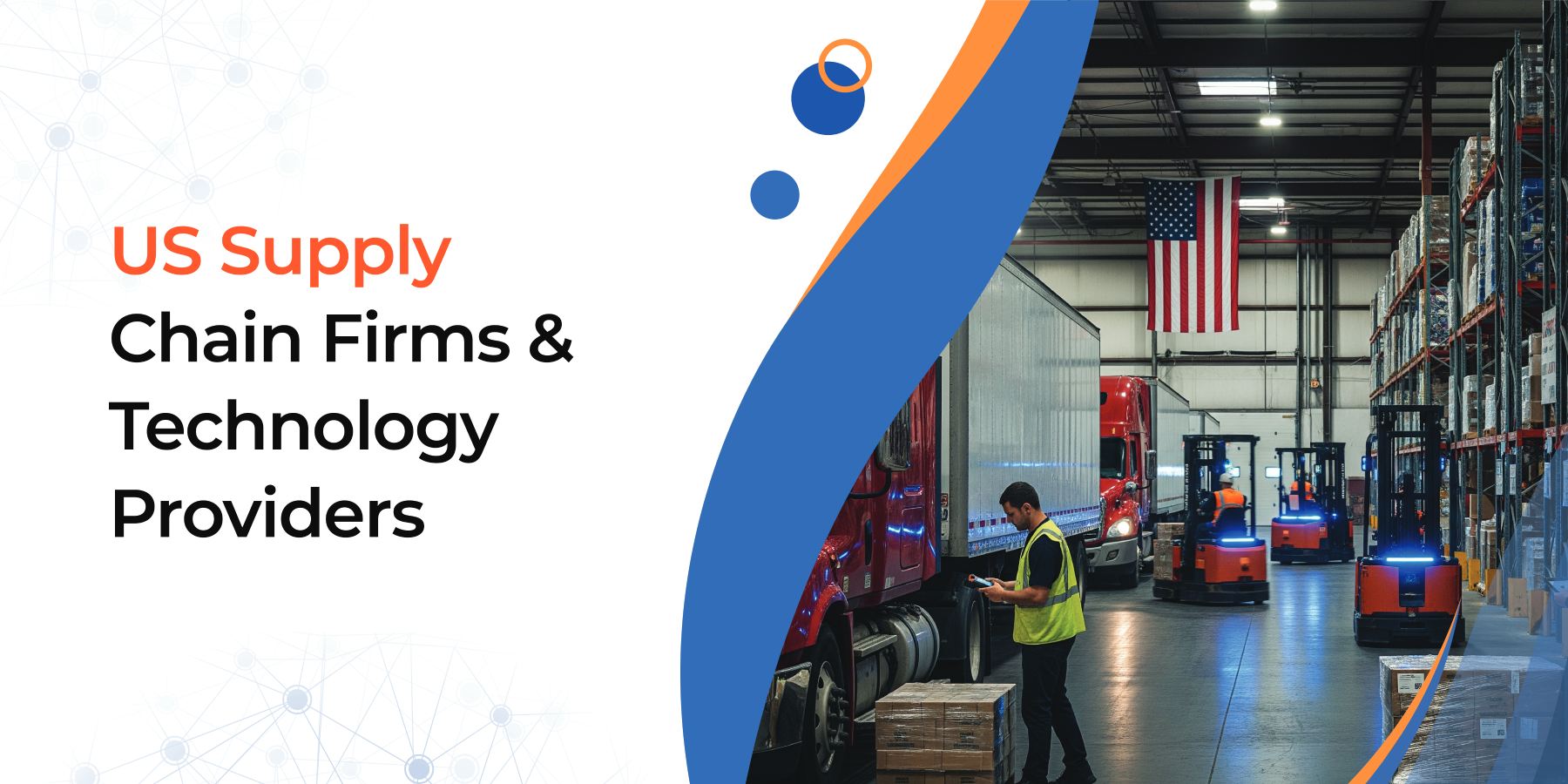
Top 5 US-Based Supply Chain Offshoring Firms With Global Capabilities in 2025

us supply

In 2025, over 70% of global enterprises outsource at least one segment of their supply chain operations, whether for cost reduction, efficiency, or digital transformation. With the rising complexity in vendor management, demand forecasting, and fulfillment logistics, businesses are turning to US-based supply chain solutions companies with global capabilities.

This guide spotlights the top supply chain companies that blend onshore leadership with offshore scalability, AI-powered platforms, and 24/7 execution. Whether you’re in retail, manufacturing, or eCommerce, the right supply chain management services company can streamline operations and drive measurable ROI.

We'll explore providers known for their innovation, reach, integration, and sector specialization, so you can find the best company for supply chain management that matches your business objectives.

Table of Contents

1. Why Supply Chain Offshoring and Tech‑Led Services Are Soaring

2. Featured US‑Based Supply Chain Solution Providers (2025)

3. Best Companies for Supply Chain Technology & Software Integration

4. Leading SCM Providers for Vendor Coordination & Logistics Execution

5. What Makes a Great Supply Chain Management Partner in 2025

Frequently Asked Questions (FAQs)

Conclusion

1. Why Supply Chain Offshoring and Tech‑Led Services Are Soaring

The next phase of supply chain transformation is powered by supply chain management services companies offering:

  • Offshore staffing for 24/7 PO processing, billing, carrier support, and track‑and‑trace roles
  • AI-driven demand planning and forecasting platforms
  • Seamless ERP/WMS/TMS integrations
  • Global fulfillment orchestration with real-time KPIs

According to Gartner, 80% of large enterprises will outsource portions of SCM by 2026, reflecting the shift toward hybrid operations that balance cost, visibility, and agility. Choosing a supply chain solution provider or a tech-enabled supply chain management company that combines offshore scalability with tech-first operations ensures lower delays, fewer errors, and better vendor coordination.

These firms (beyond Vserve) stand out for their global capabilities, tech integrations, and strategic offshore execution:

Company HQ Core SCM Services Global Reach Tech & Integration Platforms Industries Served
Vserve NY, USA PO coordination, offshore logistics, demand forecasting US, Asia, EU SAP, Oracle, NetSuite, real-time KPI dashboards Retail, Distribution, eCommerce
GXO Logistics CT, USA Contract logistics, reverse logistics, warehousing 30+ countries Robotics, automation, analytics  Consumer goods, electronics, CPG
Penske Logistics PA, USA Transport solutions, optimization, sustainability reporting North America + Global ClearChain TMS, sustainability dashboards  Automotive, retail, industrial
Metro Supply Chain NJ, USA Fulfillment, contract logistics, tailored transport North America + Global Integrated SCM toolsets Retail, food & beverage, industrial
NFI Industries NJ, USA Integrated supply chain services, contract logistics USA + Canada Warehouse and distribution platform integration Industrial, retail, manufacturing

These top supply chain companies serve as both execution partners and supply chain management providers, offering end-to-end managed services that include warehouse operations, transportation planning, inventory optimization, and off-hours offshore coordination, along with actionable dashboards and tech-forward execution.

3. Best Companies for Supply Chain Technology & Software Integration

In 2025, the leading supply chain technology companies are also standout supply chain software providers that empower visibility, planning, and analytics. Inbound Logistics lists them as top providers of cloud-native platforms, control towers, TMS/WMS optimization, and digital twin tools:

  • 4flow – network design, transportation planning, digital control towers
  • Aera Technology – predictive stockout prevention, tariff management
  • A3 Freight Payment – freight auditing, scenario-modeling, spend visibility

Mini‑case example:

A national retailer partnered with 4flow to redesign its distribution network, cutting transportation cost‑to‑serve by 15% within six months.

From predictive replenishment to CO₂ optimization and dynamic load planning, these platforms turn data into operational advantage, hallmarks of a modern supply chain solutions company.

4. Leading SCM Providers for Vendor Coordination & Logistics Execution

Vendor coordination and seamless logistics execution are essential to a resilient supply chain. Outsourced logistics teams across nearshore and offshore hubs now handle:

  • PO tracking and supplier onboarding
  • Billing, freight audit, and exception handling
  • Track-and-trace support for multiple time zones

Example:

A US consumer goods company integrated off‑hours coordination with GXO logistics and offshore tracking reps. This combined model reduced supplier-related delays by over 30% and significantly improved fill rates.

These supply chain firms, often functioning as both logistics experts and supply chain management providers, deliver real-time shipment visibility, multilingual support, and precise handling of inbound/outbound exceptions, eliminating extended PO cycle times and communication gaps.

5. What Makes a Great Supply Chain Management Partner in 2025

Use this checklist to evaluate providers:

  • Multinational logistics and fulfillment coverage
  • AI or analytics-driven demand planning
  • Offshore staffing capabilities for round‑the‑clock processing
  • Real-time KPI visibility and control‑tower dashboards
  • Seamless ERP/WMS/TMS platform compatibility
  • Industry-specific case studies demonstrating measurable ROI

Pro Tip: Ask any provider: “What percentage of your clients have been with you for 3+ years?” Retention rates above 70% typically correlate with consistent performance and trust.

A high-value supply chain management company or supply chain solutions company combines logistics execution with tech platforms and offshoring to deliver strategic, scalable supply chain outcomes.

Frequently Asked Questions (FAQs)

1. Who are the top supply chain solution providers in 2025?

Leading U.S.-based firms include GXO, Penske Logistics, Metro Supply Chain, and NFI, each with global reach and offshore/nearshore capabilities.

2. What services do supply chain management companies offer?

They offer vendor coordination, PO processing, inventory visibility, freight and TMS support, demand planning, and technology integration.

3. How do SCM software providers differ from logistics firms?

Software providers (e.g., 4flow, Aera) deliver planning, analytics, and control tower platforms. Logistics firms manage the physical execution of transportation, warehousing, and offshore operations. Top firms often combine both.

4. How do I choose the best supply chain services company?

Look for global support, offshore staffing, analytics platforms, relevant case studies, and vendor uptime commitment.

5. Which US-based SCM providers support vendor coordination globally?

GXO Logistics, Metro Supply Chain, and NFI offer strong offshore coordination teams, integrated tracking, and global logistics networks.

Conclusion

As supply chains grow more complex, firms that partner with tech-anchored, offshore-enabled U.S.-based providers gain a strategic advantage. Whether optimizing transportation, coordinating vendors, or deploying AI forecasting, these firms, together with Vserve, deliver robust, scalable, and transparent supply chain savings.

Compare the providers highlighted here, and when you're ready to scale smarter, consider working with a supply chain solutions company that aligns with your performance and technical requirements.

Ready to Simplify and Scale Your Supply Chain in 2025?

Partner with U.S.-based experts offering offshore execution, vendor tracking, and real-time inventory planning.
Talk to a Supply Chain Expert → 

Which Remote Customer Service Jobs Are Hiring Right Now With No Experience Needed

remote

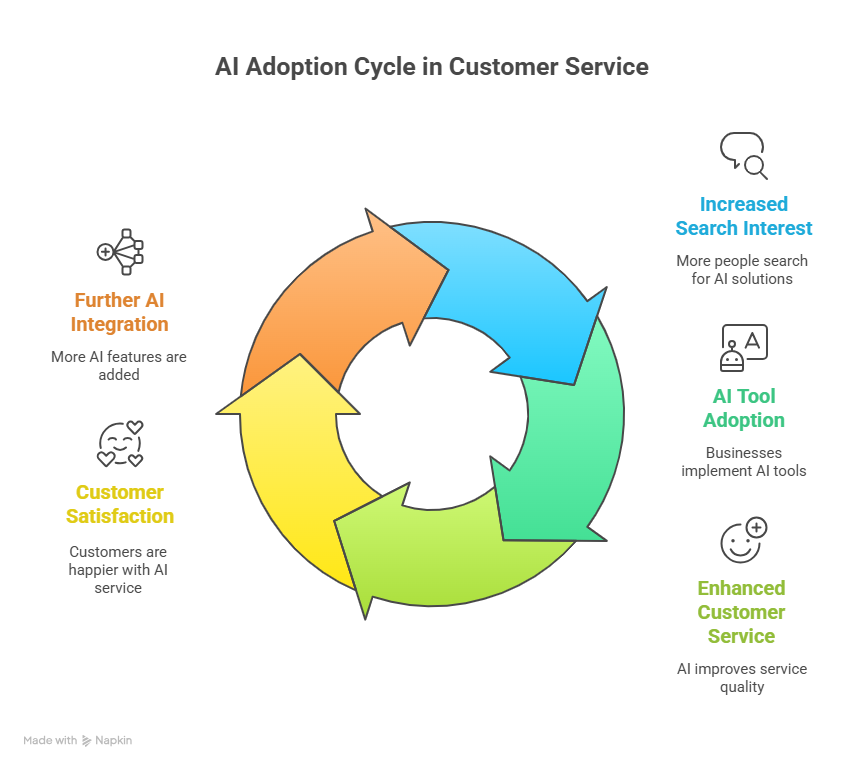
Remote customer service jobs have seen a massive 920% surge in search interest over the last few years, and in 2025, that trend shows no signs of slowing down. From stay-at-home parents and college students to career switchers and freelancers, people are flocking to remote customer service jobs online that offer flexibility, stability, and a low barrier to entry.

Even better? No experience is required for many of these roles.

In this blog, we’ll show you:

  • Why remote customer support roles are in high demand
  • Where to find legit customer service jobs online
  • Which companies are hiring right now
  • What job titles to search for
  • How to stand out, even if you’re brand new

Table of Contents

Why Remote Customer Service Jobs Are in High Demand

Can You Get a Remote Customer Service Job With No Experience?

Top Platforms to Find Remote Customer Support Jobs

Companies Hiring for Remote Customer Service Jobs (2025 Edition)

Common Remote Customer Service Job Titles

What Do These Roles Involve?

How to Get Hired Without Prior Experience

Frequently Asked Questions (FAQs)

Key Takeaways

Why Remote Customer Service Jobs Are in High Demand

The boom in eCommerce, fintech, and SaaS businesses means more customers, and more support needs. At the same time, remote work has become a standard operating model across industries.

According to FlexJobs, remote customer service jobs are among the top 3 most posted remote job categories globally.

Why companies are hiring remote:

  • Cuts overhead costs (no office space or utilities)
  • Wider talent pool across time zones
  • Faster onboarding and scalability

Can You Get a Remote Customer Service Job With No Experience?

Absolutely. Most customer service remote jobs prioritize soft skills over previous experience. If you can communicate clearly, empathize with people, and type reasonably fast, you’re already halfway there.

Transferable skills include:

  • Communication (written and verbal)
  • Conflict resolution
  • Patience and empathy
  • Time management

Many job seekers land virtual customer service associate jobs by highlighting prior roles in retail, hospitality, or volunteer work, even if it wasn’t remote.

Bonus: Free courses from Coursera, HubSpot, or Google can help you stand out.

Top Platforms to Find Remote Customer Support Jobs

Here’s where to start your search for remote customer support jobs:

Platform

Best For

Free/Paid

Pros

CloudStaff

Remote staffing for BPO and customer care

Paid

Long-term support roles, Philippines-based agents, dedicated account mgmt

WOW Customer Support

Fully managed remote support teams

Paid

Pre-vetted agents, 24/7 availability, scalable for growth

SupportNinja

Outsourced support for startups & SaaS

Paid

Dedicated agents, CX-focused training, multilingual options

Remotasks

Task-based support teams (data/QA/CS)

Paid

Cost-effective for microtasks and ticket-based support workflows

Helpware

Scalable support outsourcing

Paid

Custom-built teams, enterprise-level security, 24/7 support

Companies Hiring for Remote Customer Service Jobs (2025 Edition)

These companies are actively hiring for customer service job vacancies you can apply to, many without experience:

  1. Amazon – Virtual Customer Service Associate (seasonal & full-time)
  2. TTEC – Remote Customer Service Representatives (includes training)
  3. CVS Health – Customer Care Support Agents (part-time options)
  4. Wayfair – Chat & phone support for product queries
  5. Concentrix – Tech & retail support roles, no experience needed
  6. Apple – At-Home Advisor program
  7. Liveops – Flexible hours, contract-based call center jobs
  8. Sutherland – Entry-level support roles with paid training

Tip: Visit each company’s career page weekly, some listings close fast!

Common Remote Customer Service Job Titles

Here are the job titles you’ll often see for remote customer service jobs online:

  • Customer Service Representative
  • Chat Support Agent
  • Email Support Specialist
  • Virtual Call Center Agent
  • Tech Support (Level 1)
  • Customer Success Associate

Use these as filters when searching job boards or applying directly on company sites.

What Do These Roles Involve?

Wondering what a day in a remote support job looks like?

Typical Responsibilities:

  • Answering calls or live chats
  • Responding to customer emails
  • Resolving complaints or tracking orders
  • Updating internal systems with customer info

Tools You Might Use:

  • Zendesk
  • Freshdesk
  • Intercom
  • Google Workspace

Common Work Expectations:

  • Shifts range from 4–8 hours/day (many part-time options)
  • KPIs may include:
  • CSAT (Customer Satisfaction Score)
  • FCR (First Contact Resolution)
  • AHT (Average Handling Time)

How to Get Hired Without Prior Experience

Even if you're brand new, these tips will help you land your first remote customer service job fast:

Tips:

  • Create a clean, remote-optimized resume (focus on availability, tech-savviness, soft skills)
  • Tailor each cover letter to the job title
  • List volunteer gigs or internships that show people skills
  • Get basic certifications (e.g., “Customer Service Fundamentals” on Coursera)
  • Stick to trusted job portals to avoid scams
  • Consider freelancing or short projects on platforms like Upwork or Fiverr for experience

 Frequently Asked Questions (FAQs)

1. What are the best remote customer service jobs for beginners?

Look for entry-level roles like chat support, virtual call agents, or tier-1 help desk support. Companies like TTEC and Liveops are beginner-friendly.

2. Can I get a remote customer service job with no experience?

Yes! Most support jobs value soft skills more than work history. A strong resume and willingness to learn go a long way.

3. What qualifications do I need to work in customer support remotely?

Typically, you’ll need a stable internet connection, good communication skills, and basic tech knowledge. Some roles require a high school diploma.

4. Where can I find customer service job vacancies online?

Check platforms like We Work Remotely, VirtualStaff.ph, and TTEC Jobs. Also browse the careers pages of Amazon, Apple, and Wayfair.

5. Are these roles flexible for part-time or students?

Absolutely. Many companies offer part-time hours, weekend shifts, or flexible contracts, perfect for students or parents.

Key Takeaways

In wrapping up our guide to remote customer service jobs in 2025, one thing is clear, you don’t need years of experience to get started, just the right approach and a willingness to learn. The demand is high, and the barrier to entry has never been lower.

Here are three key takeaways to remember:

  • No Experience? No Problem: Companies like Amazon, TTEC, and Wayfair are actively hiring for roles that value your communication and problem-solving skills over your resume. Soft skills are your superpower.
  • Job Boards Matter: Platforms like Upwork and Wow Customer Support are goldmines for beginners. The right platform can save you time, protect you from scams, and match you with the right fit.
  • Certifications Can Give You an Edge: While not mandatory, free courses on platforms like Coursera or HubSpot can help you stand out. A little preparation goes a long way in impressing hiring managers.

As remote support continues to grow across industries, the opportunity to work from anywhere while helping people is just a few clicks away. Whether you’re a student, parent, or career changer, this is your moment.

Ready to Land Your First Remote Customer Service Job?

Explore trusted job boards, hiring companies, and expert tips to start your remote career with confidence.
Explore Remote Jobs

Suggested Reads

Is Generative AI Writing Customer Service Emails That Convert Better Than Your Team

Generative AI Customer Service

As a company that proudly provides human-led customer service support, we’ve seen firsthand how meaningful conversations build trust, and trust drives conversions. At Vserve, our virtual assistants are trained to provide email support with empathy, clarity, and cultural sensitivity, a skill that algorithms still struggle to match.

We help brands with customer inbox management, complaint resolution, order tracking responses, and even escalation handling. Every email is personalized by a real person who understands the emotional tone behind the customer’s words.

Now, with generative AI in customer service gaining popularity, especially for email support, many businesses are asking a serious question: Is it actually outperforming humans when it comes to writing customer service emails that convert?

Let's break it down.

Table of Contents

Why Generative AI Is Being Used for Customer Service Emails

What Makes a “Better” Customer Service Email?

The Pros and Cons of AI in Customer Email Support

Real-Life Use Case: When AI Flopped (And We Stepped In)

Can Generative AI Learn to Convert Better Over Time?

What the Data Says About AI vs Human Support

So… Is Generative AI Writing Better Emails Than Your Team?

Frequently Asked Questions (FAQs)

Key Takeaways

Why Generative AI Is Being Used for Customer Service Emails

Generative AI refers to machine learning models like Gemini customer service or ChatGPT that can generate text responses based on the context of a conversation. In customer service, this means AI is now writing everything from “We’re sorry to hear that” to complex refund explanations or product use instructions.

Here’s why businesses are drawn to it:

  • Speed and scale: AI can generate hundreds of email drafts in minutes.
  • Cost-efficiency: AI can operate 24/7 without needing breaks or salaries.
  • Consistency: Tone and branding guidelines can be hardcoded into the model.
  • Learning capabilities: With enough data, AI can improve responses over time.

It’s no wonder the interest in AI for customer support has surged. According to Exploding Topics, searches for "generative AI for customer service" jumped +880% recently, confirming that companies are curious, if not already trying it.

But does AI really write better customer service emails?

What Makes a “Better” Customer Service Email?

When we talk about whether AI is writing “better” emails than your team, we have to define “better.”

In our experience supporting hundreds of businesses with human-led customer email management, we measure quality using:

  • Conversion rate: Did the customer take the next step (purchase, review, renew)?
  • Customer satisfaction (CSAT): Did they leave a positive rating?
  • Resolution time: How long did it take to fully resolve the issue?
  • Tone and empathy: Was the message well-received emotionally?
  • Clarity and personalization: Did the customer feel heard?

AI customer service tools can do well on metrics like resolution time and sometimes even clarity. But where they consistently fall short is empathy and personalization areas where trained human agents truly shine.

The Pros and Cons of AI in Customer Email Support

Let’s be honest AI isn’t magic. Like every tool, it has benefits and trade-offs. Here's what I’ve seen in working with brands who’ve tested AI email customer service before returning to our human-led services.

Pros:

  • AI tools like Gemini customer service can generate responses instantly.
  • AI email support can reduce the burden on overworked teams.
  • Some basic inquiries, like password resets or shipping updates, can be automated without harm.

Cons:

  • AI often lacks the nuance to handle angry or emotional customers.
  • Pre-written AI replies can sound robotic or tone-deaf.
  • Errors or hallucinations (AI fabricating facts) can damage brand trust.
  • Customers can usually tell when they’re talking to a bot, and don’t love it.

Gartner predicts that by 2026, 75% of customer service interactions will be powered by some form of AI. But that doesn’t mean it’s replacing human agents, just automating basic tasks. The real conversions still come from human empathy.

Real-Life Use Case: When AI Flopped (And We Stepped In)

One of our clients in the consumer electronics space had experimented with a generative AI email tool to manage their support queue. The AI was fast, but it began sending apologies for the wrong issues, sometimes even issuing refunds without verifying customer history.

After 3 weeks, they returned to Vserve.

We deployed a dedicated support agent trained in tone-matching, empathetic listening, and persuasive writing. Within 60 days, their email CSAT scores rose by 31%, and refund-related losses dropped by 27%. The human assistant also uncovered patterns in complaints that AI had missed, such as a defective batch that required a proactive recall.

We provide human-driven support powered by process, not AI, which makes all the difference.

Can Generative AI Learn to Convert Better Over Time?

Yes, but with caveats.

Generative AI customer support can be trained on historical email responses, customer sentiment data, and outcome-based feedback loops. Some companies feed AI millions of support tickets to help it predict the best responses.

But even the most advanced artificial intelligence customer service tools still need:

  • Supervision from human QA agents
  • Ongoing fine-tuning as customer expectations evolve
  • Escalation pathways for complex or sensitive inquiries

We’ve consulted with brands who thought AI was a set-it-and-forget-it solution. What they learned the hard way is that AI needs a human safety net to maintain quality, empathy, and brand alignment.

What the Data Says About AI vs Human Support

In a 2024 study by Freshworks, 57% of customers said they prefer human interaction when resolving issues, even if it takes longer. Meanwhile, only 23% said they fully trust AI to handle complex queries without human review.

And according to Salesforce’s State of Service report, 84% of service professionals believe AI is most useful when combined with human judgment not as a replacement.

In other words, AI for business emails is a tool not a complete solution.

So… Is Generative AI Writing Better Emails Than Your Team?

If your team isn’t trained in conversion-focused email writing, maybe.
If your team struggles to keep up with response volume, possibly.

But if your team has mastered tone, clarity, persuasion, and problem-solving? Then no AI isn’t writing better emails than your people. It’s just writing faster ones.

And as we always tell our clients: Speed doesn’t always equal impact.

Frequently Asked Questions (FAQs)

1. Can AI replace human agents for customer service?

AI can help with repetitive tasks, but it still needs humans for emotional support, complex queries, and nuanced communication.

2. Is AI reliable for handling angry customer emails?

Not fully. AI may use generic empathy phrases, but it lacks the judgment needed to de-escalate tense situations.

3. What types of customer emails should AI handle?

AI is best for structured queries like order tracking, FAQs, and subscription changes. Complex issues should go to human support.

4. How do I know if AI is hurting or helping my email conversion rate?

Measure your before-and-after conversion data, CSAT scores, and first-contact resolution rates to evaluate impact.

5. Does generative AI understand customer sentiment?

To a degree. It can analyze tone markers but can’t truly “feel” or mirror emotions like a trained human can.

Key Takeaways

In wrapping up our discussion on whether generative AI is writing customer service emails better than your team, it’s clear that AI has its strengths but also clear limitations. Here are three streamlined takeaways:

  • Speed vs. Substance: AI delivers fast replies, but it often misses the emotional nuance customers expect in real conversations.
  • Human Empathy Converts: Personalized, empathetic responses from trained agents still lead to better customer satisfaction and trust.
  • Use AI as Support, Not Replacement: AI can assist with basic queries, but complex or emotional issues still need the human touch.

We’ve explored the key differences between generative AI customer service and human-led support. Now we’d love to hear from you share your thoughts in the comments!

To stay up-to-date on customer support insights and strategies, remember to check out our social media accounts too: Facebook, and LinkedIn. Stay engaged with Wow Customer Support as we continue navigating the evolving world of customer service.

How Content Moderation Services Review Text, Images, Video, and Live Streams at Scale

Content Moderation Services

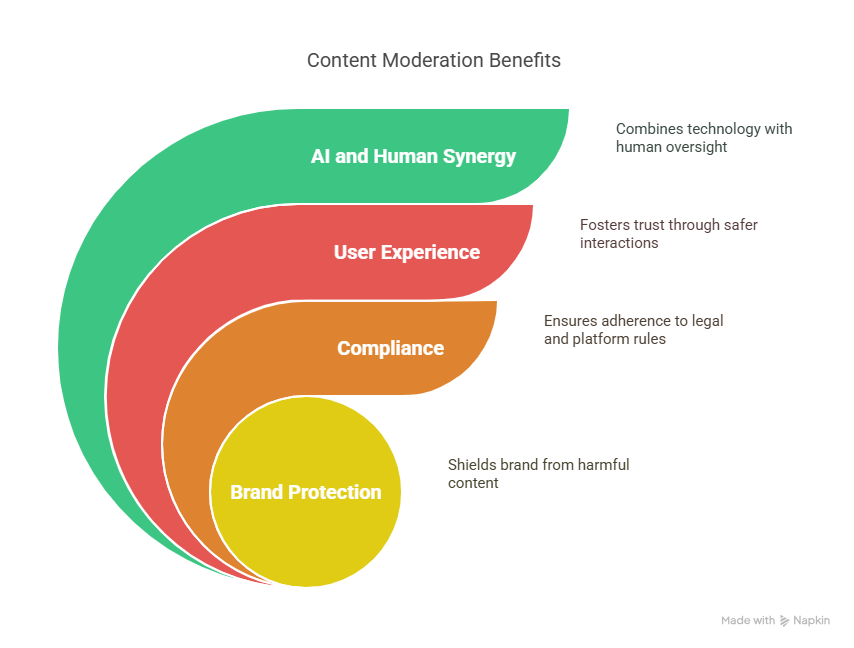
At Wow, we specialize in helping platforms maintain a safe, user-friendly environment by offering end-to-end content moderation services for text, images, videos, and even live streams. From social media networks and eCommerce marketplaces to dating apps and UGC-driven communities, we help businesses of all sizes filter out inappropriate content, enforce guidelines, and protect their brand reputation without relying entirely on automation.

While AI content moderation plays a helpful supporting role, the real power lies in human judgment. That’s why we offer trained, culturally aware human moderators who can identify nuanced issues, apply brand-specific rules, and act quickly when real-time moderation is needed.

In this blog, I’ll explain exactly how content moderation services handle different media types at scale, what goes into reviewing text, images, video, and live content, and why human-led moderation remains essential even in an AI-driven world.

Let’s break it down.

Table of Contents

Why Content Moderation Is More Important Than Ever

How Content Moderation Services Handle Text at Scale

How Image Moderation Services Keep Platforms Safe

How Video Content Moderation Works in Practice

How We Manage Live Stream Moderation in Real Time

The Role of AI in Moderation (And Where It Falls Short)

Case Study: A UGC Marketplace That Needed Full Coverage

Frequently Asked Questions (FAQs)

Key Takeaways

Why Content Moderation Is More Important Than Ever

The internet is powered by content, and much of it is user-generated. But not all content is safe, respectful, or appropriate. Offensive language, hate speech, nudity, misinformation, and graphic violence can appear anywhere. Brands that fail to moderate this type of content risk alienating users, getting flagged by regulators, or damaging public trust.

According to Statista, over 70% of social media users say they’re more likely to leave a platform that tolerates abusive or harmful content. This applies across sectors whether you're running a review site, a fashion marketplace, or a live streaming platform.

This is why social media moderation, UGC moderation services, and online moderation services are no longer optional; they’re essential.

How Content Moderation Services Handle Text at Scale

Text moderation is typically the first step for any platform with user interaction, including comments, captions, product reviews, or chat messages. But scaling this process is tricky when you're dealing with thousands (or millions) of posts a day.

Here's how professional content moderator services approach it:

  1. Rule-based Filtering
     Keywords or phrases related to hate speech, explicit language, or banned topics are automatically flagged for review.
  2. Machine Learning Content Moderation
     AI can identify trends in text and flag contextually suspicious patterns, like sarcasm, slurs, or coded hate speech. But it’s not perfect.
  3. Human Review
     This is where we come in. Our team reviews flagged content for false positives and applies platform-specific guidelines, ensuring decisions are accurate and fair.

Real example? One of our clients, a global job board, faced an issue with inappropriate messages slipping through automated filters in their chat system. We deployed a human-led moderation team that reviewed flagged messages 24/7. Within 45 days, incident reports dropped by 60%, and user engagement improved due to increased trust in platform safety.

How Image Moderation Services Keep Platforms Safe

Images are harder to moderate than text because offensive content might not contain any flagged words it’s visual, and often subtle.

Our user-generated content moderation services for images follow this process:

  • Automated Scanning using AI tools for nudity, gore, or banned symbols.
  • Contextual Human Review for memes, satire, deepfakes, and edge cases that automation can't assess.
  • Brand Guidelines Enforcement to remove low-quality images, irrelevant uploads, or photos that damage user experience.

For example, we helped a family-focused eCommerce site reduce user-submitted image violations by deploying a real-time image moderation queue. Within 30 days, the platform saw a 72% decrease in inappropriate image uploads and increased buyer trust, resulting in a 12% bump in product review submissions.

How Video Content Moderation Works in Practice

Video brings even more challenges. Unlike images or text, it requires checking for inappropriate visuals, sounds, and spoken language, all in context. This is especially critical for short-form video platforms, gaming communities, and live sellers.

Here’s how video content moderation services scale effectively:

  • Frame-by-frame scanning using AI for nudity, violence, or restricted visuals
  • Speech-to-text conversion for audio transcriptions and keyword spotting
  • Scene analysis to detect sudden changes in tone, flashing images, or other red flags
  • Human Validation to catch what's missed, especially for regional slang, cultural references, or misleading content.

While AI video content moderation tools help with volume, they can’t always distinguish between graphic content in a news clip vs. content meant to shock or harm. That’s why our human team plays a critical role in verifying, context-checking, and escalating issues to clients when needed.

How We Manage Live Stream Moderation in Real Time

Live content is the hardest to control because there’s no chance to review before it goes public. That’s where live stream moderation becomes mission-critical.

At Vserve, we provide live UGC moderation services that work like this:

  • Real-time AI detection flags banned words, violent behavior, or NSFW visuals as the stream runs
  • Live human moderators watch high-risk segments, such as influencer broadcasts, product demos, or user-hosted Q&A sessions
  • Multi-lingual and region-specific coverage ensures accuracy across global audiences

One of our clients a gaming app with user-hosted streams, saw a drop of 85% in moderation escalations within three months after introducing our human-in-the-loop system. Player satisfaction and retention rose accordingly.

The Role of AI in Moderation (And Where It Falls Short)

AI moderation tools are good at scale, but bad at nuance. Automated content moderation can:

  • Flag hate speech using keyword lists
  • Detect explicit imagery using visual recognition
  • Scan large volumes of content quickly

But AI can’t:

  • Understand sarcasm or cultural context
  • Recognize borderline cases (like art vs. explicit)
  • Follow evolving slang or inside jokes
  • Enforce brand tone or reputation-based guidelines

That’s why hybrid moderation support, where AI handles the bulk and humans make the final call, is the model we follow. It brings speed, scale, and accuracy together.

Case Study: A UGC Marketplace That Needed Full Coverage

A global UGC-driven marketplace that allowed product reviews, seller photos, and video Q&As came to us struggling with review bombing, fake listings, and NSFW content.

We built them a full-stack moderation solution that included:

  • Real-time text filtering using brand-safe keyword lists
  • AI scanning of all image/video uploads
  • A 12-hour moderation turnaround SLA
  • 24/7 human moderation team handling escalations and appeals

Results after 90 days:

  • Fake reviews dropped by 68%
  • Content takedown times improved by 80%
  • Seller complaints reduced by 41%

This success came not from pure automation, but from smart, scalable content moderation support that combined technology with people who cared about getting it right.

Frequently Asked Questions (FAQs)

1. What’s the biggest risk of using only automated moderation?

AI misses context. It may flag safe content or allow harmful posts, which leads to user backlash and compliance risks.

2. How fast can content moderation work at scale?

With the right tools and human team, moderation can happen in near real-time for live content and within minutes for text or image-based UGC.

3. Do small platforms need moderation services?

Absolutely. Even low-traffic platforms are vulnerable to inappropriate content and spam. Early moderation sets the tone for community growth.

4. Can moderation services adapt to unique brand guidelines?

Yes. At Vserve, we build brand-specific rulebooks and train our moderation teams to meet each client's standards and tone.

Key Takeaways

In wrapping up, here are the key insights on how content moderation services review content at scale:

  • Text, image, video, and live streams each require tailored review methods
  • AI helps, but human oversight ensures brand safety and accuracy
  • Hybrid models scale better and protect the user experience across platforms

Content moderation isn’t just a back-end task; it’s a front-line defense for your community, brand, and business. If you're dealing with high volumes of UGC or live content, the right content moderation service can help you grow with safety and integrity.

To stay up-to-date on content safety strategies and digital trust trends, follow us on Facebook, and LinkedIn.

9 Automation Tools That Make Outsourced Call Centers More Efficient

Call-Center-Services

There are hundreds of automation tools available today that claim to boost productivity, reduce costs, and make agents more efficient. But in the real world of call center support services, especially for small and mid-sized businesses, choosing the right stack is less about hype and more about results. At Wow Customer Support, we specialize in affordable call center services that combine trained agents with AI-enhanced customer service outsourcing tools to deliver fast and scalable results.

Before we break down the actual automation tools we use or recommend, here’s a quick overview of who we are and what we bring to the table.

Wow Customer Support

Your Partner in Human-Centered Call Center Outsourcing

Specifics

Details

Key Services

Inbound and outbound customer support, technical helpdesk, call handling, email and live chat support, order management

Industries Served

E-commerce, retail, healthcare, finance, logistics, tech startups, SaaS, home services, and more

Support Channels

Voice, email, live chat, ticketing, social media messaging, WhatsApp, and helpdesk systems

Technology Used

Freshdesk, Aircall, CloudTalk, Talkdesk, Zendesk, Five9, Salesforce, Intercom, and more

Locations Served

USA, Philippines, India, and other global support regions

Contact Details

🌐 www.wowcustomersupport.com

At Wow, we believe technology should support the human connection, not replace it. While AI-powered tools are great at routing calls, flagging issues, or reducing hold times, the real customer experience still depends on empathy, accuracy, and clarity, things only real people can deliver. That’s why our 24/7 call center services focus on blending human skill with automation tools that enhance, not override, agent performance.

Now, let’s dive into the top automation platforms helping us (and our clients) deliver better, faster support in 2025.

Table of Contents

Why Automation Is Crucial in Modern Call Center Services

Zendesk: The Workflow Backbone of Affordable Call Center Services

Five9: Cloud-Based AI Call Center Outsourcing

Observe.AI: AI-Enhanced Customer Service Outsourcing Monitoring

Tidio: Smart Chat + Voice Bot for Small Business Call Centers

Talkdesk: Smart Routing for AI Enterprise Call Center Solutions

Kustomer: CRM-Integrated AI Call Center Services

Assembled: Workforce Automation for Better Scheduling

Verbit: Live Transcription & Accessibility

Zapier: The Hidden Automation Hero in Call Center Workflows

Case Study: Scaling Smart with Hybrid AI-Human Call Center Support

Frequently Asked Questions (FAQs)

Key Takeaways

Why Automation Is Crucial in Modern Call Center Services

I’ve seen firsthand how automation has changed the way call support services operate. When we first started, everything was manual calls were logged by hand, notes were scribbled on sticky pads, and agents often worked blind with little customer history.

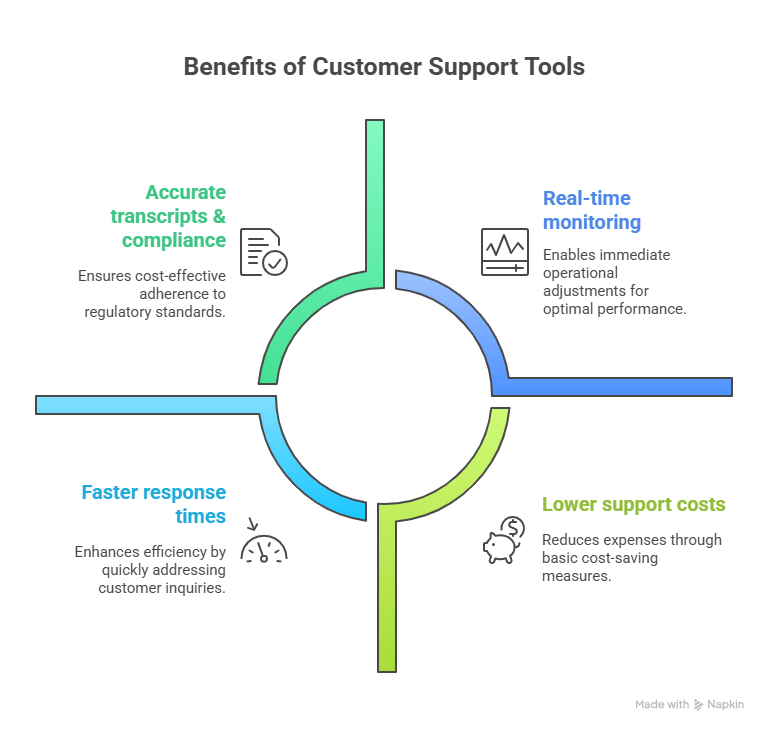
Today, automation platforms allow us to:

  • Route calls based on skill, availability, or urgency
  • Transcribe and summarize calls in real-time
  • Trigger workflows automatically (e.g., send follow-up emails, create support tickets)
  • Record quality scores without hours of review

According to Deloitte, 62% of contact centers plan to increase their automation budgets in 2025. That’s because automation allows businesses to offer low cost call center support while improving resolution quality.

Here are the tools making it happen.

1. Zendesk: The Workflow Backbone of Affordable Call Center Services

Zendesk is a customer support platform, but more importantly for us, it’s a full-blown automation engine.

We use Zendesk to:

  • Auto-create tickets from missed calls and voicemails
  • Set rules for escalation
  • Trigger reminders for unresolved queries
  • Sync chats, emails, and calls in one customer view

A real estate client outsourced their AI-powered outsourced customer support to us, and we implemented Zendesk with custom triggers. The result? They cut customer wait times by 40% without adding new agents. That’s what budget-friendly AI call center solutions look like in action.

2. Five9: Cloud-Based AI Call Center Outsourcing

Five9 gives us smart call routing, live call coaching, and post-call summaries all in one place. Its AI-enhanced engine learns from past interactions to improve agent responses.

Features we love:

  • Sentiment detection in live calls
  • Auto-dialing for outbound campaigns
  • Drag-and-drop call flow automation

For one DTC skincare brand, we used Five9 to reduce average handling time (AHT) by 22%. That’s massive savings when your volume crosses 100+ calls per hour.

3. Observe.AI: AI-Enhanced Customer Service Outsourcing Monitoring

Call center managers often struggle with coaching there’s never enough time to listen to every call. That’s where Observe.AI helps.

It transcribes, scores, and flags calls based on:

  • Tone of voice
  • Compliance keywords
  • Escalation risks

One of our clients in fintech used Observe.AI through our AI-powered enterprise customer support package. Within weeks, they identified training gaps in 3 agents who were mishandling security scripts. Fixing this helped them pass an upcoming audit with flying colors.

4. Tidio: Smart Chat + Voice Bot for Small Business Call Centers

While we don’t believe bots should replace humans, Tidio provides a powerful front line. We configure it to handle:

  • FAQs
  • After-hours inquiries
  • Lead capture

It’s ideal for businesses that want AI-enhanced customer service for small enterprises but aren’t ready for a full agent team. We’ve deployed Tidio for multiple eCommerce brands needing low cost call center at night while live agents rest.

5. Talkdesk: Smart Routing for AI Enterprise Call Center Solutions

Talkdesk is built for scale. When we work with clients handling 1,000+ calls daily, we rely on it to:

  • Route based on behavior history
  • Offer voice biometrics for authentication
  • Connect seamlessly with CRMs like Salesforce

A logistics company we support wanted real-time voice authentication to prevent fraud. With Talkdesk, we enabled AI-powered enterprise customer support that could handle security needs without frustrating good customers.

6. Kustomer: CRM-Integrated AI Call Center Services

Kustomer isn’t just a call center tool; it’s a full conversation history tracker. We use it when clients need:

  • Multichannel histories in one view
  • Triggered actions (e.g., refunds, alerts)
  • Personalized support using past data

For a fashion retailer, we helped reduce return-related call volume by 35% using Kustomer’s automation to suggest instant solutions like store credit or tracking links via WhatsApp and voice support.

7. Assembled: Workforce Automation for Better Scheduling

Scheduling live agents is a puzzle. Assembled uses AI to predict call volumes and automate schedules accordingly.

Key benefits:

  • No more overstaffing or understaffing
  • Real-time agent monitoring
  • Built-in productivity reports

This has been key for clients scaling call center support services on weekends or holiday seasons. One retail brand avoided $8,000 in overtime costs in a single month after switching to Assembled via our affordable call center services plan.

8. Verbit: Live Transcription & Accessibility

Whether for compliance or internal training, transcription is crucial. Verbit offers:

  • Real-time voice-to-text with 99% accuracy
  • Multilingual support
  • Auto-generated summaries

We use it for AI-enhanced customer service outsourcing clients needing global language coverage or internal documentation for training.

9. Zapier: The Hidden Automation Hero in Call Center Workflows

Zapier connects everything together. We build “Zaps” that:

  • Send agent performance data to Google Sheets
  • Alert Slack channels for VIP tickets
  • Trigger follow-up surveys after calls

It may not be glamorous, but it saves hundreds of hours and keeps small teams lean. For budget-friendly AI call center solutions, that’s game-changing.

Case Study: Scaling Smart with Hybrid AI-Human Call Center Support

A U.S.-based meal delivery startup approached us looking for AI call center outsourcing to reduce headcount but not CX quality. They had 5,000+ monthly calls and were missing over 700 of them.

Here’s what we did:

  1. Implemented Five9 for smart routing
  2. Added Tidio bot for basic inquiries
  3. Layered in Zendesk for ticket management
  4. Used Observe.AI for quality control

We kept 6 agents on staff but reduced missed calls by 95%, improved resolution time by 3 minutes per call, and cut costs by 30% without compromising satisfaction.

The brand now recommends our AI-powered small business customer support to other startups in their accelerator program.

Frequently Asked Questions (FAQs)

1. Can small businesses afford AI-driven call handling for SMEs?

Yes. Many AI tools now offer low-cost tiers ideal for SMEs. When paired with an outsourced team, it’s often more affordable than hiring in-house.

2. Will AI replace all human agents?

No. AI handles simple tasks. Complex issues, empathy, and escalation still require trained humans. Hybrid support is the future.

3. How long does it take to set up these automation tools?

Initial setup can take 2–4 weeks depending on tools and integration needs. Most of our clients see ROI within the first quarter.

Key Takeaways

Here’s a quick wrap-up on how automation is transforming outsourced call centers:

  • AI supports, not replaces: The smartest call center support models use automation to enhance not eliminate human service.
  • Efficiency is scalable: Tools like Five9, Zendesk, and Observe.AI make even small teams highly productive.
  • Affordability meets quality: You don’t need a massive budget to benefit from AI-powered outsourced customer support just the right tools and strategy.

At Wow Customer Support, we blend automation with human skill to deliver the best of both worlds. If you’re exploring affordable AI call center services, let’s connect.

We’d love to hear your thoughts, drop your questions or experiences in the comments section.

To stay up-to-date on customer support insights and strategies, remember to check out our social media accounts too: Facebook, and LinkedIn.

8 AI-Powered Tools Contact Center Outsourcing Providers Are Using in 2025

Contact Center Outsourcing Tools

Managing a contact center today is more complex than ever. Customers expect faster resolutions, 24/7 availability, and personalized responses across email, chat, phone, and even social media. At Wow Customer Support, we deliver human-led contact center outsourcing services that meet those expectations while blending efficiency and empathy.

We handle everything from inbound calls to chat support and post-sale queries with a real person behind each interaction. But that doesn’t mean we ignore technology. In fact, we utilize AI contact center solutions to support our team, not replace them. Tools help us move faster, stay organized, and deliver better service, but we still believe it’s the people who make customer support truly exceptional.

Before we dive into the top AI-powered tools contact center outsourcing providers are using in 2025, here’s a quick snapshot of who we are and how we work:

Wow Customer Support

Your Partner in AI-Enhanced Contact Center Outsourcing

Specifics

Details

Key Services

Inbound/outbound calls, chat support, email handling, post-sale assistance, escalation support

Support Channels

Phone, email, live chat, SMS, Facebook, Instagram, WhatsApp, social DMs

Industries Served

E-commerce, retail, tech, healthcare, logistics, SaaS, travel, fintech

AI Capabilities

Ticket tagging, routing, sentiment detection, workflow automation

Technology Used

Zendesk, Freshdesk, Gorgias, Intercom, Salesforce, Talkdesk, Dialpad

Locations Served

USA, Canada, UK, Australia, India, Philippines, and other global markets

Contact Details

🌐 www.wowcustomersupport.com

📧 info@wowcustomersupport.com

📞 +1 332 223 8085

At Wow Customer Support, we combine the best of both worlds: real people who care and smart systems that scale. Our AI-enabled contact center services don’t replace humans they support them. From intelligent routing and auto-tagging to chat sentiment detection and performance monitoring, we make sure every tech enhancement makes our team stronger, not smaller.

In this blog, I want to walk you through the top AI-powered tools that contact center outsourcing providers are using in 2025. These tools are helping teams like ours scale efficiently, support customers faster, and ensure no ticket or call falls through the cracks.

Let’s dive in.

Table of Contents

1. AI-Powered Chatbots for Instant Response Management

2. Sentiment Analysis Tools for Smarter Escalations

3. AI-Powered Speech Analytics for Quality Monitoring

4. AI Ticket Routing Systems

5. AI Knowledge Base Tools for Faster Agent Responses

6. AI Workforce Forecasting and Scheduling

7. Multilingual AI Translation for Global Support

8. AI-Powered QA Scoring Tools

Case Study: How AI Tools Helped a Retail Brand Handle a Holiday Surge

Frequently Asked Questions (FAQs)

Key Takeaways

1. AI-Powered Chatbots for Instant Response Management

Let’s start with the obvious AI contact center platforms are now packed with chatbot tools that handle Tier 1 inquiries 24/7. Whether it’s checking order status, resetting passwords, or answering FAQs, bots are now doing the heavy lifting for repetitive tasks.

We use chatbots not as a customer-facing wall but as a warm-up layer. A customer might first get help from a bot, but within seconds, they’re routed to a live agent if things get complex. Tools like Zendesk AI and Intercom’s Fin are great at triaging these interactions.

Why we use it:

  • Reduces response time during high volume
    Lets agents focus on high-impact interactions
  • Keeps support consistent across time zones

According to Salesforce’s 2025 State of Service report, 67% of service professionals say AI tools have improved response times and ticket accuracy. But bots alone aren’t enough. That’s why our AI-powered contact center outsourcing always includes a human-ready handoff option.

2. Sentiment Analysis Tools for Smarter Escalations

Imagine being able to detect when a customer is frustrated even if they never say “I’m angry.” That’s where AI-enabled contact center services shine. Sentiment analysis tools scan customer messages and flag language patterns that suggest stress, urgency, or dissatisfaction.

We use sentiment trackers to:

  • Escalate issues before customers request it
  • Alert supervisors to emotional tickets
  • Prioritize issues that need a soft-touch resolution

One of our clients, a DTC subscription brand, was seeing increased churn. By integrating sentiment analysis with our live chat platform, we detected negative language patterns earlier and routed those chats to our retention team. Over three months, this approach reduced voluntary churn by 19%.

These tools don’t replace our intuition, but they help guide where we put our human energy.

3. AI-Powered Speech Analytics for Quality Monitoring

If your support includes voice calls, then AI automation for customer support can’t stop at text. We use tools like Observe.AI to review calls, analyze tone and keywords, and flag missed steps.

Instead of listening to random call samples, we can now:

  • Monitor 100% of calls
  • Track agent compliance in real time
  • Get coaching alerts for improvement areas

It’s one of the most useful AI tools because it helps us train better and improve faster, without relying on subjective QA scoring. A health & wellness client saw their First Contact Resolution rate jump 15% after we began using speech analysis to tailor our agent training program.

This is where AI customer service outsourcing really adds value, it enhances human skills, it doesn’t replace them.

4. AI Ticket Routing Systems

Routing tickets manually can lead to delays, especially when volumes spike. That’s why we use AI routing systems that automatically sort and send tickets to the right team based on content, urgency, or past interaction.

Our routing system:

  • Tags tickets by product or issue type
  • Routes complaints to senior agents
  • Sends repeat requests to agents who handled them previously

With AI contact center solutions like Freshdesk Freddy or Salesforce Einstein, we’ve reduced average ticket routing time from 3 minutes to under 15 seconds.

It’s a small change that adds up. Faster routing = faster responses = happier customers.

5. AI Knowledge Base Tools for Faster Agent Responses

Sometimes, an agent knows what to say, but they just can’t find the documentation quickly. AI-powered knowledge tools solve this by surfacing help articles or canned responses in real time.

These tools:

  • Recommend articles based on keywords
  • Auto-suggest replies for FAQs
  • Help new agents onboard faster

Our contact center outsourcing team uses this daily. A logistics client reduced average handle time by 28% after we rolled out AI-augmented search within their knowledge base. When agents have answers at their fingertips, they deliver better experiences fast.

6. AI Workforce Forecasting and Scheduling

Staffing a contact center is a math problem: too few agents = delays, too many = wasted cost. AI tools help us predict when we’ll be busy based on:

  • Seasonal patterns
  • Website traffic spikes
  • Marketing campaign launches

Tools like NICE and Playvox allow us to build smarter schedules that adjust dynamically. In one example, our team forecasted a 3x volume spike during a client's Black Friday campaign, and staffed just enough to keep SLAs intact without overspending.

With AI-powered contact center outsourcing, forecasting isn’t guesswork. It’s predictive and precise.

7. Multilingual AI Translation for Global Support

As companies go global, language support gets tricky. We use AI contact center platforms with real-time translation to help agents communicate across 15+ languages.

It helps us:

  • Support customers in their native language
  • Avoid hiring separate agents for every locale
  • Offer inclusive service without adding complexity

Of course, our agents still review all translations before sending replies, but this AI layer gives us reach without sacrificing accuracy. For a SaaS client expanding in Europe, AI translation cut resolution times by 36% in non-English tickets.

8. AI-Powered QA Scoring Tools

QA is essential, but manually scoring hundreds of interactions a week is slow. With AI QA tools, we review a much larger sample size while keeping human oversight.

These platforms:

  • Grade voice and text interactions
  • Flag tone issues, dead air, or non-compliance
  • Benchmark team performance

For one eCommerce brand, our QA scores improved by 22% after we adopted automated scoring combined with human review. This is how we scale quality within AI-enabled contact center services.

Case Study: How AI Tools Helped a Retail Brand Handle a Holiday Surge

A leading U.S. apparel brand partnered with us to handle their holiday customer service overflow. They expected double the volume but didn’t want to compromise experience.

We set up:

  • AI chatbots for Tier 1 FAQs
  • AI ticket routing for speed
  • Sentiment alerts for priority cases
  • Knowledge base automation to assist new agents

The results?

  • 41% reduction in first reply time
  • 23% increase in CSAT scores
  • 17% drop in backlog during peak week

This partnership proved that AI-powered contact center outsourcing works best when the tools serve the people, not the other way around.

Frequently Asked Questions (FAQs)

1. Are AI tools replacing live agents in contact centers?

No. AI supports agents by handling simple tasks and surfacing answers more quickly, but real conversations still require human empathy and decision-making.

2. Do I need expensive platforms to benefit from AI in outsourcing?

Not necessarily. Many popular tools, such as Zendesk, Freshdesk, and Intercom, include AI features in their standard plans. We help clients choose what fits their needs and budget.

3. Can AI really improve customer satisfaction?

Yes, when used correctly. Faster routing, smarter FAQs, and quicker responses enhance satisfaction, but human follow-up remains key.

Key Takeaways

In wrapping up our exploration of AI tools used by contact center outsourcing providers, it’s clear that these technologies help improve speed, accuracy, and scalability. But it’s the human element that turns tools into real solutions. Here are three streamlined takeaways:

  • Use AI to Scale Smart: Automate ticket sorting, call monitoring, and FAQs but keep agents focused on what matters most.
  • Support Agents with Insight: Tools that guide not dictate, help your team deliver better outcomes.
  • Keep People in the Loop: The best contact center outsourcing services balance automation with real human empathy.

We’ve walked through the tools, making a real impact in 2025. Want to explore how AI can work alongside your team? Let’s talk.

To stay up-to-date on customer support insights and strategies, be sure to check out our social media accounts as well: Facebook, and LinkedIn.

10 AI-Driven Tools Enhancing Customer Support Operations in 2025

Customer Support AI Tools

At Wow Customer Support, we’ve been helping businesses of all sizes transform how they manage customer interactions by focusing on human-first service delivery backed by smart tools. While the rise of automation and artificial intelligence has certainly shaped the customer service space, we believe in a balanced approach. Our team supports businesses through outsourced customer support services that combine empathy, speed, and consistency. From 24/7 live agents to tailored workflows, we build solutions that scale, while keeping the human touch alive.

As we move into 2025, the role of AI in customer support has expanded, but it’s important to understand what these tools can and can’t do. Many brands think AI will replace their entire service team. In reality, it’s most effective when it supports your agents, automates routine tasks, and improves overall speed and efficiency. In this blog, I’ll walk you through some of the most effective AI-driven tools we’ve seen in action, and how they’re helping teams (ours included) deliver better customer experiences.

But before we dive into the tools, here’s a quick overview of Wow Customer Support and what makes us different in a world of bots and automation:

Wow Customer Support

Your Partner in Human-Centered Support + AI-Enhanced Efficiency

Key Services

24/7 outsourced customer support services, live chat support, helpdesk management, ticket triage, order and return handling, product inquiry response, multilingual support

Industries Served

E-commerce, retail, beauty & wellness, SaaS, logistics, consumer tech, travel, DTC brands

Support Channels

Voice, email, live chat, Facebook Messenger, WhatsApp, Instagram DMs, ticketing systems

Technology Used

Zendesk, Freshdesk, Gorgias, Intercom, Kustomer, Salesforce, Help Scout, AI chat integrations, smart routing tools

AI Capabilities

AI-powered support center tools, sentiment analysis, auto-responses, predictive ticket routing, agent-assist features

Locations Served

USA, India, Philippines, and other global markets

Contact Details

🌐 www.wowcustomersupport.com

📧 info@wowcustomersupport.com

📞 +1 332 223 8085

Wow Customer Support has become a trusted name for growing brands looking to scale their customer support outsourcing solutions without sacrificing quality. While AI continues to reshape the industry, we’ve found success by blending smart automation with skilled human agents. Whether it’s through real-time chat support, proactive ticket routing, or multilingual customer handling, we’re here to help businesses grow stronger through responsive, people-first service.

Now that you know who we are and how we work, let’s take a look at the top AI-driven tools enhancing customer support operations in 2025 and how you can use them responsibly to support your team, not replace it.

Table of Contents

1. AI-Powered Chatbots and Virtual Assistants

2. AI-Based Ticket Triage and Routing

3. Predictive Customer Service Analytics

4. Voice AI and Speech Recognition

5. AI-Assisted Email and Messaging Replies

6. AI-Powered Knowledge Base Optimization

7. Sentiment and Emotion Detection Tools

8. Agent Assist AI Tools

9. Real-Time Translation and Multilingual AI Support

10. Quality Monitoring and Performance Coaching Tools

Case Study: How Wow Support Helped a Global DTC Brand with AI + Human Service

Frequently Asked Questions (FAQs)

Key Takeaways

1. AI-Powered Chatbots and Virtual Assistants

Let’s start with the most familiar face of AI in support: the chatbot. In 2025, chatbots have become more sophisticated but they’re still best used for simple, repetitive queries. Tools like Intercom’s Fin, Zendesk Answer Bot, and Drift use natural language processing (NLP) to guide users to answers, track issues, and even escalate to human agents.

These bots form part of what many call a smart customer assistance center, offering immediate responses without needing a live agent at all times. But they aren’t a one-size-fits-all fix. While they can deflect up to 60% of repetitive tickets, according to a Zendesk report, they still rely heavily on good setup, clear knowledge bases, and a proper fallback system.

At Wow, we help clients integrate AI chat features into their websites but we don’t stop there. We assign a real person to every account to make sure the chatbot evolves with the customer’s needs. This blend of automation and customer support outsourcing services ensures smooth escalations and accurate responses.

2. AI-Based Ticket Triage and Routing

Another game-changer is intelligent ticket routing. AI tools can now scan incoming messages, identify keywords, and route tickets to the right department or agent without human input. Platforms like Freshdesk, Salesforce Einstein, and Help Scout are offering AI-powered support center functionalities that reduce response times and improve agent productivity.

Instead of randomly assigning tickets, AI uses data like topic urgency, sentiment analysis, and customer history to make smart decisions. This feature is part of a growing category of AI-driven service center capabilities that allow faster resolutions.

We helped a fashion eCommerce brand integrate this into their ticketing platform. With AI-powered triage layered onto their customer support outsourcing setup, we reduced average handling time by 22% and improved first-response accuracy.

3. Predictive Customer Service Analytics

AI isn’t just about real-time responses it’s also about forecasting. Platforms now use smart customer service technologies to predict what issues might arise based on customer behavior, order patterns, or seasonal spikes. Tools like Tethr, Observe.AI, and even Google’s Contact Center AI use historical data to recommend proactive support actions.

Imagine knowing which customers are likely to churn, or what questions will spike after a product launch. With AI-enhanced solution center insights, businesses can prepare their teams in advance, improving satisfaction and avoiding backlogs.

At Wow, we use predictive analytics to help clients prepare staffing levels, content updates, and auto-replies. This makes our customer support outsourcing solutions more strategic, not just reactive.

4. Voice AI and Speech Recognition

One of the most exciting developments in 2025 is the maturity of AI voice support. Tools like Five9, Amazon Connect, and Google Dialogflow now offer speech recognition that rivals human-level accuracy. This tech is driving AI-driven customer solutions consultant models where voice bots handle call routing, gather data, and sometimes even solve basic issues before reaching an agent.

These AI-based contact center solutions are particularly beneficial in high-volume industries such as travel, retail, and banking. At Wow, we’ve tested these tools in hybrid setups, where AI voice assistants collect the customer’s issue, then hand off the details to a live agent who picks up where the system left off. This saves time and reduces frustration.

But again, we don’t recommend leaving the entire call in AI’s hands. For complex or emotional cases, a real voice still matters. Our customer support outsourcing service always keeps live fallback agents on standby.

5. AI-Assisted Email and Messaging Replies

AI tools can now help agents draft responses, suggest follow-ups, and even auto-translate messages. Platforms like Grammarly Business, ChatGPT integrations, and Kustomer use AI to generate message drafts based on conversation history and customer tone.

This is where Artificial intelligence support expert tools shine. They boost agent speed and help maintain tone consistency across channels something that’s crucial for global brands.

One client we support sells personalized gifts worldwide. With AI-assisted replies built into our outsourced customer support services, we reduced average email reply times by 37%, all while maintaining a brand-consistent tone in multiple languages.

6. AI-Powered Knowledge Base Optimization

Your help center is only as good as its content, and AI can now help optimize it automatically. Tools like Yext, Document360, and Stonly analyze search terms, failed searches, and user drop-off to suggest content updates.

This makes your knowledge base not just static but responsive an important part of building a smart customer assistance center. At Wow, we routinely audit help articles and use AI-powered insights to flag outdated answers or missing guides, then our human team steps in to rewrite and publish them.

This ensures our customer support outsourcing clients deliver accurate self-service options that reduce ticket volume.

7. Sentiment and Emotion Detection Tools

It’s not just about what customers say, but how they say it. Sentiment analysis tools like IBM Watson, MonkeyLearn, and Lexalytics allow support teams to detect customer frustration, urgency, or satisfaction from tone and word choice.

These tools form part of AI-driven customer solutions consultant offerings that help agents prioritize and personalize their approach. If a customer sounds angry, they get faster routing. If a review sounds happy, it might trigger an upsell email.

In our customer support service outsourcing model, we use these tools to coach agents on empathy, flag critical cases, and report customer mood trends to management.

8. Agent Assist AI Tools

Agent assist tools work quietly behind the scenes. While a live agent handles a chat or call, these tools (like Cresta, Balto, or Salesforce’s Einstein GPT) suggest responses, show product links, and even warn if a refund policy is being misquoted.

These are key components of any AI-enhanced solution center because they boost agent confidence and cut down on errors. At Wow, our customer support outsourcing team uses agent assist tools across multiple industries from healthcare to retail, and it’s improved their productivity by nearly 30% in some cases.

9. Real-Time Translation and Multilingual AI Support

Global businesses often struggle with language support. AI-powered translation tools like Unbabel and DeepL now offer real-time translations that are close to human-level accuracy.

We integrate these into our outsourced customer support services for brands serving diverse regions. AI helps translate messages instantly, while our bilingual agents step in when nuance matters most.

This balance of automation and human oversight enables us to provide customer support outsourcing services that are both efficient and culturally sensitive.

10. Quality Monitoring and Performance Coaching Tools

AI also helps improve internal performance. Tools like Playvox, Klaus, and MaestroQA score tickets, provide feedback, and suggest training topics based on support data.

With smart customer service technologies, QA becomes continuous, not just quarterly. At Wow, we use these tools as part of our customer support outsourcing service, helping our agents grow while ensuring consistent brand performance across every channel.

Case Study: How Wow Support Helped a Global DTC Brand with AI + Human Service

One of our global DTC clients, a subscription-based skincare brand, was scaling rapidly but struggling to manage rising ticket volumes, response times, and multilingual support. They came to us for an end-to-end customer support outsourcing solution.

Here’s what we implemented:

  • Intercom chatbot for FAQs
  • AI-assisted email reply suggestions
  • Real-time translation for Spanish and French
  • Agent assist tools for product recommendations
  • Weekly sentiment analysis for brand tracking

Combined with our 24/7 human support team, this hybrid approach cut their first-response time by 45%, improved CSAT scores to 4.9/5, and kept labor costs lean.

Frequently Asked Questions (FAQs)

1. Can AI replace live customer service agents completely?

No. AI can help with speed and automation, but complex, emotional, or brand-sensitive issues still need human judgment and empathy.

2. Is AI expensive to implement in support operations?

Many tools are affordable or included with platforms you already use. Paired with outsourced customer support services, the ROI can be significant.

3. What’s the biggest benefit of using AI in support?

Speed and consistency. AI helps route, reply, and prioritize freeing up agents to focus on high-value conversations.

Key Takeaways

In 2025, AI-driven tools are changing how support teams operate but they work best when paired with human service. Here are three quick takeaways:

  • Let AI handle the routine, but keep humans for the relationships.
  • Use AI for insights routing, sentiment, and forecasting can elevate strategy.
  • Blend smart tech with skilled agents to offer scalable, customer-first service.

To learn more about how Wow Customer Support blends automation with people-powered solutions, drop us a message or follow our latest updates online.

To stay up-to-date on customer support insights and strategies, remember to follow Wow Customer Support on our social platforms: Facebook, and LinkedIn.